 Isobel Fraser
Farringdon station has become one of London's most strategically significant transport hubs — and for property investors and homeowners in the surrounding area, its transformation since the Elizabeth line opened is a compelling case study in how infrastructure drives wealth.
Farringdon's New Status as a Super-Hub
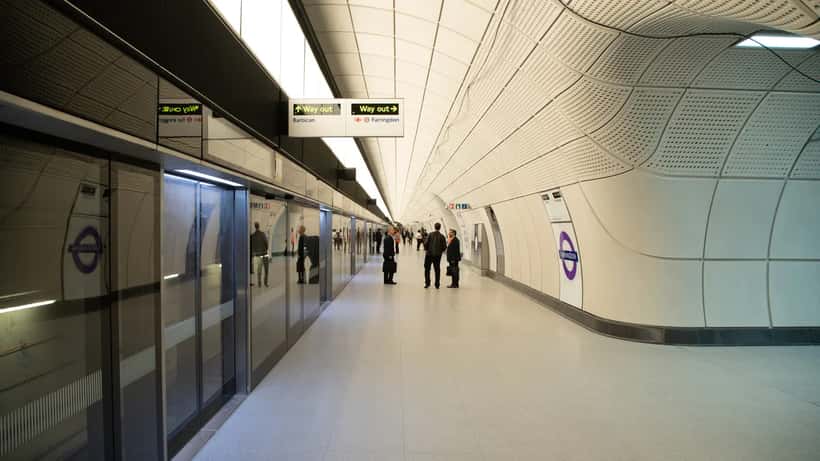
When Crossrail services began stopping at Farringdon in May 2022, the station was already an important node on the London Underground network. The Elizabeth line elevated it to a different tier altogether. Farringdon is now the only station in Britain served by both the east-west Elizabeth line and the north-south Thameslink service, connecting it directly to Heathrow, Reading, Shenfield, Abbey Wood, Gatwick, Bedford, and Brighton.
During April 2026, the station remained fully operational even as RMT industrial action disrupted Underground services, underlining how the Elizabeth line's independent operation from TfL's traditional Tube network provides a degree of resilience that many commuter routes cannot match.
At peak times, 20 trains per hour pass through Farringdon in each direction. When the original Crossrail studies were conducted, TfL projected demand of roughly 27 million passengers annually at Farringdon by 2026. Those projections have proved broadly accurate. The station serves the City of London, Clerkenwell, Islington, and Barbican — some of the most commercially dense postcodes in England.
What the Data Says About Property Values Along the Elizabeth Line
The headline figure from independent property analysis is striking. House prices around Elizabeth line stations increased by approximately 70% over the decade to 2026, compared with a national average uplift of around 65%. In central London postcodes directly served by the line, the increase reached 73%.
TfL's own evaluation of Crossrail's pre-opening property impacts, published at tfl.gov.uk, noted significant uplift in areas within a 10-minute walk of Elizabeth line stations. Property values in those zones outperformed their wider boroughs consistently across the period studied.
For Farringdon specifically, the picture is shaped by two competing forces. On one hand, the area around the station — EC1, EC1A, and parts of EC2 — is already expensive. Average residential values in Clerkenwell are among the highest in London. This means the raw percentage uplift is applied to a high base. On the other hand, commercial property in the district has responded strongly, with office space near Farringdon consistently in demand from legal, media, and financial services firms.
For Homeowners: What Crossrail's Effect Means in Practice
For homeowners within roughly a 15-minute walk of Farringdon, the Crossrail effect has been both a windfall and a complication. Values rose significantly in the run-up to the Elizabeth line's opening, as buyers and investors priced in anticipated travel benefits. Since then, values have remained elevated relative to the broader London market.
The practical implication for anyone considering buying or selling in the area is that transport connectivity is now a material factor in any valuation conversation. A property appraiser, mortgage lender, or estate agent will routinely reference Elizabeth line proximity when assessing a home's market value or rental yield potential.
For property investors, the lessons from Farringdon and other Elizabeth line stations are instructive. Outer London stations — including Abbey Wood, Ilford, Romford, and Southall — have experienced some of the strongest recent growth precisely because the uplift potential there is greater, relative to the starting price. The "Crossrail effect" was not a single event. It is a sustained shift in how London's geography relates to commute times and, therefore, to property desirability.
The Role of Expert Advice in Property Investment Decisions
Property investment in areas shaped by major infrastructure projects is not straightforward. Timing, planning permissions, rental demand, and tax treatment all interact in complex ways. A significant number of buyers who purchased near Elizabeth line stations in the 2018-2021 period — anticipating the opening that was delayed several times — experienced short-term uncertainty before prices recovered.
Anyone contemplating a purchase in the Farringdon area, or along the broader Elizabeth line corridor, should seek specialist advice before committing capital. A property investment adviser with knowledge of the London market can assess whether current pricing already reflects future upside, or whether genuine value remains. A tax adviser familiar with Stamp Duty Land Tax (SDLT), capital gains treatment on buy-to-let properties, and the implications of the current mortgage landscape can ensure that any investment is structured efficiently.
Similarly, landlords operating in the area need to stay current with the Renters' Rights Act, which made significant changes to the private rental sector. Advice from a letting solicitor or regulated property adviser is not a luxury in this environment — it is a practical necessity.
Please note: This article provides general information for educational purposes only. It does not constitute financial, legal, or investment advice. Property investment involves risk, including the potential loss of capital. You should consult a regulated financial adviser before making investment decisions.
Looking Ahead: Farringdon in a Changing London
The Elizabeth line has already changed the way Londoners think about distance and commute. For Farringdon, the transformation is particularly visible. What was once a mid-tier station on the Hammersmith & City and Metropolitan lines is now a central hub connecting central London to both airports, the financial district, and the suburbs in a single seat.
For property owners and investors in the area, this connectivity premium is now baked into values. The question for the next phase of the market is not whether Farringdon's transport credentials are strong — they clearly are — but whether the local economy can continue to absorb the secondary effects of growth: rising commercial rents, residential displacement pressures, and the ongoing demand for high-quality professional services from businesses choosing to locate nearby.
Whether you are buying, selling, letting, or simply trying to understand the value of what you own near Farringdon, connecting with a qualified property expert through ExpertZoom can provide the clarity and confidence you need.
