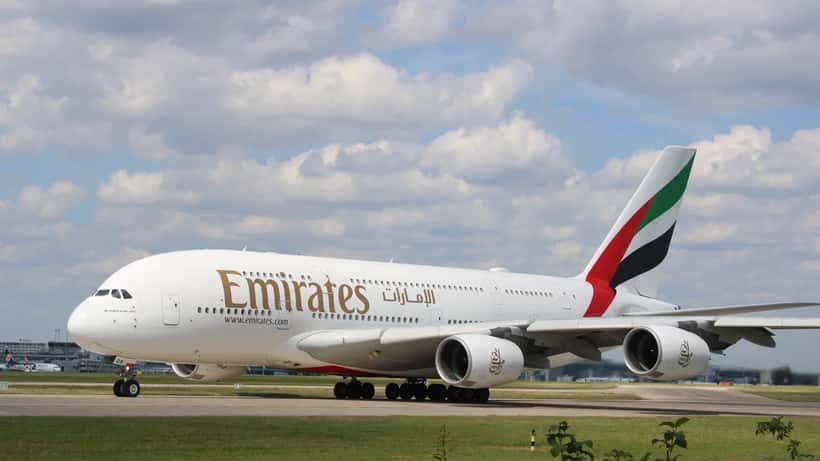
Emirates has cancelled Airbus A380 services on six global routes for June 2026, including two UK gateways that will directly affect British travellers. The Dubai-based carrier confirmed on 26 May 2026 that Manchester and London Gatwick would lose their scheduled A380 operations, with 286 one-way superjumbo flights replaced by smaller Boeing 777 and Airbus A350 aircraft across the month.
Which Routes Are Losing A380 Service
The six affected destinations span three continents and include Copenhagen, Osaka, Washington Dulles, Munich, Manchester and London Gatwick. Aviation data from Cirium confirms that 286 one-way A380 flights originally planned for June 2026 will now operate on alternative widebody types.
For UK passengers, the inclusion of Manchester and London Gatwick carries particular significance. Emirates had positioned the A380 as a flagship experience on these routes, offering first-class suites, onboard lounge facilities and a premium economy cabin that smaller aircraft cannot replicate. Travellers who specifically booked Emirates to access these amenities will now find themselves on different hardware with notably different product offerings.
The Boeing 777 will assume the bulk of these replacement services, while the newly inducted Airbus A350 will step in on select routes. Both aircraft types offer substantially fewer premium seats than the A380, creating a knock-on effect for passengers holding confirmed reservations in first class, business class and premium economy.
Why Emirates Is Downsizing These Routes
Emirates has faced sustained operational pressure throughout 2026 following regional conflict that forced airspace closures and temporary shutdowns at Dubai International Airport in March. While the airline has restored approximately 70 percent of its pre-crisis capacity, network planners continue to optimise fleet deployment against constrained demand and operational complexity.
The A380 represents Emirates' highest-capacity and highest-cost unit to operate. When load factors do not justify deploying 489 seats, the airline routinely substitutes smaller aircraft to protect yield. June historically marks the beginning of peak summer travel, but the lingering effects of Middle East disruptions and altered booking patterns appear to have prompted a more conservative approach to capacity planning this year.
Fleet transition timing also plays a role. Emirates continues inducting Airbus A350 aircraft into its network, and the June schedule revision provides an opportunity to deploy these new jets on established routes while extracting additional flying hours from the type before peak season intensifies.
What Aircraft Substitution Means for Your Booking
Passengers holding confirmed reservations on affected flights will typically receive automatic rebooking notifications from Emirates. However, the experience varies dramatically depending on original cabin class.
First-class passengers face the most significant downgrade. The A380 first-class product includes fully enclosed suites, shower facilities and direct aisle access that simply do not exist on Emirates' Boeing 777 fleet. Business-class travellers accustomed to the A380's onboard lounge and spacious upper-deck seating will similarly find the 777 business cabin a step down in space and ambience.
Premium economy presents a different challenge. Emirates has been rolling out premium economy across its A380 network, targeting more than 84 routes by July 2026. The Boeing 777 fleet operated by Emirates does not currently feature premium economy seating, meaning passengers who purchased this cabin specifically may find themselves downgraded to regular economy or, in fortunate cases, upgraded to business class at no charge.
Your Passenger Rights When Airlines Change Aircraft
UK passengers enjoy substantial legal protection when airlines make significant changes to confirmed bookings. The key question is whether an aircraft substitution constitutes a "significant change" that triggers refund or rerouting rights.
Under UK Civil Aviation Authority guidance, changes to aircraft type are generally considered operational decisions within the airline's control. However, when the substitution results in a downgrade of purchased cabin class, passengers have clear entitlements. If you booked premium economy and the replacement aircraft lacks this cabin, the airline must either provide a full refund for the affected flight or reroute you on a service that preserves your original cabin class.
For downgrades from business class to premium economy, or from premium economy to economy, airlines typically owe passengers the fare difference between the cabins. Emirates' own conditions of carriage address these scenarios, though the specific refund calculation method varies by ticket type and fare basis.
Steps to Take If Your Flight Is Affected
Passengers should first verify whether their specific flight appears on the revised schedule. Emirates typically communicates aircraft changes through its mobile app, email notifications and the Manage Booking portal on emirates.com. Do not rely solely on the original booking confirmation, as aircraft assignments can change multiple times before departure.
If your flight has been substituted and you are dissatisfied with the new aircraft type, contact Emirates customer service promptly. The airline's flexible rebooking policy for 2026 permits most passengers to change travel dates without penalty, subject to fare difference and seat availability. For passengers whose cabin class no longer exists on the replacement aircraft, push for a rerouting option that preserves your original product, even if this means travelling on a different date.
Document all communications with the airline, including agent names, reference numbers and promised actions. Should the airline fail to provide satisfactory resolution, you retain the right to escalate complaints to the UK Civil Aviation Authority or an approved alternative dispute resolution service.
When to Seek Expert Advice
Complex rerouting scenarios involving multiple passengers, connecting flights or special assistance requirements can quickly exceed what standard airline call centres handle efficiently. A travel specialist or consumer rights adviser can help negotiate with airlines, identify alternative routings through partner carriers and ensure that compensation entitlements are fully honoured.
For business travellers whose schedules cannot accommodate date changes, expert consultation becomes particularly valuable. Finding alternative premium cabin inventory on short notice during peak summer travel requires access to global distribution systems and relationships with airline revenue management teams that individual passengers rarely possess.
Emirates remains one of the world's largest international carriers, and the A380 will continue serving its core London Heathrow route throughout June 2026. However, passengers booked through Manchester and London Gatwick should verify their aircraft type immediately and understand their rights before the departure date approaches.
