 Rebecca Taylor
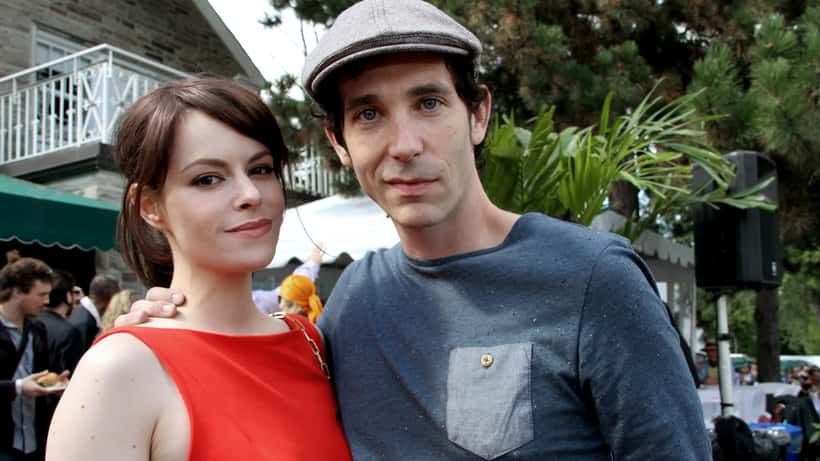
Canadian actress Emily Hampshire began her weekly run as E.D.I.T.H. — Marvel's AI assistant character — in the Disney+ series VisionQuest on 14 October 2026, following appearances at the New York Comic Con Marvel panel on 8 October and a London Film Festival screening on 12 October. The role requires Hampshire to inhabit the controlled precision of an artificial intelligence across an extended production schedule, and has reignited a conversation that matters well beyond the Marvel universe: when the demands of a role push a performer to psychological limits, how do you know when it is time to seek professional help?
For the UK's approximately 75,000 professional performers — the majority of them freelancers — this is not an abstract question. It is a structural one, with consequences that unfold quietly between productions.
VisionQuest and the Rise of Non-Human Roles
VisionQuest, which began its weekly Disney+ release on 14 October 2026, centres on the Marvel Comics character Vision and the artificial intelligences connected to him. Hampshire's E.D.I.T.H. — an AI assistant whose logic, restraint, and precision she must render convincingly across every scene — represents one of the more cognitively unusual acting challenges of the streaming era.
Unlike emotionally expressive roles where performers can draw on personal experience and feeling, portraying an AI requires sustained emotional suppression. The actor must project detachment and computational clarity while remaining present enough to hold a scene — a combination that occupational health practitioners who specialise in the performing arts increasingly identify as a risk factor for psychological burnout in extended productions.
Hampshire is no stranger to demanding material. In August 2026, she was simultaneously cast in Heated Rivalry Season 2 (the Paramount+ adaptation of Rachel Reid's romance novels), taking on the role of Vanessa — a character requiring a very different emotional register. In an interview with Deadline on 8 October 2026, she discussed navigating multiple high-profile projects in rapid succession, describing the mental discipline required to shift between roles. Her schedule during this period — NYCC, London Film Festival, Celine's Paris show on 5 October alongside former Schitt's Creek co-star Dan Levy — illustrates the pace that high-profile working actors operate at, and the limited space left for rest or psychological recovery.
The Freelance Gap That Makes Performer Health Different
This is where the UK's occupational health infrastructure becomes directly relevant. The British Association for Performing Arts Medicine (BAPAM) is one of the primary clinical resources for professional performers in the UK, providing specialist practitioner referrals and guidance tailored to the unique health demands of performance work. Its guidance consistently identifies one key vulnerability: the freelance gap.
For freelance actors and performers, the occupational health pathways that salaried workers take for granted simply do not exist. When a television or film production wraps, any associated welfare support ends with it. There is no occupational health department to refer you, no HR team to notice early warning signs, and no employer-sponsored counselling service. UK Equity, the performers' union, offers members access to the Equity Charitable Trust and limited counselling referral services — but uptake is low, frequently due to a combination of professional stigma and uncertainty about eligibility.
According to NHS data, anxiety disorders are the most commonly diagnosed mental health conditions in working-age adults in England, with those in creative and freelance industries disproportionately represented in self-referral data. Performing arts professionals who do seek support tend to do so later than workers in other sectors — a delay that health professionals consistently link to worse outcomes and longer recovery times.
The Independent Review of Welfare and Safety on Screen, published by the British Film Institute and Equity in 2025, identified psychological safety as one of three priority areas for improvement in UK film and television productions. Despite this, structural change at the production level has been slow, and the burden of managing mental health continues to fall primarily on individual performers.
When the Warning Signs Appear: A Concrete Scenario
Consider a scenario representative of what many UK actors experience. An actor — call her Maya — secures a significant recurring role in a high-budget UK streaming series. Production runs for six months. Under Equity minimum rates for principal performers in UK television, Maya earns approximately £2,400 per month during filming — enough to cover costs, but with no employment benefits, pension contributions, or health provision beyond statutory minimums.
Around month four, Maya notices a pattern: persistent sleep disruption three to four nights per week, difficulty concentrating during her days off, and growing dread in the hours before filming — not nerves, but a heavier, sustained unease. She has also started finding it difficult to fully disengage from her character's worldview during evenings and weekends, a phenomenon occupational health practitioners who work with performers call identity or character boundary blurring. She attributes it to "the pressure of the role" and does not raise it with anyone on set.
When production wraps, the income stops immediately. Maya is not yet unwell enough to meet the threshold for Priority Access through NHS talking therapy services. She earns too much during production to qualify for means-tested support, but nothing between jobs.
If Maya had consulted a health professional at the four-month mark — either through a GP referral to NHS talking therapies, or directly through a BAPAM-listed performing arts medicine practitioner — the picture would likely be different. A standard course of Cognitive Behavioural Therapy (CBT) runs to eight sessions. NHS provision is free of charge following a GP referral or self-referral via the IAPT (Improving Access to Psychological Therapies) pathway. Privately, CBT typically costs between £60 and £120 per session in the UK, putting a full course at £480 to £960 — a cost that, for self-employed performers, may in certain circumstances qualify as a work-related health expense deductible under HMRC's self-employment expense rules (professional guidance from an accountant or tax adviser is recommended before claiming).
The critical variable is timing. Early-stage occupational burnout, when addressed at the four-month point with structured support, typically resolves within a three-to-six-month therapeutic course. Left until post-production — when the income has stopped, the structure has gone, and the psychological costs have compounded — recovery timelines extend significantly and the risk of a transition to diagnosed anxiety or depressive disorder increases.
What Performers and Their Employers Should Watch For
Hampshire's moment in the spotlight has coincided with increased industry attention to performer welfare. For working actors and those who manage them — agents, directors, production coordinators — there are practical markers that suggest a consultation with a health professional should not wait:
- Sleep disturbance persisting for more than three weeks
- Difficulty maintaining a clear boundary between a performed character and off-set identity (particularly relevant for roles requiring emotional suppression or non-human character work, as in E.D.I.T.H.)
- Withdrawal from personal relationships and activities outside work
- Anxiety specifically tied to professional performance rather than generalised stress
- Physical symptoms including persistent fatigue, headaches, or changes in appetite without obvious medical cause
For production companies and employers in the entertainment industry, the 2025 BFI/Equity Review established a clear duty of care expectation: productions working with principal performers over extended schedules should provide access to an independent welfare contact and information about mental health referral pathways at the start of production, not only when problems emerge.
What to Do Now
The infrastructure to support performer mental health in the UK is real and accessible. NHS talking therapies are available via self-referral in England without needing a GP appointment first — a route available through the NHS website. BAPAM provides a free telephone helpline and a searchable database of practitioners with specialist performing arts experience. Equity members can contact the Equity Charitable Trust for referral support.
For performers wondering whether their experience warrants a formal consultation — the answer, almost always, is yes. The threshold for an initial conversation with a GP about work-related psychological stress is low. What matters is not whether the situation seems "serious enough" by some external standard, but whether it is affecting your capacity to work and live.
Emily Hampshire's career trajectory — from Schitt's Creek to Marvel's VisionQuest, across one of the busiest professional periods of her life — illustrates both the extraordinary demands placed on working actors at the top of their craft, and the largely invisible support structures they must navigate to sustain it. The crossover between professional pressure and mental health is not unique to high-profile performers — it is documented across the UK performing arts sector, as explored in this analysis of creative burnout and when professional guidance becomes essential.
Knowing when to ask for help is not a weakness in this profession. It is, in the language of performance itself, good timing.
This article is for informational purposes only and does not constitute medical advice. If you are experiencing mental health difficulties, please consult a qualified health professional or contact your GP.
