 Rebecca Taylor
A new Ebola outbreak is spreading across East and Central Africa, with 575 suspected cases, 51 confirmed infections, and 148 suspected deaths recorded as of 21 May 2026. The outbreak is caused by the Bundibugyo ebolavirus strain, for which no licensed vaccine currently exists — a fact that has alarmed infectious disease specialists across Europe and prompted urgent travel health advisories for UK citizens planning trips to the affected region.
What Is Happening and Where
The 2026 outbreak is centred across the Democratic Republic of Congo, Uganda, and South Sudan. Health authorities in all three countries are coordinating with the World Health Organisation (WHO), which confirmed on 19 May 2026 that developing a promising new vaccine for the Bundibugyo strain would take approximately six to nine months. That timeline means travellers face a risk period with no available immunisation.
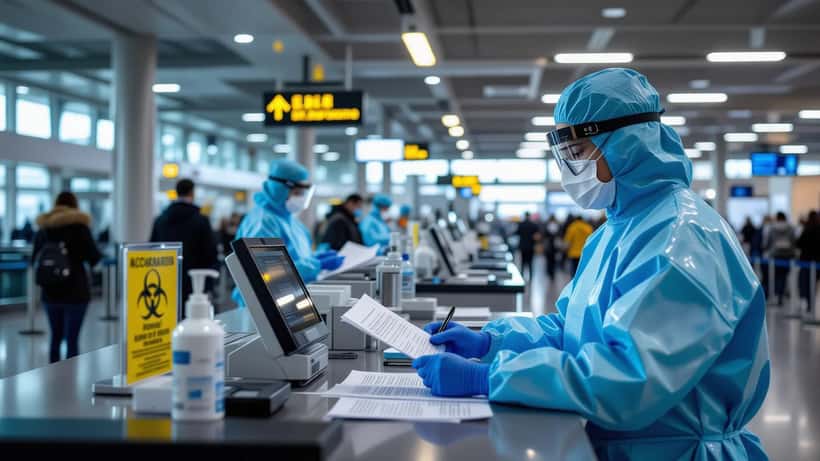
The United States has already implemented enhanced travel screening at airports, with entry restrictions placed on non-US passport holders who have recent travel history to Uganda, the DRC, or South Sudan. The UK Health Security Agency (UKHSA) is monitoring the situation closely, with infectious disease experts urging vigilance at borders and advising that travellers who have recently returned from the affected region should be aware of the key symptoms.
Why the Absence of a Vaccine Matters for UK Travellers
During previous Ebola outbreaks — particularly the 2014 to 2016 West Africa crisis — the rollout of experimental vaccines provided some protection for healthcare workers and high-risk contacts. The Bundibugyo strain involved in the 2026 outbreak is different from the strains targeted by existing licensed vaccines. Scientists are debating whether any cross-protection exists, but as of now, no currently approved vaccine should be assumed to be protective against this strain.
This distinguishes the 2026 outbreak from more recent Ebola responses in which vaccination was a central containment tool. For UK travellers, this means that travel to the affected region carries an elevated and unmitigated biological risk that cannot be addressed through routine pre-travel vaccination.
Who Is at Risk in the UK
The risk to the UK general population remains very low. Ebola does not spread through casual contact and requires direct exposure to the bodily fluids of an infected and symptomatic individual. It is not airborne.
However, specific groups face a meaningfully elevated risk and should exercise particular caution:
- UK citizens travelling to, or returning from, DRC, Uganda, or South Sudan
- Healthcare workers or aid workers deployed to the outbreak region
- Individuals with family connections in affected areas who may be considering emergency travel
- Researchers or field workers in adjacent border regions
For these groups, the absence of a licensed vaccine makes pre-travel consultation with a doctor or travel health specialist more important than ever, not less.
Symptoms to Know and When to Seek Immediate Help
Ebola disease presents initially with fever, severe headache, muscle pain, weakness, fatigue, and vomiting. These early symptoms overlap substantially with malaria, typhoid, and other illnesses common in the region, which is why clinical assessment matters significantly.
If you have returned from DRC, Uganda, or South Sudan within the past 21 days and develop a fever, you should contact NHS 111 before attending any clinical setting. Do not travel to a hospital or GP surgery without first calling ahead. Healthcare professionals need advance warning to implement appropriate infection control.
The 21-day window is the Ebola incubation period. Anyone within that window who develops symptoms should treat the situation as an emergency and seek medical advice by telephone immediately.
What to Discuss With a Doctor Before You Travel
If you are planning travel to East or Central Africa — even to countries not currently listed as outbreak zones — a pre-travel health consultation is strongly advisable. A GP or travel health specialist can assess your specific itinerary, purpose of travel, and health history to determine your risk level and advise on practical precautions.
Key questions to raise with your doctor include:
- Which countries are currently classified as high-risk by the UKHSA?
- Are any other vaccines recommended for my destination (yellow fever, typhoid, hepatitis A)?
- What precautions should I take if I am working in a healthcare or humanitarian capacity?
- What are the current entry requirements and screening protocols at my destination airports?
- At what point should I self-isolate and contact NHS 111 on return?
The UK's official travel health resource, NaTHNaC (the National Travel Health Network and Centre), provides country-by-country guidance regularly updated to reflect outbreak status. Reviewing this guidance alongside a professional consultation gives you the most complete picture of current risk. Official NHS travel health guidance is available at travelhealthpro.org.uk.
The Broader Lesson: Travel Health Is Specialist Territory
The 2026 Ebola outbreak is a reminder that travel medicine is a specialised field, distinct from routine general practice. Risk assessment for international travel involves knowing which vaccines are contraindicated in which combinations, understanding regional disease patterns, and staying current with outbreak notifications that change week by week.
GPs provide excellent care for everyday health, but for complex international travel — particularly to regions experiencing active outbreaks — a travel medicine specialist can offer a more targeted assessment. They can also provide documentation required by some airlines and destination countries.
UK travellers visiting other regions with active disease alerts — including the 2026 Cape Verde shigellosis outbreak — face similar challenges in getting timely professional advice before departure. You can also explore travel-related health concerns with a qualified GP or travel health doctor through Expert Zoom, connecting you with UK-registered medical professionals who can advise on your specific destination and circumstances.
The Ebola outbreak is evolving rapidly. With no vaccine available and a confirmed case count rising through May 2026, travellers need professional guidance, not just precautionary reading. Book a consultation before you book your flight.
This article is for informational purposes only and does not constitute medical advice. Always consult a qualified healthcare professional before making travel health decisions.
