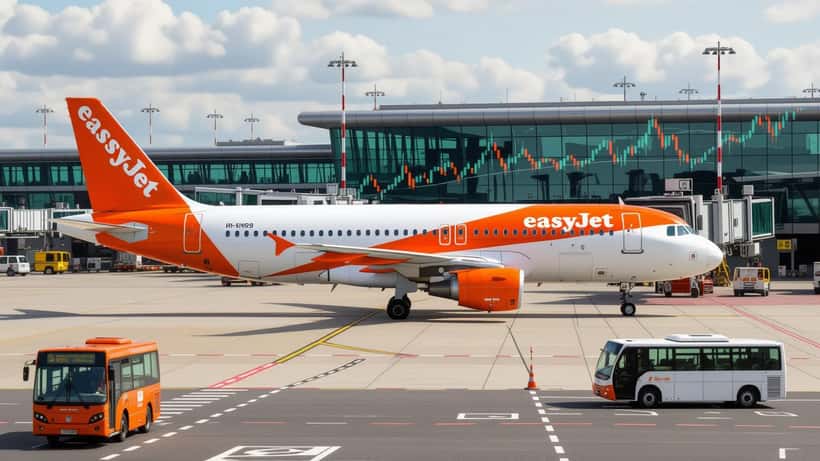
Fresh takeover speculation is swirling around easyJet in 2026, as analysts and investors debate whether the British low-cost carrier could become the next European airline to attract a serious bid. With consolidation pressures mounting across the aviation sector and easyJet’s market valuation still recovering from post-pandemic turbulence, the idea of a takeover has moved from fringe chatter to a credible talking point among aviation finance specialists.
The airline, headquartered at Luton Airport, has rebuilt its network aggressively since 2022. By summer 2026 it is operating more than 1,000 routes across Europe and North Africa, carrying millions of holidaymakers and business travellers. Yet its share price has lagged behind some peers, partly because of fierce competition from Wizz Air, Ryanair and resurgent legacy carriers. That valuation gap is exactly what makes easyJet an interesting target for private equity or a rival airline with deeper pockets.
Why easyJet looks attractive to a bidder
Several structural factors make easyJet a plausible takeover candidate in 2026. First, it owns the majority of its aircraft and airport slots outright, giving any acquirer hard assets rather than a fragile lease-heavy balance sheet. Second, its brand recognition in the UK and Northern Europe remains exceptionally strong, especially for short-haul leisure travel. Third, the company has cut costs, simplified its fleet around Airbus A320-family aircraft, and improved its digital operations.
From a buyer’s perspective, the prize is a ready-made pan-European platform. A private-equity consortium could seek to take easyJet private, streamline the cost base further, and eventually re-list the business when market conditions improve. Alternatively, a strategic airline buyer—particularly from outside Europe—could use easyJet as a springboard into the tightly regulated EU aviation market.
Regulatory hurdles would be significant but not insurmountable. EU ownership rules require that a majority of an EU airline’s shares be held by EU nationals, and that effective control rests within the bloc. Any non-European bidder would need to structure a deal carefully, as previous attempts involving airlines such as easyJet and IAG have shown. That legal complexity is where expert aviation and corporate-law advice becomes essential.
What a bid could mean for passengers
For travellers, the prospect of an easyJet takeover raises practical questions. Would a new owner keep the low-cost model, or would fares rise as the business is squeezed for returns? Historically, private-equity ownership of airlines has produced mixed results: some carriers emerged leaner and more reliable, while others cut routes and added fees.
A strategic buyer with an existing network might choose to merge overlapping routes, potentially reducing choice on popular city pairs. On the other hand, it could also strengthen easyJet’s long-haul feeder partnerships and improve loyalty integration. The outcome depends heavily on the identity of the bidder and the regulatory remedies imposed by competition authorities.
Passengers should also watch for changes to refund policies, baggage rules and customer-service responsiveness. During any ownership transition, operational focus can drift, and consumer protections under UK and EU law would be tested. Anyone booking flights far in advance during 2026 should keep an eye on official announcements and ensure bookings are made with a credit card or other payment method that offers refund protection.
The investor and advisory angle
For investors, easyJet’s potential bid dynamic is a reminder that airline equities can be event-driven as well as cyclical. Takeover rumours can move the share price sharply, but they can also fade just as quickly if no concrete approach materialises. Disciplined investors will look past the headlines and focus on load factors, yield trends, fuel hedging and net debt.
Advisory professionals—corporate finance lawyers, aviation specialists, tax advisers and competition economists—are likely to be in demand if a formal approach emerges. A takeover of easyJet’s scale would require co-ordinated advice across multiple jurisdictions, covering everything from merger control in Brussels and London to slot allocations at congested airports like Gatwick and Amsterdam Schiphol.
Smaller consultancies and expert networks that cover aviation, travel and transport should prepare for an uptick in due-diligence requests. Even if a full takeover never happens, the speculation itself often triggers strategic reviews, fleet financing rounds and partnership discussions that require specialist input.
Outlook for the rest of 2026
Whether or not a firm bid emerges, the easyJet takeover story highlights a broader trend: European aviation is consolidating, and weaker or undervalued carriers are coming under scrutiny. Fuel-price volatility, sustainability pressures and airport-capacity constraints are forcing airlines to think bigger. In that environment, medium-sized flag carriers and large low-cost operators alike are reassessing their strategic options.
EasyJet’s management has historically been vocal about independence, but public-company boards have a duty to consider any serious proposal. If a credible bidder appears, shareholders will expect a full and fair evaluation. Until then, the market will continue to read every operational update and fleet decision for hidden signals.
Businesses and consumers with a stake in easyJet’s future should stay informed, understand their rights and seek expert guidance when major structural change is on the horizon. The airline industry rarely stands still for long, and 2026 is shaping up to be a pivotal year.
