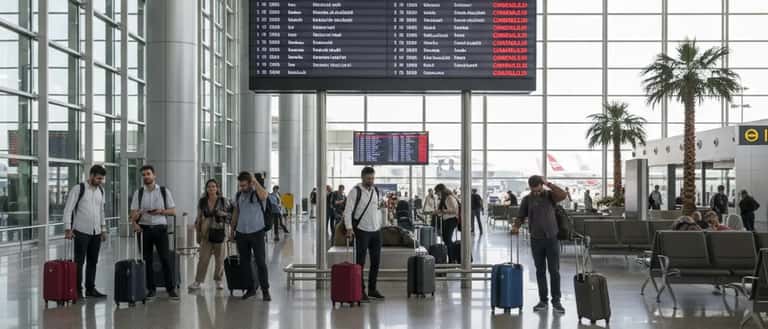
More than 12,300 flights were cancelled across major Middle East airports in early March 2026 as the escalation of regional conflict closed Dubai International, Abu Dhabi's Zayed International, and Doha's Hamad International Airport simultaneously. Thousands of British passengers were left stranded — many still unsure what compensation, if any, they are entitled to.
What Happened: The Scale of the March 2026 Disruption
The closure of UAE and Gulf airspace between 1 and 4 March 2026 triggered the largest single disruption to UK air travel since the COVID-19 pandemic. Emirates, Qatar Airways, and Etihad Airways all suspended or severely reduced operations. According to AirHelp, over 12,300 flights were cancelled in just 72 hours across Dubai, Abu Dhabi, and Doha airports.
The UAE government moved quickly: the Civil Aviation Authority announced it would cover accommodation and food costs for all passengers stranded in UAE airports during the closure — an unusual and significant commitment. Despite this gesture, tens of thousands of passengers on connecting flights, or who had paid for independent accommodation, incurred unrecovered costs.
Your Rights as a Stranded Passenger: What UK Law Says
The key question for British passengers is whether the disruption qualifies as an "extraordinary circumstance" under UK law — the legal test that determines whether airlines owe financial compensation.
Under UK Retained Regulation EC 261/2004 (which remains applicable post-Brexit as part of retained EU law), passengers on flights departing from UK airports or operated by UK carriers are entitled to:
- Cancellation compensation: £220 to £520 per passenger, depending on flight distance — but only if the cancellation is not caused by extraordinary circumstances.
- Rebooking or full refund: Regardless of the cause, airlines must offer you a choice between rebooking at no extra cost or a full refund.
- Duty of care: When disruption extends overnight, airlines must provide meals, refreshments, and hotel accommodation (or reimburse reasonable costs).
The critical issue in the March 2026 disruption is the extraordinary circumstances defence. Airlines have widely invoked force majeure given the regional conflict — meaning the cash compensation element (£220–£520) is unlikely to be payable. However, the duty of care obligations remain — airlines cannot escape these even in force majeure situations.
What You Are Still Owed (Even Without Compensation)
Many passengers do not realise that even when cash compensation is off the table, they have enforceable rights:
Accommodation costs: If you were stranded overnight and your airline failed to provide a hotel or reimburse your hotel costs, you can claim these back. Keep all receipts. The airline's duty of care applies for as long as you remain stranded due to the cancellation.
Meal and transport costs: Airlines must cover reasonable meal expenses and transport between the airport and hotel. "Reasonable" typically means up to £25 per day for meals.
Rebooking on alternative carriers: If your airline offered no alternative flight within a reasonable timeframe, you may have been entitled to book with another carrier and claim the difference.
Travel insurance claims: Many UK travel policies cover trip disruption due to civil unrest or airport closure. Check your policy for "travel disruption", "missed connection" or "political unrest" clauses — these are often overlooked.
When a Lawyer Adds Value
For most straightforward duty of care claims (hotel, meals, transport under £500), the airline's online claims form or a service like AirHelp is sufficient. But a travel law solicitor becomes valuable when:
- Your claim is disputed or rejected — airlines frequently reject duty of care claims citing force majeure, even when the specific costs claimed (meals, hotel) are not exempt.
- Your losses are substantial — missed business meetings, non-refundable events, or connecting holiday packages that were entirely wasted can amount to thousands of pounds.
- You booked through a travel agent or package holiday — Package Travel Regulations 2018 give additional rights against the organiser, not just the airline, and these claims require legal expertise to navigate correctly.
- You are a small business — Business travel disruption causing commercial losses is not covered by the standard EC 261/2004 regime, but contractual claims against airlines or insurers may be available.
How to Claim: Practical Steps
- Gather your evidence now: Booking confirmations, boarding pass, receipts for any hotels, meals, or alternative transport you paid for, and written communication from the airline.
- Submit a formal written claim to the airline citing UK Retained Regulation EC 261/2004 for duty of care costs. Most airlines have a claims portal.
- If rejected, escalate to CEDR or Civil Aviation Authority — the UK's alternative dispute resolution bodies handle airline complaints for free.
- Check your travel insurance: Submit a claim citing "travel disruption" or "airport closure" as the cause.
- If losses are significant, consult a solicitor — many travel law specialists offer a free initial assessment.
Legal disclaimer: This article is for informational purposes only and does not constitute legal advice. Individual circumstances vary. Consult a qualified solicitor for advice specific to your situation.
If you were affected by the March 2026 Middle East flight disruptions and want to understand your legal options, our specialist travel and consumer law experts at Expert Zoom — UK Legal Experts can assess your situation and guide you through the claims process.
