 Amelia Davies
Dragon Ball Super: Beerus — a fully rebuilt anime remake centred on the God of Destruction — launched in Japan on Fuji TV on 11 October 2026 and is expected to reach Disney+ subscribers in the UK within days, according to the Disney+ fan resource What's On Disney Plus. For the franchise's millions of UK fans, the arrival of major new official content rarely triggers just a viewing session. It sparks a creative wave: fan art floods Etsy, cosplay commissions spike at conventions, and YouTube reaction channels scramble to publish content before the algorithm window closes. But under UK law, that creative wave carries legal exposure most fans never stop to consider — and with Dragon Ball Super: Beerus set to be the biggest anime launch of Q4 2026 in Britain, now is exactly the right moment to understand where the lines fall.
Can I Post Dragon Ball Fan Art Online Without Breaking the Law?
The short answer is: probably, as long as it stays genuinely non-commercial.
UK copyright law under the Copyright, Designs and Patents Act 1988 (CDPA) grants automatic protection to creative works from the moment they are made — including anime characters, their visual design, and their names. Dragon Ball Super's characters are owned by Toei Animation and, since 2024, administered jointly with the Toriyama estate following the passing of series creator Akira Toriyama. Creating a drawing of Beerus and posting it on Instagram is, strictly speaking, an unauthorised derivative work under CDPA s.16(1)(e).
In practice, however, Toei Animation — like most major Japanese studios — has historically tolerated fan art shared freely online for personal, non-commercial appreciation. This is not a formal licence. It is a business decision based on goodwill and the commercial value of an engaged fan community. The legal risk remains on paper, but enforcement against non-commercial fan artists who charge nothing and credit the original is historically rare.
There is also a limited statutory protection worth knowing. Under s.30A CDPA, introduced in 2014, content that genuinely amounts to parody, caricature, or pastiche of a copyright work may qualify for a "fair dealing" exemption. A cartoon placing Beerus in a satirical political scenario or reimagining him as a parody of modern celebrity culture could fall within pastiche. A straightforward high-quality recreation of the character's official design, however well-executed, would not. According to the UK Intellectual Property Office, this exception is deliberately narrow and does not extend to commercial use.
What Happens the Moment I Charge Money for It?
The legal picture shifts sharply the instant money changes hands.
Selling prints at MCM London, offering commission slots on Etsy, putting fan art behind a Patreon paywall, or running a YouTube channel with sponsored segments featuring Dragon Ball clips — each of these transforms a tolerated creative activity into a commercially actionable one. Under CDPA s.17-23, commercial exploitation of another party's copyright work without authorisation constitutes infringement. This includes reproduction (printing a design on merchandise), communication to the public (streaming clips), and making copies available for download. There is no "small seller" threshold. A single commercial transaction can form the basis of a legal claim.
Japanese studios have demonstrated they take these rights seriously. Toei Animation filed a high-profile lawsuit in the United States in 2022 against a YouTuber whose reaction content generated advertising revenue from Dragon Ball footage, ultimately seeking damages under US statutory law. UK damages are calculated differently — courts here typically award compensatory damages for actual financial loss plus an account of profits made by the infringer — but legal costs at the Intellectual Property Enterprise Court (IPEC), the UK's specialist lower court for IP disputes, still typically begin at £5,000 to £10,000 for a defended claim. Even a successful defence is not free.
The Dragon Ball Super: Beerus launch also represents a period of heightened brand monitoring. Toei Animation has publicly indicated it plans a global rollout of the series across streaming platforms including Disney+ (for the UK and certain other markets), Hulu, and Netflix in October 2026, which means brand protection and unauthorised merchandise enforcement are likely to be active priorities for the studio during this period.
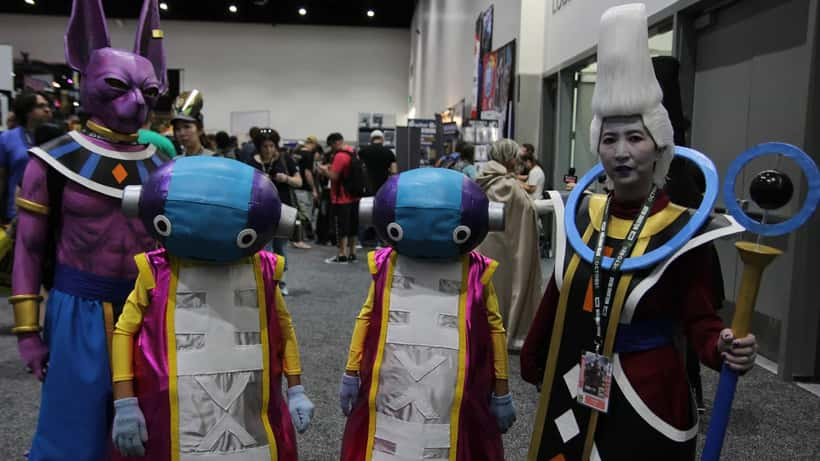
Is Dragon Ball Cosplay at UK Conventions Legal?
This is where the law becomes genuinely complex, and where a specialist IP solicitor's advice is most valuable.
Costume designs in the UK can attract protection under three different regimes: copyright (as artistic works), registered design rights (for specific visual features), and unregistered design right. For most anime character costumes, the primary legal issue is the copyright in the character's visual appearance — not the fabric garments themselves, which are functional objects — rather than the costume as a design artefact.
Wearing a Beerus costume at a UK fan convention for personal enjoyment falls comfortably within what is tolerated. Selling handmade Beerus costumes through an online store, or offering bespoke commissions that reproduce the character's distinctive protected visual identity — his grey feline features, Egyptian-inspired robes, and the specific proportional design Toriyama created — constitutes a different legal proposition. That design is Toei's intellectual property, and reproducing it in a product sold for money potentially infringes that right.
For cosplayers who want to earn income from their work, the safer route is original character design informed by anime aesthetics rather than direct character reproduction. UK streaming platforms and conventions hosting Dragon Ball Super: Beerus content in October 2026 will see a sharp demand spike for Beerus-adjacent cosplay content. Creators who want to capitalise on that moment commercially should understand the legal terrain first — including what streaming rights mean for reaction video creators, a topic covered in detail for UK audiences in the context of major licensed streaming launches.
The Real Cost: What Happens When Toei Notices Your Etsy Shop
Consider Sophie, a 26-year-old digital illustrator in Manchester who has followed Dragon Ball since she was twelve. When Dragon Ball Super: Beerus lands on Disney+ UK in mid-October 2026, Sophie launches an Etsy store and posts to her 4,200 Instagram followers:
- Beerus and Whis digital art prints: £12 each
- Commission slots for character portraits: £35 per character
- Bundled wallpaper packs featuring the new series' art style: £8
Within six weeks, the store earns approximately £600 per month. Her work is original in execution, her customers are enthusiastic, and she considers herself well within the "fan appreciation" zone.
But Toei Animation uses automated brand monitoring tools — standard practice among major entertainment studios — that scan Etsy, Redbubble, and similar platforms for unauthorised reproductions of key character visuals. If Sophie's listings are flagged and Toei's legal team issues a UK cease-and-desist notice in December 2026, the financial reality changes immediately:
If Sophie ignores the notice: Toei could proceed to IPEC. Even at the small claims track (capped at £10,000 in damages for the claimant), Sophie would likely face a court order requiring her to hand over all profits earned, remove all products from sale permanently, and potentially pay a portion of the studio's legal costs. A £10,000 damages cap does not mean £10,000 maximum total cost to Sophie — her own legal costs in responding could match or exceed that figure.
If Sophie seeks immediate legal advice on receipt of the notice: An initial one-hour consultation with a UK IP solicitor typically costs £150–£300. Drafting a formal response, assessing whether her specific art style supports a pastiche defence under s.30A CDPA, and negotiating a settlement to avoid court proceedings could realistically cost £2,000–£5,000 in professional fees.
In either scenario, the cumulative cost — in money, time, platform account risk, and reputational uncertainty — substantially exceeds the roughly £3,600 Sophie earned over six months. The difference between getting advice before opening the shop and reacting to a cease-and-desist after is, in this example, a five-figure exposure built on a three-figure monthly income.
What UK Dragon Ball Fans Should Do Before the Beerus Wave Hits
Dragon Ball Super: Beerus is a cultural event for UK anime fans — and also a practical test of where creative passion ends and commercial liability begins. For fans who want to be on the right side of the law as the series rolls out across UK streaming platforms this October, three concrete steps matter.
First, keep it non-commercial during the launch period. Build your audience, demonstrate your skill, and post freely. Toei's enforcement focus during a major launch is typically on commercial competitors, not individual creators sharing art for free. A strong non-commercial portfolio has independent value and establishes your creative identity without legal exposure.
Second, understand what the pastiche defence actually requires. Section 30A CDPA is not a general "fan art is fine" provision. It applies only where the work genuinely transforms, parodies, or comments on the original rather than simply reproducing it with skill. If your work reimagines Beerus in an original narrative context that comments on something beyond Dragon Ball itself, you may have an argument. If it faithfully recreates official character designs for resale, you almost certainly do not.
Third, get professional advice before you monetise. The cost of a one-hour IP consultation — typically £150–£300 with a UK solicitor — is a fraction of what enforcement proceedings would cost. Platforms such as Expert Zoom connect UK users with qualified intellectual property solicitors who can give you a clear, jurisdiction-specific answer based on your specific use case before you open the store, not after you receive a letter.
Dragon Ball Super: Beerus may be the most-watched UK anime premiere of autumn 2026. Make sure your creative response to it is one that lasts longer than a copyright enforcement notice.
This article is for general informational purposes only and does not constitute legal advice. For guidance specific to your situation, consult a qualified UK solicitor.
