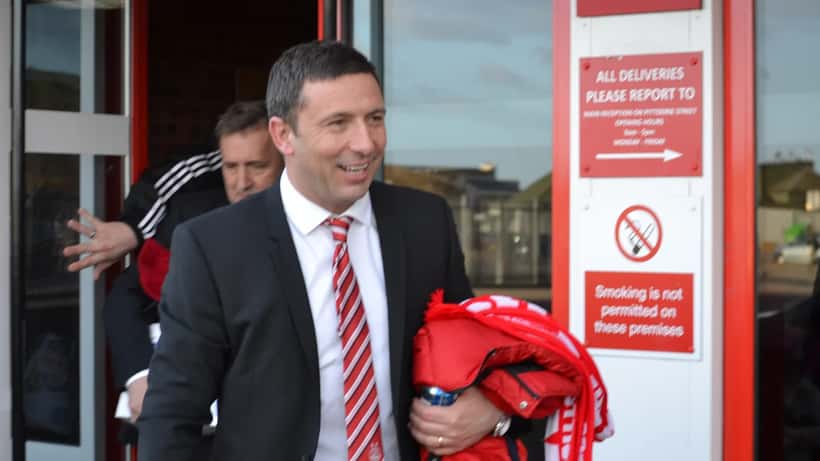
 Grace Davies
Derek McInnes' Hearts sit one point clear of Rangers and three ahead of Celtic with six matches remaining in the Scottish Premiership season, placing the Edinburgh club on the verge of their first top-flight title since 1960. For McInnes — and for every player under his command — the next six weeks will be among the most psychologically demanding of their careers.
The Weight of History: 66 Years Without a Title
Heart of Midlothian Football Club last won the Scottish First Division in 1959-60. That is not just a long time in football terms; it is a generational silence that has defined the identity of an entire support. Every Hearts supporter over the age of 70 carries a memory of that title. Everyone younger has only inherited the longing.
McInnes, who has managed Kilmarnock and Aberdeen before taking charge at Tynecastle, is acutely aware of this history. His contract extension through 2026 signals the club's belief in his ability to carry this moment through to its conclusion. But managing a title run-in is one of football's most psychologically complex challenges. The closer the finishing line, the louder the doubt.
As of April 2026, the mathematics are clear: six wins from six remaining matches puts the trophy at Tynecastle. But the final fixture — an away trip to Celtic Park on 16 May — carries sufficient drama to define or destroy a season.
What Sports Psychology Tells Us About Title Run-Ins
The pressure felt by players and managers in the closing stages of a title race is not simply anxiety. It is a specific form of performance psychology challenge known as choking under pressure, and it is well documented in elite sport research.
A 2022 study published in the Journal of Applied Sport Psychology found that athletes performing in high-stakes scenarios showed significantly elevated cortisol levels during the final phases of competitive seasons, even when their current performance was strong. The problem was not ability — it was the intrusive awareness of consequence.
Three psychological factors tend to determine whether teams hold on or collapse in title run-ins:
Process focus versus outcome focus. Teams that win titles in the final weeks consistently report, in post-season analysis, that they were able to redirect attention toward immediate task execution — the next pass, the next defensive shape — rather than fixating on the league table. McInnes has spoken publicly about taking the season "one game at a time," which is not a cliché but a deliberate framing strategy.
Cohesion under stress. Title pressure tests group dynamics. Mistakes become amplified. Blame can creep in. Teams that maintain psychological safety — the shared belief that individual errors will not be punished destructively — tend to recover better from setbacks within matches and across fixtures.
Recovery rituals. Elite sports psychologists increasingly prescribe structured recovery protocols between high-pressure matches. These are not simply physical: cold water immersion, sleep optimisation, and reduced training loads all play a role, but deliberate emotional processing — reviewing what went well, not just what went wrong — is increasingly central to elite preparation.
Beyond Sport: Pressure, Performance, and Professional Life
McInnes' situation is recognisable far beyond football. In workplaces, in businesses, and in personal careers, people regularly encounter their own version of the title run-in: the point at which previous preparation meets the final test, and the consequences of failure suddenly feel personal and public.
Research from University College London published in 2024 identified that professionals in competitive environments — legal, financial, sales, management — experience similar performance degradation under high-visibility pressure scenarios. The symptoms are consistent: reduced decision quality, increased risk aversion, disrupted sleep, and heightened reactivity in interpersonal situations.
The tools developed in elite sport psychology transfer directly. A financial adviser managing a critical client pitch, a lawyer preparing for a key tribunal, or a business owner navigating a decisive tender all benefit from the same core principles: narrow your focus to executable actions, maintain your recovery practices, protect group trust, and resist the temptation to change a system that has been working.
When Professional Support Makes the Difference
Not all pressure is equal, and not all self-management is sufficient. Some professionals face sustained, chronic performance pressure that tips from manageable challenge into clinical-level stress. The distinction matters.
Sports psychologists and occupational performance coaches are seeing a significant uptick in referrals from non-sporting contexts. According to the British Psychological Society's 2025 guidance on workplace performance, demand for performance psychology consultations in professional contexts increased by 34% between 2023 and 2025, driven primarily by mid-career professionals and business leaders.
Signs that pressure may have crossed into territory requiring professional support include:
- Persistent sleep disruption linked to work performance anxiety
- Inability to switch off between work periods
- Increasing avoidance of high-stakes decisions or conversations
- Physical symptoms — headaches, fatigue, digestive issues — appearing specifically in work contexts
- Deterioration in close personal relationships correlated with professional stress
A qualified performance psychologist or sport and exercise psychologist can help identify whether what you are experiencing is adaptive competitive drive — which can be harnessed — or maladaptive anxiety that is impeding your functioning.
The Six-Game Test
For Derek McInnes and his players, the next six matches will test preparation, character, and psychological resilience in equal measure. The fixture list runs through April and into May, with each result shaping the mathematics and the emotional landscape of the campaign.
What history shows about title run-ins — and what sports science confirms — is that physical preparation rarely separates teams at this stage. The decisive variable is almost always mental. The team that manages doubt most effectively tends to win.
Whether in football or in your professional life, the final stretch is rarely about doing something different. It is about having the psychological tools to execute what you already know how to do, when the stakes are highest.
This article is for informational purposes only. If you are experiencing significant work-related stress or anxiety, speaking to a registered health professional is recommended.
