 Imogen Bennett
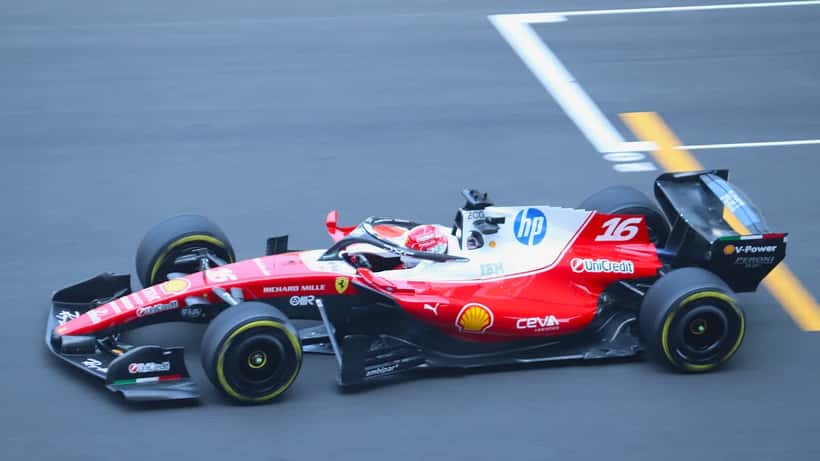
Today at Silverstone, Charles Leclerc delivered Ferrari one of the most dramatic victories of the 2026 Formula 1 season, crossing the line first at the British Grand Prix after championship leader Kimi Antonelli's Mercedes suffered a catastrophic wheel shield failure in the closing laps. The race finished under a safety car, but the result was unambiguous: Leclerc took the win, George Russell claimed second, and Lewis Hamilton — Leclerc's own Ferrari teammate — completed the podium.
For Leclerc, 28, the victory arrives at a financially pivotal moment. Weeks ago, Ferrari confirmed a long-term contract extension reportedly worth $335 million across four seasons (2027–2030), layered on top of a 2026 base salary of $36 million that can reach $62 million once sponsorship deals and performance bonuses are included. A Silverstone win only strengthens his position — and places his total career earnings on a trajectory that puts him among the wealthiest athletes of his generation.
When a Race Win Becomes a Financial Event
A Formula 1 Grand Prix victory is not simply a sporting achievement. For a driver of Leclerc's profile, a single race win can trigger contractual bonus clauses, unlock sponsorship escalators, and meaningfully boost the commercial value of his personal brand across partnerships with Rolex, Richard Mille, and other global sponsors.
According to RacingNews365, Leclerc's net worth is estimated at approximately $125 million — a figure that has grown sharply as Ferrari rebuilt its competitive programme under the new 2026 technical regulations. That kind of wealth, arriving in irregular surges tied to race results, bonus milestones, and commercial cycles, creates a financial profile that is genuinely difficult to manage without specialist guidance.
For UK fans who followed the race build-up and broadcast details through today's coverage, the victory narrative is compelling. But the financial story behind the trophy is arguably just as instructive.
The Challenge of Irregular, Multi-Jurisdictional Income
Leclerc is a resident of Monaco, a jurisdiction with no income tax — a choice that, while common among F1 drivers, is itself the product of deliberate, expert-led financial planning. His income arrives simultaneously from multiple sources: a Ferrari retainer, performance bonuses, image rights held through a corporate structure, and commercial revenue from partners across several countries.
For UK residents, there is a lesson here that does not require a nine-figure contract to apply. A senior professional receiving a combination of PAYE income, equity vesting, a property portfolio, and an inherited pension can face an equally layered financial picture — one where a DIY approach is no longer adequate.
The Financial Conduct Authority notes that roughly 8.6 million UK adults hold assets in investment products, yet fewer than one in five has ever consulted a regulated financial adviser. The gap between accumulating wealth and actively managing it is, for many people, the single biggest risk to long-term financial security.
Three Lessons From Leclerc's Financial Approach
Diversification does not happen by accident. Leclerc's wealth spans cash, equity in commercial ventures, real estate, and investment portfolios managed on his behalf. High earners — whether in sport, law, or technology — tend to accumulate wealth in concentrated forms, often in company shares or property, without a deliberate plan to diversify. A single race win cannot undo poor diversification; neither can a single bonus payment rescue an unmanaged portfolio.
Timing matters more than most people realise. A race bonus and a contract signing payment may arrive in the same tax year, creating a spike in assessable income that requires proactive planning rather than reactive tax filing. In the UK, this is particularly relevant for anyone crossing the higher or additional rate income threshold in a given year, where the difference between well-timed pension contributions or ISA use and poor timing can amount to thousands of pounds of unnecessary tax.
Domicile and residency are not the same thing. Leclerc's Monaco residency is a legitimate and widely-used structure in professional sport. For UK-based professionals with international income — freelancers working abroad, executives on overseas secondments, or investors with foreign rental income — understanding the interaction between UK statutory residency rules and foreign income sources is a complex area where errors are costly and corrections are often retrospective.
The Practical Role of a Wealth Manager
A wealth manager does considerably more than select investment funds. For clients with complex income profiles, the role spans tax planning, estate structuring, insurance review, pension optimisation, and multi-year cash-flow modelling. The question is not whether your wealth is comparable to Leclerc's — it is whether your financial life has grown complex enough that the cost of professional advice is outweighed by the value it returns.
Typical triggers for engaging a wealth manager in the UK include: a significant inheritance or windfall, equity vesting from a startup or listed company, a divorce settlement, property sale proceeds above a certain threshold, or a step-change in income following a promotion or career pivot. None of these require a $62 million salary.
What to Do Next
If today's result has prompted you to take stock of your own financial trajectory, the FCA's register of regulated advisers is the safest starting point for verifying that any firm you approach holds the appropriate UK authorisation. Regulated advisers are required to act in your best interest and follow clear conduct standards — an important distinction from unregulated financial coaches or commentary.
Specialist platforms connect individuals directly with wealth managers who have experience in their specific circumstances, whether that involves international income streams, equity compensation, or inheritance tax planning. The earlier a structured financial plan is in place, the more options remain available.
Charles Leclerc will contest many more grands prix before his career ends. The wealth he accumulates will reflect not just the decisions made at racing speed, but the quality of financial counsel he receives in the quieter moments between circuits.
This article is for informational purposes only and does not constitute regulated financial advice. For guidance specific to your circumstances, consult a wealth manager authorised and regulated by the Financial Conduct Authority.
