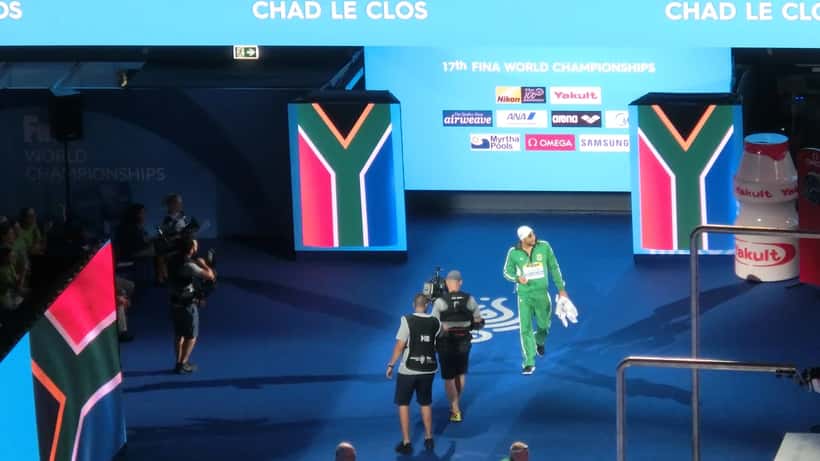
 Abigail Clarke
As Chad le Clos dived into the Glasgow pool on 24 July 2026, he carried eighteen Commonwealth medals and thirty-four years of experience. The South African butterfly specialist is chasing a record 19th medal — more than any male athlete in the Games' history — and doing it at an age when most elite swimmers have long retired. What his body can do at 34, sports medicine experts say, holds lessons that extend far beyond the pool.
The Story Behind the Record Chase
Le Clos won gold in the 100m butterfly at the South African National Championships in April 2026, clocking 52.18 seconds to beat swimmers a decade his junior. He has competed at six Commonwealth Games since Glasgow 2010 and still holds world records in his discipline. His ambition stretches further still: LA28, when he would be 36 years old, remains a stated goal.
This is not the story of a fading champion clinging to relevance. According to research published in the British Journal of Sports Medicine, swimmers and cyclists are among the few athletic populations where peak performance windows can extend well into the mid-30s — particularly in events that reward aerobic efficiency over raw explosive power. Le Clos competes across the 50m, 100m, and 200m butterfly, a range spanning both anaerobic power and sustained endurance output. His sustained excellence across that spectrum is physiologically unusual and strategically built over decades of professional support.
What Sports Medicine Says About Performing in Your 30s
The assumption that athletic performance declines sharply after 28 is increasingly challenged by performance data. UK Sport's long-term athlete development framework identifies elite performers in technical and aerobic disciplines as frequently reaching genuine performance peaks between 28 and 34, once decades of technical refinement compound with a fully matured aerobic system.
Several physiological mechanisms explain this. Slow-twitch muscle fibres — responsible for sustained aerobic output — are substantially more resistant to age-related decline than fast-twitch fibres, which generate explosive speed. Swimming is also a non-impact sport, meaning cumulative mechanical stress on joints is far lower than in running or contact sports, and recovery windows remain manageable for longer.
But physiology brings real trade-offs. After 30, VO2 max — the standard measure of aerobic capacity — declines at approximately 1% per year in untrained individuals. Elite athletes slow that decline dramatically through structured training, but they cannot reverse it. What they learn instead is to compensate: through superior race tactics, refined stroke mechanics, and far more disciplined load management than they applied in their 20s.
Le Clos has spoken publicly about restructuring his training as he entered his 30s — reducing raw training volume, lengthening recovery intervals, and working more closely with physiotherapists, nutritionists, and sports doctors than at any earlier point in his career. That professional support network is, his coaching team has confirmed, the central pillar of his continued performance.
Why Recreational Athletes Over 30 Should Pay Attention
Le Clos operates at an extraordinary level. But the principles behind his longevity apply directly to anyone who swims, cycles, runs, or trains recreationally past the age of 30.
Sport England's Active Lives 2025-26 survey estimates that 9.7 million people aged 35-64 in the UK participate regularly in physical activity or amateur sport. Many encounter exactly the challenge le Clos has navigated: the body's recovery demands change with each passing year, but the ambition and enjoyment driving training do not. That gap — between what the body now needs and what training is delivering — is precisely where avoidable injuries occur.
Common patterns in recreational athletes over 30 include extended recovery time after intense sessions (from 24 hours to 48-72 hours), increased muscle soreness at identical training loads, persistent joint discomfort that does not fully resolve with rest, and reduced sleep quality after late evening training.
None of these signals indicate irreversible decline. Most are indicators of under-recovery: a training load that has not been recalibrated to match the body's current recovery capacity. In most cases, the appropriate intervention is adjusting load intelligently — not stopping training.
Concrete Case: What the Numbers Actually Mean
Consider a 37-year-old recreational swimmer who has trained four sessions per week for three years and recently added a fifth — a weekly high-intensity interval set — ahead of a local masters competition. Within four weeks, they notice shoulder discomfort that now takes 48-60 hours to resolve, rather than the 24 hours that was previously typical. There is also a persistent click on the forward reach phase of each stroke.
If this person follows the common self-management approach and trains through the discomfort, data from the British Swimming Sports Medicine Programme suggests a roughly 1-in-3 probability of developing supraspinatus tendinopathy within 8-12 weeks. That condition typically extends enforced rest or modified training to 3-6 months, requiring physiotherapy, imaging, and in some cases corticosteroid injection.
The earlier intervention path produces a substantially different outcome. A sports physiotherapist assessment at week 4 — at the point where the 48-hour recovery window first becomes notable — would typically identify glenohumeral impingement as the mechanism driving the discomfort. The standard recommendation at that stage: reduce total training volume by 20-30% (returning to four sessions), temporarily replace the interval set with a low-load technique session, and introduce a 10-minute rotator cuff activation sequence before each swim.
At that intervention point, resolution typically takes 2-4 weeks of modified training. The financial comparison is clear: a private sports physio initial consultation in the UK costs approximately £65-£95, versus a full shoulder imaging and multi-session physiotherapy package running £400-£750 once a tendinopathy is established. More significantly, the time cost — 3 weeks of modified training versus 3-6 months of restricted or suspended activity — is far greater than the monetary one.
The specific trigger point worth remembering: if you are a recreational athlete over 30 and your usual recovery window extends by more than 50% (from 24 hours to 36 hours or beyond), or if discomfort persists beyond a full rest day, that is the window in which a sports medicine or physiotherapy consultation delivers its clearest return. It is also, not coincidentally, the window in which intervention is cheapest and fastest.
What Le Clos Gets Right — and What You Can Apply
Le Clos's longevity is not accidental, and it is not purely a product of exceptional genetics. It reflects a structured approach to load management, professional support, and technical investment that recreational athletes can meaningfully replicate.
Recovery is training. Le Clos has stated repeatedly that his recovery protocols — sleep, nutrition, and physiotherapy work — are scheduled and protected as seriously as pool sessions. For recreational athletes, this means sleep duration (7-9 hours for those training regularly) and protein intake (1.6-2.2g per kilogram of bodyweight for those training three or more times weekly) are not optional additions to the programme.
Volume before intensity. When increasing training load, adding session frequency before increasing session intensity substantially reduces injury risk. A fifth swim session should be established and tolerated before hard interval work is added — not introduced simultaneously.
Technical investment compounds. Le Clos has refined his butterfly mechanics over 25 years of coached practice. Recreational swimmers who invest even occasionally in stroke coaching are less likely to develop the compensatory movement patterns — particularly in the shoulder complex — that generate most overuse injuries.
Seek professional assessment proactively. The single most consistent predictor of avoidable long-term injury in recreational athletes is delayed professional consultation. Le Clos does not see his sports medicine team only when injured; professional input is embedded in the ongoing training structure. For recreational athletes, this means treating a sports physio assessment when symptoms first appear — not after months of self-management — as the default response.
The Takeaway from Glasgow 2026
Chad le Clos competing at 34 for a record 19th Commonwealth medal is a compelling story. It is also a practical demonstration of what professional, structured athletic support can sustain over time. The principles are not exclusive to Olympians.
If you are over 30 and training regularly, and you have noticed shifts in recovery time, persistent discomfort that outlasts rest days, or a plateau you cannot explain, a sports medicine or physiotherapy consultation is the appropriate next step. An expert can assess your specific load, biomechanics, and recovery markers — and build a programme that keeps you competing and enjoying training for the long term, not just through this season.
This article is for informational purposes only and does not constitute medical advice. For any persistent pain or injury, consult a qualified sports medicine professional or physiotherapist.
