 Imogen Bennett
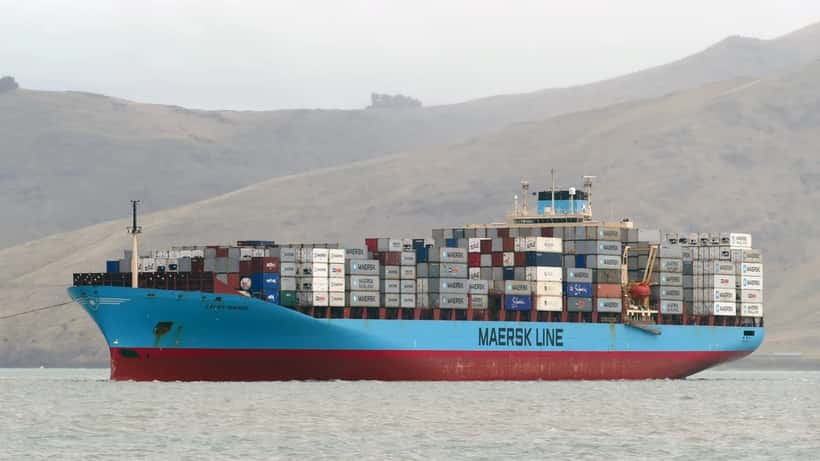
Iran seized two container ships in the Strait of Hormuz on 22 April 2026, further escalating a maritime crisis that has brought shipping traffic in one of the world's most critical waterways to a near-standstill — with direct and immediate consequences for UK businesses that depend on global supply chains.
The vessels, the Francesca and the Epaminondas, were seized by Iran's Islamic Revolutionary Guard Corps (IRGC) Navy following an earlier American seizure of the Iranian cargo vessel Touska on 19 April. The moves represent a significant escalation in the ongoing standoff between Washington and Tehran that has closed the Strait of Hormuz to normal commercial shipping since February 2026.
The Strait of Hormuz: Why It Matters to British Businesses
The Strait of Hormuz connects the Persian Gulf to the Gulf of Oman and handles a disproportionate share of global trade — including roughly 20% of the world's oil and liquefied natural gas supply. Under normal conditions, approximately 138 vessels transit the strait daily. According to shipping data cited by the Daily Sabah, that figure has now collapsed to single digits.
For UK businesses, the consequences are compounding rapidly. The UK is a net energy importer, and restricted LNG shipments are feeding directly into rising utility costs. Fertiliser exports through the region have also been disrupted, with knock-on effects for UK agricultural supply chains. Meanwhile, companies importing goods from the Gulf, East Africa, and South Asia face significantly longer lead times as vessels reroute around the Cape of Good Hope — adding an estimated six to eight weeks to transit times and substantially increasing fuel and freight costs.
The UK government's Foreign, Commonwealth & Development Office (FCDO) travel and trade advisory for Iran has been updated to reflect the escalating maritime risks, warning businesses of the elevated danger to shipping in the Arabian Gulf, Strait of Hormuz, and Gulf of Oman.
UK Government Response and Diplomatic Efforts
The British government has moved quickly to address the crisis. On 9 April 2026, UK Foreign Secretary Yvette Cooper publicly rejected Iran's attempts to impose toll collection on ships transiting the strait — a demand seen as legally unenforceable under international maritime law. Prime Minister Keir Starmer subsequently confirmed that the UK is working with France, the United States, and other allies to assemble a diplomatic and potentially defensive coalition to keep the strait open.
On 14 April, the UK and France announced a joint "defensive multilateral mission" to ensure commercial shipping can pass through the waterway. However, given the ongoing seizures as recently as 22 April, the impact of these efforts remains limited.
For British businesses, diplomatic resolutions typically unfold over months or years. The operational disruption is happening now.
What This Means for Your Business Finances
The Strait of Hormuz crisis creates four distinct categories of financial risk for UK businesses.
Rising input costs. Energy price spikes driven by restricted LNG supply are pushing up overhead costs across all sectors. The Office for Budget Responsibility warned in its March 2026 Economic and Fiscal Outlook that the Middle East conflict could have "very significant impacts" on the UK economy. Businesses with energy-intensive operations face particular exposure.
Insurance premium increases. Maritime insurance premiums for vessels in the region have risen sharply. Some underwriters have cancelled cover entirely for ships transiting the affected waterway. UK businesses with supply contracts that include shipping insurance clauses may find their contracts affected — or find themselves self-insuring risks they had previously passed to carriers.
Force majeure and contract disputes. Many shipping contracts and supply agreements include force majeure clauses that may be triggered by geopolitical events. If your supplier is unable to deliver on time due to the crisis, or if you cannot fulfil your obligations to customers, the question of who bears the resulting financial loss will depend on the precise language of your contracts. According to the House of Commons Library research briefing CBP-10601, the UK economy is already experiencing supply constraints linked directly to the Middle East conflict.
Currency and payment risks. Businesses with outstanding payments or receivables in Gulf-linked currencies, or with contracts priced in US dollars, may face additional foreign exchange exposure as the crisis evolves.
Practical Steps: What to Do Now
While diplomatic and military developments remain unpredictable, there are concrete steps UK businesses can take immediately to protect their financial position.
Audit your supply chain exposure. Map every supplier and logistics provider that routes goods through the Gulf region, the Strait of Hormuz, or across the Indian Ocean. Understand which contracts are at risk and what alternative sourcing or routing options exist.
Review your insurance coverage. Ask your insurer or broker whether your marine or trade credit insurance policy covers disruptions caused by geopolitical seizures. Review any war-risk exclusions carefully. Standard cargo policies often exclude losses arising from government seizure or acts of war without specific endorsements.
Check your contracts for force majeure clauses. Identify which contracts — whether with suppliers or customers — include force majeure provisions, and what the trigger conditions are. Understand your notification obligations: failure to issue a timely force majeure notice can forfeit your right to invoke the clause.
Engage a financial adviser. Businesses facing significant supply disruption, rising costs, and contractual uncertainty should not manage these risks in isolation. A qualified financial adviser or wealth manager can help model the financial impact of different scenarios, assess hedging strategies for currency and commodity price exposure, and identify whether your business needs emergency liquidity support.
Expert Zoom connects you with experienced wealth managers and financial advisers who work with UK businesses navigating supply chain uncertainty and economic volatility. Getting independent financial guidance now — rather than after costs have spiralled — is the most effective risk management strategy available.
This article is for informational purposes only and does not constitute financial or legal advice. Please consult a qualified professional for guidance specific to your business circumstances.
