 Amelia Ward
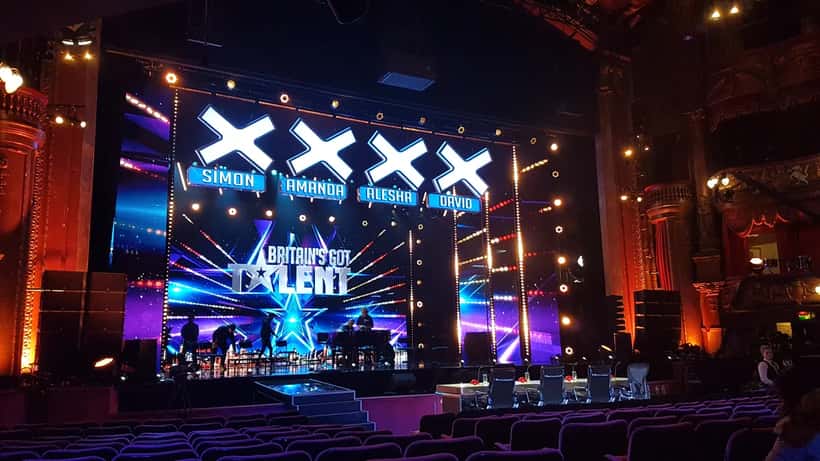
Singer Matty Juniosa brought the Britain's Got Talent studio audience to its feet on Saturday, 25 April 2026, earning his second golden buzzer of the series — this time from judge Amanda Holden — and a direct place in the grand final. Watched by millions across the UK on ITV1 and ITVX, his performance was one of eight acts competing in the show's first live semi-final. But while viewers celebrated from their sofas, fewer considered what it actually takes to step under those lights — and the psychological reality facing anyone who does.
For the eight acts on that ITV stage — including dog performer Anastasiia, magician Fraser Penman, acrobatic quartet The Rafikiz, and comedian Christy Coysh — performing before a live studio audience and a prime-time television nation requires navigating something that affects far more people than professional entertainers.
What Is Performance Anxiety?
Performance anxiety, commonly known as stage fright, is the fear or dread that arises when an individual must perform in front of others and anticipates negative evaluation of the result. It is one of the most widespread forms of anxiety in the UK, affecting musicians, public speakers, teachers, job candidates, and anyone required to demonstrate their abilities under observation.
The experience is rooted in the brain's threat-response system. When the brain perceives social evaluation as a danger — "they are watching me and I may fail" — it activates the same physiological machinery used to handle physical threats. Heart rate increases. Muscles tense. Perspiration rises. The voice can tremble. Cognitive functions including memory and short-term recall can temporarily falter. For a contestant standing before a television panel and a live studio audience, these sensations can feel overwhelming rather than manageable.
The crucial distinction is that performance anxiety is not a character weakness or a sign of insufficient preparation. It is a physiological response to a genuinely high-stakes social situation — and it affects people at every level of skill and experience.
The UK Statistics Behind Stage Fright
Britain's Got Talent consistently attracts hundreds of thousands of applicants each series, meaning that stage fright is a lived experience for a significant portion of the population. The data supports this scale.
According to the Priory Group, 37.1% of women and 29.9% of men in the UK currently report high levels of anxiety. In any given week in England, six in 100 people are diagnosed with Generalised Anxiety Disorder. And according to NHS data, in 2023–24 there were 204,526 new referrals for anxiety in under-17s in England — more than double the rate recorded before the pandemic.
These figures are not specific to performance settings, but they indicate the population-level prevalence of anxiety that performance situations can trigger or amplify. For anyone who has felt their hands shake before a presentation, their voice crack before a speech, or their mind go blank before a job interview, performance anxiety is not an abstract clinical concept — it is an immediate, visceral experience.
Who Is Most Vulnerable?
Performance anxiety is particularly acute in situations combining three factors: high stakes, evaluation by others, and limited room for correction. A Britain's Got Talent live semi-final combines all three in extreme form. But the same conditions appear in everyday professional life — sales pitches, court appearances, medical consultations, teaching, and public speaking roles.
Research published in the journal Psychology of Music found that up to 59% of music students experience performance anxiety at a clinically significant level. The condition is not limited to amateurs or novices: experienced professionals frequently describe identical psychological patterns re-emerging under new pressures or higher-stakes situations.
Young performers face a compounded challenge. The prefrontal cortex — responsible for emotional regulation and rational perspective-taking — does not fully mature until the mid-twenties. Adolescents and young adults who audition for televised competitions are physiologically more vulnerable to the full-body impact of fear responses, and less able to self-regulate them without support.
When Should You Seek Professional Help?
The threshold between healthy pre-performance nerves and debilitating anxiety is one of degree and daily impact. A degree of nervousness before performing is not only normal — many performers report that eliminating it entirely would reduce their edge. The question is whether anxiety is enhancing or obstructing your ability to function.
Professional support is warranted when performance anxiety:
- Prevents you from accepting opportunities — declining auditions, promotions, presentations, or social invitations because the anticipated fear feels unmanageable
- Begins days or weeks before an event, disrupting sleep, concentration, and daily functioning
- Produces disproportionate physical symptoms — persistent trembling, nausea, hyperventilation, or heart palpitations unrelated to the actual risk of the situation
- Follows you after the event — prolonged self-critical rumination that does not resolve naturally over hours or days
A GP is typically the appropriate first contact. They can assess whether your experience meets diagnostic criteria for Social Anxiety Disorder or Generalised Anxiety Disorder, refer you for NHS-funded talking therapies, or discuss targeted short-term options for acute situations.
What Professional Treatment Involves
Cognitive behavioural therapy (CBT) is the NICE-recommended treatment for performance anxiety and social anxiety in the UK. CBT works by identifying the automatic thought patterns that amplify fear — such as catastrophising ("everyone will notice if I forget the words") or mind-reading ("the judges already think I'm not good enough") — and systematically replacing them with more proportionate, evidence-based thinking.
Other evidence-supported approaches include:
- Exposure therapy: Gradually confronting the feared situation — rehearsing before progressively larger groups — to reduce the anxiety response through repeated, non-catastrophic experience
- Mindfulness-based cognitive therapy: Training attention to remain anchored in the present moment, reducing the anticipatory worry that often exceeds the anxiety of the event itself
- Prescribed beta-blockers: Used by a doctor for specific high-stakes occasions to reduce the physiological symptoms of anxiety — rapid heartbeat, trembling — without impairing cognitive function
A therapist with specific experience in performance anxiety — one who works with musicians, actors, public speakers, or professionals in high-evaluation roles — can tailor these approaches to the precise context that triggers your anxiety.
Finding the Right Support
For anyone watching Matty Juniosa receive his golden buzzer and feeling certain that could never be them, the evidence suggests the obstacle is more psychological than it is to do with talent. Professional intervention makes a measurable, clinically validated difference.
ExpertZoom connects you with certified health professionals — GPs and therapists with experience in anxiety and performance-related mental health — who can help you identify the right pathway, whether that is NHS talking therapies, a private CBT programme, or targeted medical support for a specific high-pressure situation.
Medical disclaimer: This article is for informational purposes only and does not constitute medical advice. If you are experiencing symptoms of anxiety or mental health difficulties, please consult a qualified healthcare professional.
