 Amelia Davies
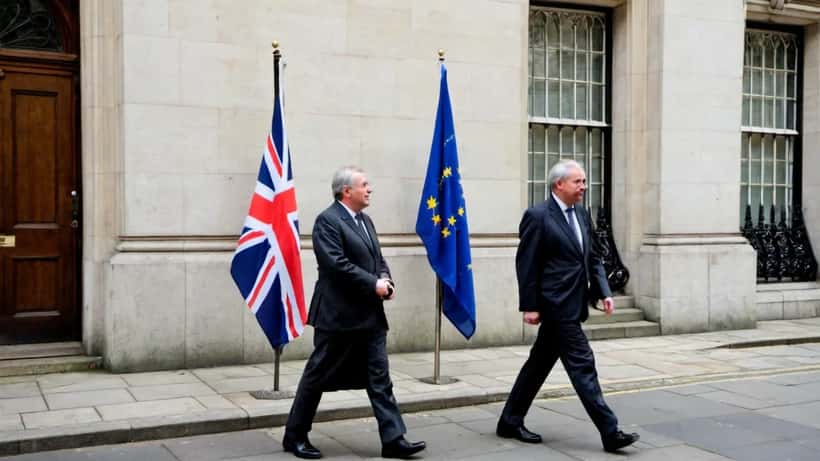
Prime Minister Keir Starmer announced on 1 April 2026 that a new UK-EU summit will take place imminently, marking the most significant shift in post-Brexit relations since the UK left the European Union in January 2020. With closer economic and security cooperation on the table, the announcement has reignited questions about what this reset means for individuals, businesses, and anyone whose legal rights were reshaped by Brexit.
What Starmer's Brexit Reset Actually Involves
The UK-EU reset is not a reversal of Brexit. Britain remains outside the single market and customs union. What is changing is the tone and ambition of the relationship. The April 2026 summit follows the inaugural post-Brexit UK-EU summit held in May 2025, which focused primarily on trade friction reduction.
The new summit will address two areas simultaneously: closer economic cooperation and closer security cooperation. This dual focus is significant. On the economic side, discussions are expected to include mutual recognition frameworks for professional qualifications, reduced customs red tape for small businesses, and smoother movement of goods. On security, the conversation extends to defence, intelligence sharing, and cybersecurity collaboration.
According to government sources cited in April 2026 briefings, around 60% of British people now view Brexit as a mistake. That public sentiment is shaping the political urgency behind Starmer's approach. But for ordinary citizens, the question remains practical: what does this reset actually change for my rights, my business, or my freedom to live and work in Europe?
Your Legal Rights in a Post-Brexit World
Since the UK formally left the EU, a series of legal rights were frozen, amended, or entirely lost. Understanding which rights still apply — and which are being renegotiated — requires specialist legal knowledge.
Right to work and live in the EU. Freedom of movement ended on 31 December 2020. UK citizens no longer have an automatic right to live, work, or retire in any EU member state. Each country now applies its own national visa rules. For example, a UK citizen wanting to move to France for work must apply through France's immigration system independently.
EU Settled Status for existing residents. UK citizens who were living in an EU country before the transition ended, and who registered under that country's resident protection scheme, retain most of their pre-Brexit rights. However, those rights are only as strong as the Withdrawal Agreement — an international treaty that can, in theory, be renegotiated.
Reciprocal healthcare. The European Health Insurance Card (EHIC) is no longer available to new UK applicants. UK travellers and temporary residents in Europe must now rely on travel insurance or private cover, and the terms vary country by country. The 2026 UK-EU discussions include some form of healthcare reciprocity restoration, but nothing is finalised.
Professional qualifications. Before Brexit, a solicitor, nurse, or architect qualified in the UK could have their credentials recognised across all EU member states. That automatic recognition ended. The reset summit in 2026 is specifically exploring mutual recognition agreements (MRAs) that could restore some of this, but any agreement will take years to implement.
What the Reset Could Mean for Businesses
UK businesses exporting to the EU have faced additional costs since 2021. The Trade and Cooperation Agreement (TCA) eliminated tariffs on most goods but introduced significant non-tariff barriers — customs declarations, rules of origin requirements, and sanitary and phytosanitary (SPS) checks on food products.
Small and medium enterprises have been disproportionately affected. A 2025 UK Office for National Statistics analysis found that goods exports to the EU fell by approximately 18% in volume terms compared to pre-Brexit trends. The April 2026 summit is expected to include discussions on reducing these friction points.
For businesses in regulated sectors — financial services, legal services, data — the reset conversations are particularly consequential. UK-based financial firms currently operate under a patchwork of temporary equivalence decisions. A more structured UK-EU regulatory framework could stabilise market access, but until agreements are signed, legal uncertainty remains high.
Data protection is another area of active negotiation. The UK's adequacy decision from the European Commission, which allows UK businesses to receive personal data from EU customers without additional legal mechanisms, is subject to renewal. Any divergence between UK GDPR and EU GDPR rules could trigger a data adequacy review.
When to Speak to a Legal Expert
The Brexit reset creates a deceptive sense of resolution. Headlines about closer cooperation can mask the fact that individual rights and business obligations have not yet changed. Until new treaties are ratified, the current legal framework — built under the TCA and Withdrawal Agreement — governs your situation.
There are specific circumstances where consulting a lawyer now is worth the conversation:
- You are a UK citizen living in an EU country and unsure whether your residence rights are protected
- Your business exports goods to the EU and you want to understand your exposure if SPS rules are tightened
- You were an EU citizen working in the UK and your settled or pre-settled status is coming up for review — see also What the 2026 UK Foreign Policy Shift Means for Expats and EU Citizens
- You hold a UK professional qualification and want to practice in an EU member state
- You are a small business owner affected by HMRC customs compliance and want clarity before rule changes
According to GOV.UK guidance on Brexit and your rights, individuals should always verify their status under the relevant country's national law, not rely solely on general UK government advice.
The Long View: Brexit Is Still Being Written
The decade since the 2016 referendum has demonstrated that Brexit is not a single event but an ongoing legal process. Each summit, each reset, and each new agreement reshapes the rules — sometimes quietly, without public announcement.
For individuals and businesses, the most reliable response to this uncertainty is not to wait for clarity to arrive in the news. It is to understand your own specific situation today and to build that understanding with qualified legal advice. A lawyer specialising in UK-EU cross-border matters can map out where you stand, what risks apply to your circumstances, and what steps you can take to protect your position as negotiations evolve.
This article contains general information only and does not constitute legal advice. If your situation involves specific rights under the Withdrawal Agreement or the Trade and Cooperation Agreement, consult a qualified solicitor.
