 Rebecca Taylor
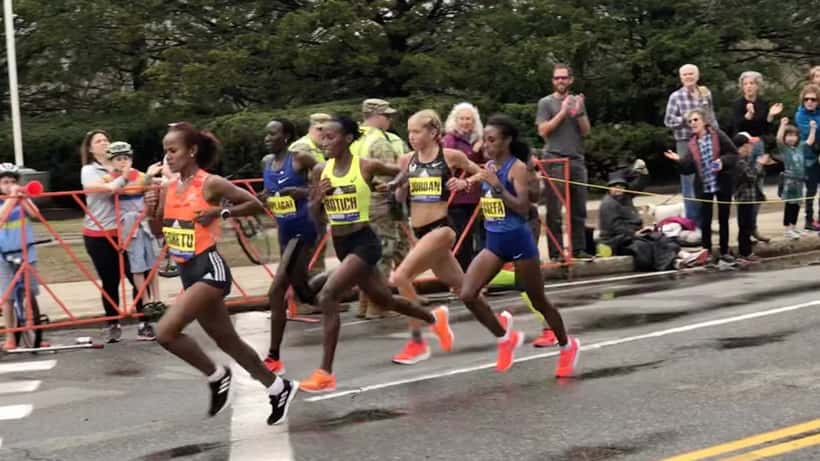
The 130th Boston Marathon takes place today, 20 April 2026, with 30,000 runners from 123 countries navigating 26 miles and 385 yards through the streets of Massachusetts. It is the world's oldest annual marathon — and one of the most medically intense endurance events on the planet, deploying 1,600 medical volunteers to handle race-day injuries. For the millions of British amateur runners lacing up their trainers this spring, the injuries that sideline even elite Boston competitors contain lessons that could save months of recovery time.
What Injuries Strike Most at Boston?
Boston is notoriously difficult on legs. The first 21 miles feature net downhill running, particularly the punishing Heartbreak Hill descent before mile 17, which shifts mechanical load dramatically onto the quadriceps and knee joints compared with flat or mixed-terrain races. Race medics see a predictable cluster of conditions regardless of the athlete's level.
Iliotibial band syndrome (ITBS) — the sharp lateral knee pain colloquially called "runner's knee" — is among the most common presentations at major marathons. The IT band, a thick fascia running from the hip to the shin, becomes inflamed through repetitive flexion, especially on downhill gradients. Runners who have trained predominantly on flat roads are disproportionately vulnerable when encountering hilly courses.
Stress fractures affect between 1% and 2% of marathon runners annually, according to sports medicine literature. The metatarsal bones of the foot and the tibia are the most common sites. Stress fractures often present as a dull ache that worsens during a run and eases with rest — a warning sign that is too frequently ignored in the adrenaline of race day.
Hyponatraemia — dangerously low blood sodium caused by drinking too much plain water during a long run — is a condition that hospitalises runners at every major marathon. Counterintuitively, it is more common in slower, recreational runners than in elite athletes, because they spend more time on course and tend to over-drink. Symptoms including nausea, headache, confusion, and in severe cases seizures can be mistaken for dehydration.
Rhabdomyolysis — muscle breakdown releasing proteins into the bloodstream that can damage the kidneys — occurs at a spectrum of severity from mild to life-threatening. Extreme exertion, inadequate training for the distance, and hot conditions are the main risk factors.
The Weekend Warrior Problem in the UK
The Boston Marathon's medical team will see the full spectrum from elite professionals to 70-year-old charity runners completing their bucket-list race. British runners face a particularly recognisable pattern: undertrained for the full distance, overconfident from previous shorter events, and reluctant to visit a GP or sports medicine specialist until the injury forces the issue.
According to NHS guidance, most running-related injuries stem from doing too much, too soon, too fast — the three cardinal errors of recreational athletes. A GP or physiotherapist can assess biomechanical risk factors such as gait, foot strike pattern, and hip stability before they become the injuries that cost an entire season of training. The NHS provides detailed guidance on preventing and managing sports injuries at www.nhs.uk/conditions/sports-injuries/.
When "Running Through It" Is the Wrong Decision
The instinct to push through discomfort is deep in running culture. But the ability to distinguish between acceptable training discomfort and injury-signalling pain is one of the most valuable skills an amateur athlete can develop — and one that a sports medicine doctor or physiotherapist can teach far faster than trial and error.
You should see a doctor if:
- Knee or hip pain sharpens after 20-30 minutes of running and does not resolve within 48 hours of rest
- Pain is localised to a specific bone (particularly the foot or shin) and worsens when you press on it
- You experience dizziness, chest pain, or confusion during or after a run
- A previously reliable pace begins to feel disproportionately hard without any training load explanation
- Swelling, bruising, or visible deformity accompanies any impact injury
Delaying assessment of a stress fracture can turn a 6-week recovery into a 3-month one if the bone progresses to a complete break. Early intervention by a sports medicine specialist dramatically improves outcomes across the injury spectrum.
You can also find further advice from related Expert Zoom content: London Marathon 2026: The Training Injuries You Should Know and Brighton Marathon 2026: The Injuries Doctors See Most.
Smart Training Reduces Boston-Style Injuries
Whether you are preparing for a local 10K or your first full marathon, the core principles of injury prevention overlap across all distances:
Increase mileage incrementally. The broadly cited "10% rule" — adding no more than 10% to your weekly mileage each week — remains a sound baseline for most recreational runners. Rapid mileage spikes are the single most predictable cause of overuse injuries.
Strengthen, not just run. Hip abductor weakness is a primary risk factor for ITBS and runner's knee. Single-leg exercises, glute bridges, and lateral band walks build the muscular support that reduces joint stress during the repetitive impact of running.
Respect recovery. Sleep, nutrition, and rest days are training. Overtraining syndrome is a medically recognised condition that reduces performance, increases injury risk, and can suppress immune function for months.
Taper before a major event. Boston runners are tapering their training now, in the weeks before the race. Reducing mileage while maintaining intensity in the final 2-3 weeks before a marathon is well-established in sports medicine literature as reducing race-day injury risk and improving performance.
How Expert Zoom Can Help
If you are dealing with a running-related injury — from the familiar runner's knee to something more concerning that has not resolved with rest — Expert Zoom connects you directly with qualified sports medicine doctors, physiotherapists, and orthopaedic consultants across the UK. You do not need a GP referral, and first consultations are available within days rather than weeks. Expert assessment early in the injury process means shorter recovery time and a faster return to the sport you enjoy.
Today, 30,000 runners will be testing the limits of human endurance in Boston. Every one of those athletes, from the elite Ethiopians targeting course records to the charity runners finishing long after dark, is a reminder of what the human body can achieve — and the expert support it sometimes needs to get there.
