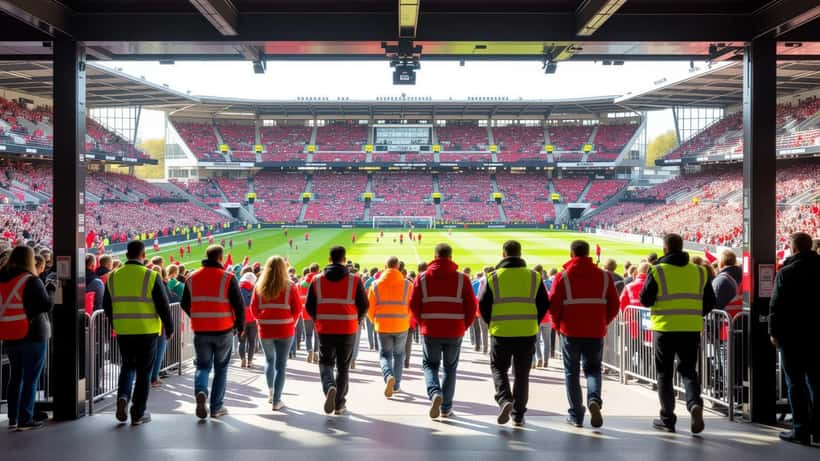
The Birmingham vs Huddersfield fixture in the 2026 EFL Championship is shaping up to be one of the more closely watched encounters of the season, not only for the result on the pitch but for what it reveals about modern match-day governance. With both clubs operating under heightened scrutiny from the league, local authorities, and supporter groups, the game is a practical case study in how stadium safety, ticketing policy, and fan conduct intersect. For organisers, legal advisers, and venue operators, it is also a timely reminder that the biggest risks often sit outside the ninety minutes of play.
A match of this profile carries more than the usual logistical load. Birmingham's home ground is expected to draw a substantial travelling contingent from West Yorkshire, which means coordinated transport, segregation, and stewarding plans must be in place well before kick-off. The recent WBA points deduction case showed how quickly off-field compliance failures can overshadow sporting performance, and the same regulatory framework now applies to every Championship host. Clubs that treat match-day preparation as a compliance exercise, rather than a last-minute checklist, are the ones that avoid the costly penalties and reputational damage that follow an incident.
One area that deserves particular attention is the duty of care owed to spectators. Under the Sporting Events (Control of Alcohol etc.) Act 1985 and the relevant guidance from the Sports Grounds Safety Authority, a host club must take reasonable steps to protect fans from foreseeable harm. That duty extends to crush risks, inadequate signage, poor lighting, and even the management of hostile behaviour in adjacent areas. In practice, this means a risk assessment that is specific to the fixture, updated for the expected crowd profile, and signed off by someone with the authority to act on it. Generic templates copied from a previous game will not suffice if the evidence shows that the risks were different and known.
Ticketing and access control are equally important. All-seater requirements, disabled access obligations, and anti-discrimination policies must be enforced consistently. Where a club uses digital ticketing, there is an added layer of data-protection compliance. Any breach that exposes supporter data can lead to enforcement action by the Information Commissioner's Office, as well as civil claims. The costs of getting this wrong are now high enough that most clubs treat data security as a board-level issue rather than an IT matter.
Fan behaviour remains a sensitive topic. While the overwhelming majority of supporters attend without incident, high-profile fixtures can attract individuals whose conduct creates liability for the host. The use of pyrotechnics, discriminatory chanting, and pitch incursions are not merely disciplinary issues; they can amount to criminal offences and expose the club to sanctions from the EFL. Proactive communication with supporter groups, clear steward briefings, and rapid reporting to the police are the standard controls. What matters in law is whether those controls were reasonable in the circumstances, and whether they were actually implemented.
From a commercial perspective, the fixture also highlights the value of specialist advice. Clubs increasingly rely on external consultants for crowd safety, licensing, and regulatory compliance. The same is true for broadcasters, sponsors, and hospitality providers who need to understand their own liabilities. In a market where a single safety failure can lead to cancelled insurance cover and cancelled contracts, the cost of early professional input is usually modest compared with the cost of a dispute.
Medical preparedness is another point that expert observers will watch closely. Every professional ground must have a medical plan, but the quality of that plan varies. For a fixture with a large away following, the plan should account for the increased likelihood of alcohol-related incidents, the distance some fans have travelled, and the pressure on local emergency services. Delayed or inadequate medical response can form the basis of a negligence claim, particularly if the injury was foreseeable and the resources on hand were plainly insufficient.
For fans attending the Birmingham vs Huddersfield match, the practical message is to arrive early, follow steward instructions, and keep tickets and identification accessible. For the professionals running the event, the message is more complex: compliance is not a box-ticking exercise, and the legal environment around spectator safety continues to tighten. The clubs that invest in expert advice and treat match-day operations as a managed risk are the ones that protect both their supporters and their business.
The fixture will also be watched by insurers and risk managers across English football. A clean, well-managed event reinforces the case for stable premiums and continued investment in stadium infrastructure. A poorly managed one can have the opposite effect, raising costs for the wider league. In that sense, every major match is a data point in a longer conversation about how the sport balances spectacle with responsibility.
Looking ahead, the 2026 season is likely to bring further guidance from the Sports Grounds Safety Authority on issues such as safe standing, digital ticketing, and crowd density monitoring. Clubs that start preparing now will be in a much stronger position when those changes take effect. Those that wait for a mandate may find themselves scrambling to comply while also managing the ordinary pressures of a Championship campaign.
The Birmingham vs Huddersfield match is therefore about more than three points. It is a working example of how sports law, safety engineering, and fan engagement come together in a single afternoon. For anyone advising clubs, venues, or regulators, it is a useful opportunity to review whether current practices would survive scrutiny if something went wrong. The best time to answer that question is before kick-off, not in the aftermath.
