 Harriet Price
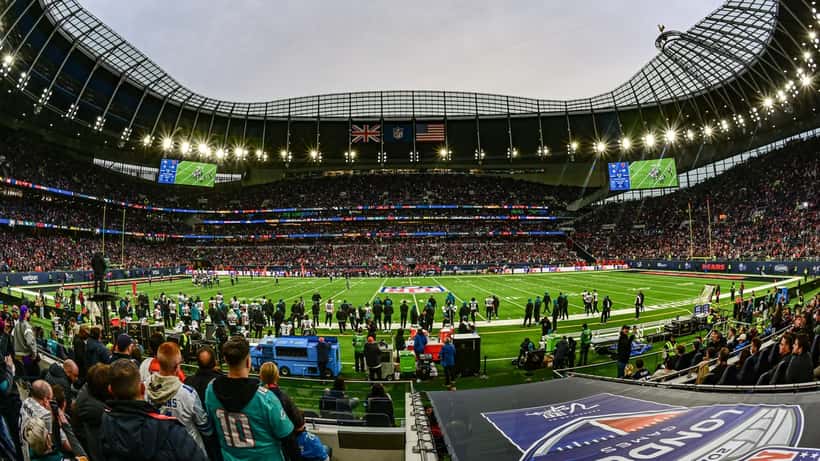
Thursday Night Football delivered one of the most breathtaking matchups of the 2026 NFL season when the Buffalo Bills edged the Detroit Lions 48–42 in a Week 2 thriller on 17 September 2026. For millions of UK fans who placed bets on the game — from spread bets and over-unders to touchdown scorer props — the final scoreline was either a welcome windfall or a painful near-miss. But for a growing number of British bettors, the result came with an unwelcome addition: a restricted account, a refused withdrawal, or a mandatory spending cap imposed mid-process with almost no explanation.
With the Gambling Commission's landmark 2026 reforms now fully in force, the regulatory ground beneath every UK sports bettor has shifted — and most people who backed the Bills or the Lions have no idea how many new rights they actually hold.
Why So Many NFL Bettors Are Getting Caught Out in 2026
The Gambling Commission's sweeping rule changes, phased in throughout late 2025 and across 2026, have fundamentally altered what UKGC-licensed operators can and must do with your account. The single most consequential change came into force on 2 April 2026: mandatory affordability checks across all licensed remote gambling operators in Great Britain.
Under the two-tier financial risk framework now in place, operators must conduct enhanced due diligence if your net losses exceed defined thresholds within a 90-day rolling window. In practice, that means a losing run — even a single large accumulator gone wrong on a high-scoring game like Bills vs Lions — can trigger a demand for payslips, bank statements, or proof of income before your account is allowed to continue functioning.
For the Bills–Lions matchup alone, the over-under was set at 52.5 points. The game finished at 90 total points. Bettors who had taken the over and won found themselves in the paradoxical situation of having a profitable outcome while simultaneously being flagged for compliance review because of their deposit history over the preceding three months. Settled bets are protected under UKGC rules — but withdrawing those winnings is where things quickly get complicated.
Earlier changes compound the problem. From October 2025, operators were required to prompt every new account holder to set a financial deposit limit before placing their first bet, with the limit accessible from the homepage and any deposit screen. If you set a limit during registration and have since increased it multiple times, operators are now required to log each change and may use the pattern as a risk indicator. Casual NFL fans — many of whom only bet seasonally on marquee games — are being swept up in frameworks built for problem gambling intervention.
What UK Gambling Law Actually Guarantees You
Under the Gambling Act 2005 and the UKGC's Licence Conditions and Codes of Practice (LCCP), operators must ensure that terms are fair, that customer funds are ring-fenced, and that genuine dispute resolution is accessible. Several of these protections are routinely misunderstood or ignored by operators under pressure:
You cannot be permanently excluded without explanation. If an operator restricts or closes your account, they are legally required to communicate the reason, return your full balance promptly, and honour all bets placed and settled before the restriction was applied. They cannot retrospectively void a winning bet that was accepted at standard odds.
Affordability checks must be proportionate. UKGC guidance is explicit: operators must not demand documentation for losses below the trigger thresholds without additional cause. If your account was flagged despite losses that sit below the stated threshold, you have grounds to challenge the request formally.
Bonus terms now have a legal ceiling. Since January 2026, operators are banned from bundling bonuses across product types — if you were offered a sports welcome bonus, it cannot be subject to casino wagering requirements. Wagering requirements are capped at 10 times the bonus amount. Any welcome offer applied to your Bills vs Lions bet that carried terms above that cap is legally unenforceable in Great Britain.
The Gambling Commission's enforcement record demonstrates that these rules carry real weight. Financial penalties against non-compliant operators have exceeded £100 million cumulatively since 2024, and licence revocations have accelerated. That enforcement history gives individual consumers genuine leverage in disputes. Understanding UK sports betting rules more broadly — including how UK law treats international fixtures — is explored in our earlier piece on UK sports betting legal rights.
The Expert View: Three Scenarios Where Legal Advice Changes Everything
Consumer protection solicitors who specialise in gaming and gambling law have reported a sharp increase in instruction volumes since the April 2026 affordability framework came into full effect. The typical operator pathway — trigger check, suspend account, request documentation, restrict or close — can be legally challenged at each stage, but the window for action is narrow and the language operators use can obscure your actual position.
There are three scenarios where professional legal advice makes a measurable difference:
Your withdrawal has been refused or delayed. An operator withholding your balance during a review is not simply a customer service matter. Depending on the precise circumstances, it may constitute unlawful retention of client money. A formal legal letter referencing LCCP SR Code Provision 3.3.1 — which governs the release of funds during ongoing reviews — routinely produces results within days that a standard complaint through the operator's portal does not produce in weeks.
A winning bet was voided after settlement. Operators are permitted to void bets placed in error (technical glitch, manifest incorrect odds) before they are settled. They are not permitted to use a post-game compliance review to void a winning bet that was accepted under normal conditions. If your Bills outright bet or a Lions scoring prop was accepted pre-game and settled in your favour, subsequently voiding it is almost certainly legally indefensible.
A GAMSTOP error has locked you out. GAMSTOP's single-registration system blocks a bettor simultaneously across all UKGC-licensed remote operators. Incorrect matches — your name or date of birth being confused with another registered user — can lock you out of accounts you have never chosen to close. This is a third-party administrative error and requires a formal correction process that a legal adviser can move through considerably faster than a self-managed complaint.
Concrete Case: The £50 Accumulator That Led to a Frozen Account
Here is a scenario that reflects the pattern consumer solicitors in the UK are now handling routinely:
A 34-year-old secondary school teacher from Leeds placed a £50 four-leg accumulator for the Bills vs Lions game on 17 September 2026 — Bills to win outright, total points over 52.5, a Lions receiver to score a touchdown, and a Premier League result to close the same evening. Potential payout: approximately £290.
All four legs landed. When he attempted to withdraw the £290 plus his remaining account balance of £47, his account was placed under review. The operator cited the April 2026 affordability framework and requested three months of bank statements within 72 hours. His account balance — £337 in total — was frozen pending receipt of documentation.
If he complied immediately by sending the statements, his account would remain under review for up to 30 additional days under the operator's internal policy, with no guarantee of a favourable outcome.
If he refused or could not provide documents, the operator's terms allowed it to close his account and return the balance within 30 days — a provision designed for fraud prevention, but routinely applied to legitimate customers.
What he actually did, on advice from a consumer law solicitor, was send a written request for immediate withdrawal of his existing balance — citing LCCP SR Code Provision 3.3.1 and the UKGC's published guidance that funds must remain accessible to the customer while reviews are ongoing except in specific fraud-related circumstances. He also noted that his 90-day net losses across all platforms were below the stated trigger threshold, making the review itself potentially disproportionate.
His balance was released within four business days. The compliance review continued, but separately from the withheld funds. He incurred no legal fees — the initial consultation was free, and the written letter required less than an hour of solicitor time.
Without that knowledge, he had been on the verge of accepting a £50 goodwill gesture from the operator's customer service team, which would have been presented as a full and final resolution.
What to Do If Your NFL Bet Has Triggered a Review
If you placed a wager on the Bills vs Lions game or any other September 2026 fixture and your account has subsequently been restricted or your withdrawal delayed, the practical steps are straightforward:
Document everything now. Screenshot your account balance, full bet history, and every piece of operator correspondence. Note the precise timestamp of any restriction or account flag — this detail matters in formal complaints.
Request your balance in writing. Send a written request via the operator's email channel explicitly requesting release of your existing balance. Reference LCCP SR Code Provision 3.3.1. Keep a copy and note the date sent.
File a formal operator complaint. Operators are required to acknowledge complaints within five working days and issue a final response within eight weeks. Request a reference number for your complaint at the time of submission. If the response is unsatisfactory, escalate free of charge to an Approved Alternative Dispute Resolution (ADR) body — typically eCOGRA or IBAS, depending on your operator's licence.
Seek legal advice if meaningful funds are involved. Consumer law solicitors who handle gambling disputes frequently offer no-obligation initial consultations. A single formal letter from a solicitor carries considerably more weight than an unrepresented consumer complaint — and in straightforward balance-release cases, it frequently resolves the dispute before any formal proceedings are necessary.
The United Kingdom has one of the most heavily regulated gambling environments in the world. The 2026 reforms gave bettors more documented rights than at any prior point in British gambling history. The Bills won the game. You may well be entitled to what you won.
