 Sophie Taylor
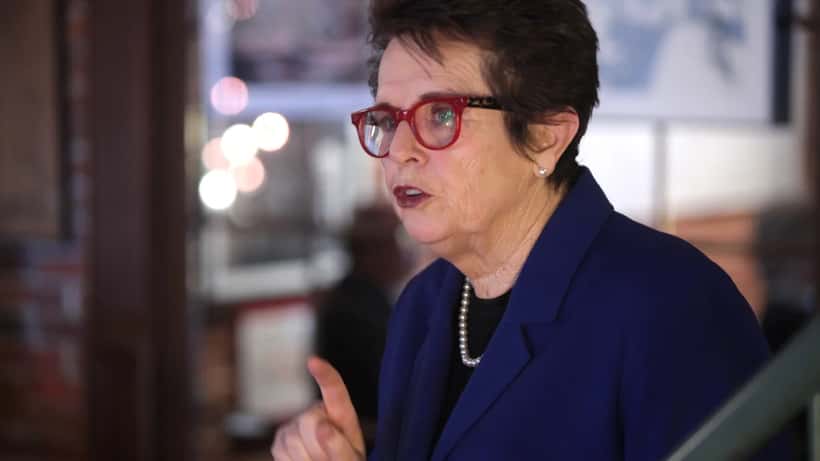
On 18 May 2026, at the age of 82, tennis legend Billie Jean King collected her Bachelor of Arts in History from California State University, Los Angeles — 65 years after she first enrolled. According to Cal State LA, she celebrated by hitting tennis balls into the crowd of fellow graduates at the Shrine Auditorium. The moment, widely shared across social media this week, has prompted thousands of people in the UK and beyond to ask a question that King has now answered with her own life: is it ever too late to go back to university?
The answer, according to educational advisers and adult learning specialists, is almost always no.
Why Adults Return to Education Later in Life
Data from the Higher Education Statistics Agency (HESA) published in 2026 shows that approximately 340,000 students aged 30 or over enrolled in UK higher education during the 2024/25 academic year — a figure that has grown steadily as cost barriers have shifted and flexible learning options have expanded. The Open University alone enrols over 170,000 students annually, the majority of whom are working adults returning to study.
The reasons adults choose to return are varied: career change, promotion requirements, personal fulfilment, redundancy, or simply a subject they always meant to study. King's motivation was reportedly the last of these — she started studying history decades ago but a professional tennis career intervened.
For many returning students, the biggest obstacle is not motivation but practical support. Study skills that felt natural at 18 can feel unfamiliar after decades away from formal education. Essay structure, critical analysis, time management around work and family commitments, and adapting to digital learning platforms all present genuine challenges.
What Returning Students Actually Struggle With
Adult returners consistently identify three primary challenges in research conducted by the UK's National Institute of Adult Continuing Education (NIACE).
Academic writing. The conventions of academic essays — argumentation, referencing, critical analysis — are specific and learnable, but they are not intuitive for someone whose last formal writing was at school. Many returning students find that a few sessions with a subject-specific tutor can transform their writing confidence and results within weeks.
Subject-specific knowledge gaps. Adult students returning after 20 or 30 years away frequently feel that their peers have a foundational knowledge they lack. In subjects like history, law, or the sciences, a tutor who can identify and address specific gaps systematically is far more efficient than trying to self-teach from a reading list alone.
Digital learning tools. University virtual learning environments, referencing software, and online library systems have changed significantly since the 1980s and 1990s. Students over 50 consistently report that navigation of these platforms is a hidden barrier to engagement — one that targeted tutoring can address quickly.
The UK Routes Back to Education
Adults in England who want to return to degree-level study have several options.
The Open University offers modular, flexible degrees across a wide range of subjects. Students pay per module rather than per year, making it financially manageable alongside work.
Access to Higher Education Diplomas — typically a one-year course offered through further education colleges — are specifically designed to prepare adults who left school without A-levels for degree-level study. Over 25,000 people complete Access courses in England each year, with the majority going on to university.
Mature student entry routes exist at most Russell Group and post-92 universities. Institutions actively recruit mature students and often consider professional experience and personal statements alongside formal qualifications.
Financial support is available through the standard student loans system. As of 2025/26, mature students in England can access tuition fee loans and maintenance loans regardless of age for first degrees. Part-time students can access part-time loans. Details are available through Student Finance England.
How a Tutor Can Make the Difference
The transition back to study is significantly smoother with professional support. An experienced tutor in your chosen subject can provide:
- A diagnostic assessment of your current knowledge and skill level
- A structured catch-up plan targeting your specific gaps
- Ongoing feedback on written work before you submit to your institution
- Study skills coaching: time management, note-taking, exam technique
- Confidence building at key moments — the first essay, the first exam, the first seminar contribution
Tutors working with adult returners frequently describe the experience as highly rewarding. The motivation and life experience that adults bring to academic study often produces outstanding results once initial confidence barriers are overcome.
From the Shrine Auditorium to Your Local Library
Billie Jean King's graduation at 82 is an exceptional story — but the decision to return to learning at any age is far more common than most people realise. Whether you want to complete the degree you started decades ago, study for a professional qualification, or simply explore a subject you have always found fascinating, the practical support is there.
ExpertZoom connects learners of all ages with qualified tutors who specialise in working with returning adult students. A first conversation costs nothing — and it might be the first step in a story you have been putting off for much longer than 65 years.
