 Eleanor Vaughan
Belgium stunned France 2-0 at King Baudouin Stadium in Brussels on Monday 28 September 2026, in a UEFA Nations League match that left French supporters reeling and UK fans with a very specific grievance. Mathis Godts and Dodi Lukébakio scored for the Red Devils, handing Zinédine Zidane a crushing defeat in only his second match as France coach. The result shook European football — but for the thousands of British fans who had made the trip to Brussels explicitly to watch Kylian Mbappe, the question was not about tactics or results. It was about money, contract, and whether consumer law offers any remedy when the player you paid to see never sets foot on the pitch.
The Mbappe Factor: What Changed 48 Hours Before Kick-Off
Mbappe suffered a hyperextension of the posterior capsule of his left knee on 25 September 2026, during France's 1-0 victory over Turkey in Kocaeli. He scored the decisive goal — a curling finish from inside the box in the 57th minute — before collapsing on the pitch and being substituted just a minute later. Despite briefly returning, he could not continue. Zidane confirmed after the match: "It's not great. Unfortunately I think he is going to have to go home. We don't want to take any risks."
Real Madrid's medical team confirmed the diagnosis on 26 September. Mbappe would miss the remainder of France's Nations League camp — including Monday's match in Brussels — and was ruled out for up to two weeks. The announcement came precisely 48 hours before kick-off, at which point thousands of UK supporters had already committed to non-refundable Eurostar tickets, Brussels hotel bookings, and match entry passes purchased weeks in advance.
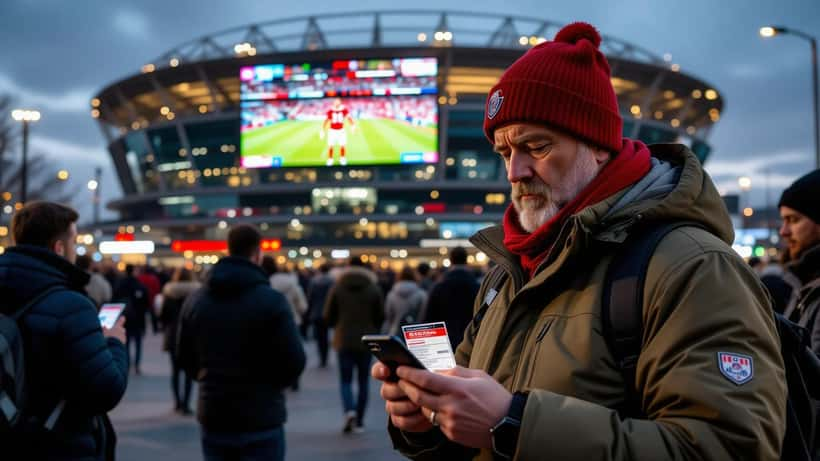
For those fans, the timeline is the crux of the legal question. Not because they expected Zidane to keep a half-fit Mbappe on the pitch — but because many made the decision to travel while Mbappe was fit, based on marketing materials and promotional content that featured him prominently.
The True Cost of a Brussels Away Trip
International football tourism is expensive by any measure. Nations League tickets for Monday's match at King Baudouin Stadium were priced between €80 and €250 depending on category, roughly £68 to £213 at current exchange rates, with premium hospitality seats and secondary market resales pushing the upper end above £350. A return Eurostar journey from London St Pancras on relatively short notice typically costs between £120 and £220. Accommodation in central Brussels for one or two nights adds a further £80 to £160 per night.
The total expenditure for a typical UK fan making this trip — ticket, travel, and accommodation — sits comfortably between £400 and £900, depending on how far in advance they booked and which category of seat they purchased. According to UEFA's own secondary market analysis, matches featuring Mbappe command a 15 to 20 per cent ticket price premium compared to equivalent fixtures without him. That premium is not priced by accident: it reflects a genuine consumer expectation that he will play.
When that expectation is shattered 48 hours before departure, the question of who bears the financial consequence becomes legally substantive.
What UK Consumer Law Actually Provides
The Consumer Rights Act 2015 is the primary framework governing service purchases in the United Kingdom. It requires that services match any description given by the supplier at the point of sale, and that they be provided with reasonable care and skill. However, applying this to football tickets is not straightforward.
Standard ticketing terms and conditions — including those used by UEFA's official portal and authorised resellers — contain a well-established clause: squad selection is at the sole discretion of the coaching staff, and changes to the anticipated lineup, including the non-appearance of named players, do not constitute grounds for a refund or compensation. This clause is legally robust and courts have consistently upheld it.
The legal picture changes, however, when marketing communications make specific representations. The Consumer Protection from Unfair Trading Regulations 2008 — which implement the EU Unfair Commercial Practices Directive and remain part of UK law — prohibit misleading commercial practices, including the creation of a false impression about the composition or key attributes of an event. If a ticketing platform, official Federation account, or UEFA itself marketed this specific Belgium vs France fixture using Mbappe's image or name in a way that reasonable consumers would interpret as a guarantee of his involvement, that communication may constitute an actionable misleading practice.
The Competition and Markets Authority has previously issued enforcement guidance on sports and entertainment ticketing, noting that fans must not be given impressions about what is on offer that cannot be substantiated at the point of purchase. The bar is not high: a promotional email with "See Kylian Mbappe live in Brussels" in the subject line, sent after tickets were on general sale, could be enough to shift the analysis.
A Real Scenario: The £680 Trip That Changed Overnight
Consider this specific situation, representative of many UK fans who attended Monday's match. Alex is a 38-year-old project manager from Birmingham. On 6 September, after France's Nations League squad was announced with Mbappe listed as captain, Alex purchased a Category 2 seat through the official UEFA ticket portal (£185). On 8 September, he booked a Eurostar return to Brussels (£160 on an advance fare). On 9 September, he reserved a hotel near Gare du Midi for one night (£135). He also saw a post on UEFA's verified social media account on 11 September showing Mbappe in the France squad photo, captioned "Nations League Matchday 2 — are you going?"
Total spend: £480. He could not cancel the hotel without penalty, and the Eurostar tickets were non-refundable economy fares.
Mbappe's injury was confirmed on 26 September.
If UEFA's post of 11 September — or any subsequent official communication — explicitly linked Mbappe to this specific fixture: Alex has a plausible claim under the Consumer Protection from Unfair Trading Regulations 2008. A consumer law solicitor could argue that the promotional post created a reasonable and specific expectation of Mbappe's participation, representing a misleading commercial practice. In this scenario, potential recovery includes the ticket face value (£185) and, if causation between the promotion and Alex's hotel and travel decisions can be established, a broader claim for consequential loss.
If Alex purchased only the "Belgium vs France" ticket with no specific player promise in the communications he received: a direct refund claim against UEFA is unlikely to succeed under standard terms. However, because Alex paid for his Eurostar journey by credit card and the cost exceeded £100, he may be eligible for a Section 75 claim under the Consumer Credit Act 1974. Section 75 renders his credit card provider jointly liable for any breach of contract or misrepresentation by the supplier — allowing him to dispute the charge directly with his bank without litigating against UEFA. The six-year limitation period under the Limitation Act 1980 gives him time, but acting quickly while promotional materials remain publicly accessible is strategically important.
When a Legal Expert Changes the Outcome
Most fans who feel aggrieved after a high-profile player withdrawal will not pursue legal action — not because they lack grounds, but because they do not know what threshold makes a claim viable, or how to frame an argument that goes beyond standard terms and conditions.
A consumer rights solicitor with experience in sports and entertainment law can make the critical difference between a successful dispute and an abandoned one. Their role includes: assessing whether specific marketing materials create a misrepresentation claim under the 2008 Regulations; advising on whether a Section 75 chargeback is likely to succeed and how to present it; identifying whether a group action by multiple affected fans is commercially feasible; and providing a realistic assessment of small claims court costs relative to the value at stake (for claims under £1,000, small claims court fees start at £35 in England and Wales).
For similar situations — such as UK fans who faced unexpected squad changes in Champions League fixtures — legal advice has proved decisive in unlocking remedies that standard customer service processes failed to provide.
What You Should Do in the Next 72 Hours
If you traveled to Brussels and believe Mbappe's expected participation influenced your decision to purchase:
Screenshot everything now. Capture any marketing emails, social media posts, or official communications that featured Mbappe in connection with this specific fixture — including the publication date and platform. This evidence deteriorates quickly as posts are deleted or edited.
Locate your purchase confirmation. Check whether the confirmation email or the platform's product page contained any reference to France's squad or specific players. Even a generic squad announcement linked from the ticket purchase page can be relevant.
Check your credit card statement. If any element of your trip costing over £100 was paid by credit card, contact your card provider about a Section 75 claim. You do not need to pursue UEFA directly to use this route.
Contact the ticketing platform directly first. Formal complaints to UEFA and its authorised platforms create a paper trail and occasionally result in goodwill credits, particularly when significant numbers of fans escalate simultaneously.
Consult a solicitor if your total claim exceeds £300. The analysis is highly fact-specific. Whether you have a viable claim depends on the exact content of the marketing materials you received, and legal advice will quickly clarify whether you have a case worth pursuing.
This article is for general information only and does not constitute legal advice. If you require guidance specific to your situation, consult a qualified solicitor.
