 Grace Davies
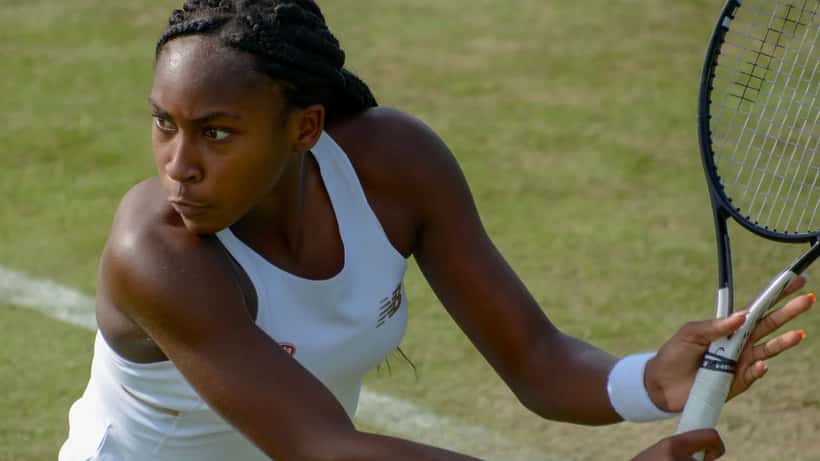
Coco Gauff walked off court in Beijing on 3 October 2026 having just lost 6-1, 6-2 to Amanda Anisimova in 62 minutes. The world number two's China Open semifinal exit was one of the most startling results of her career — and it raises a question that applies far beyond professional tennis: what does a sudden collapse in athletic performance actually signal, and when should you seek professional help?
A Stunning Result at One of Tennis's Biggest Stages
The China Open, held annually at the National Tennis Center in Beijing, is one of the WTA's Premier Mandatory events. Gauff arrived ranked inside the world's top three, carrying a schedule already covering the full US hard-court swing, the US Open, and Fed Cup commitments. Anisimova had been inconsistent through much of 2025, making the 6-1, 6-2 margin all the more striking.
In the other semifinal, Linda Noskova overcame fifth seed Jessica Pegula 6-3, 1-6, 7-6(6), setting up an all-unseeded final that few had predicted. On the men's side, Novak Djokovic made his long-awaited return to Beijing, defeating Nuno Borges 6-3, 7-6(2) in composed fashion — a contrast that illustrates how fine the line between peak fitness and accumulated exhaustion can be at the highest level.
That contrast matters for UK athletes too. Djokovic, now 38, is celebrated for his ability to manage training load across decades. Gauff, at 22, is theoretically in her physical prime. When someone at that level drops 6-1 in a major semifinal, a single bad day rarely explains it fully.
Why Sudden Performance Drops Are More Than "Off Days"
Sports medicine specialists draw a clear distinction between an isolated poor result and a clinical pattern known as overreaching, or in more severe cases, overtraining syndrome (OTS). According to NHS guidance on exercise and recovery, the body requires structured rest to adapt to training load. When competitive and training demands consistently exceed recovery capacity, the result is not simply tiredness.
The decline manifests as measurable drops in strength, reaction speed, coordination, and in-match decision-making. For elite players who accumulate 30 or more competitive matches annually across multiple time zones, the signs are gradual and easy to rationalise. "I'll be better after one rest day" is a phrase heard constantly in elite locker rooms — right up until a 6-1 scoreline appears on the scoreboard.
A GP or sports medicine specialist assessing for OTS looks for a cluster of signs rather than one defining symptom. Persistent fatigue unresolved by sleep, a resting heart rate elevated five or more beats above personal baseline on consecutive mornings, a measurable drop in performance despite consistent training, mood changes such as low motivation or irritability, and two or more minor illnesses within six weeks — none of these confirms OTS alone, but together they form a recognisable clinical picture.
What This Means for UK Athletes
It would be a mistake to treat overtraining syndrome as an exclusively elite problem. Research published in the British Journal of Sports Medicine shows that amateur athletes training for marathons, triathlons, or competitive club sport are at equal or greater risk than professionals. The reason is straightforward: they lack the performance support structures that flag warning signs early.
Sport England's 2025-2026 Active Lives Survey estimates 7.1 million UK adults run regularly, with endurance event participation growing year-on-year since 2022. With that growth has come a rise in self-coached athletes following digital plans with no professional oversight — and a surge in burnout-related GP consultations across UK sports medicine clinics.
The Beijing Open result is a relevant mirror for any UK amateur who has pushed hard through autumn: half-marathons in September, weekend sportives, club football, padel leagues. The question is not whether you are tired — most active adults in October are. The question is whether your fatigue is functional (the kind that produces adaptation overnight) or non-functional (the kind that compounds across weeks and erodes gains).
For context on how upper-limb overuse injuries develop alongside fatigue, see how tennis players manage arm and shoulder strain at elite level — the biomechanical patterns overlap significantly with OTS.
The Bristol Club Player: A Case That Maps Your Own Risk
Take a 38-year-old club tennis player in Bristol competing in a local league three evenings per week. They added a sprint triathlon in July and a half-marathon in September without reducing their tennis schedule. Their resting heart rate, stable at 52 beats per minute (bpm) for two years, has climbed to 62 bpm over the past four weeks. Their league win rate dropped from 63% to 38%. They have had two minor colds in seven weeks.
Here is the if/then logic a GP applies: if resting heart rate rises by more than 7–10 bpm above a stable four-week baseline, and performance metrics decline by 20% or more, and two or more minor illnesses occur within a six-week window, then the probability of functional overreaching or early OTS is clinically significant.
In practice, this cluster would prompt targeted blood work: ferritin, thyroid function, full blood count, vitamin D, and morning cortisol. Checking these rules out common mimics — iron deficiency anaemia is frequently misread as overtraining fatigue in female club athletes — and confirms whether a structured rest protocol is needed.
The cost of ignoring this pattern is measurable. Overtraining syndrome, left unaddressed, takes an average of three to twelve months to resolve fully, according to published data from the European College of Sport Science. That is not two or three weeks of easier training — it is a potential season-ending plateau. The Bristol player who pushes through to the winter league risks turning a manageable autumn dip into a twelve-month setback.
Three Things a Sports Medicine GP Does That Self-Diagnosis Can't
The clinical role in suspected overtraining has three distinct functions. First, the GP rules out organic causes. Iron-deficiency anaemia, hypothyroidism, coeliac disease, and low vitamin D are all common mimics of OTS fatigue. Missing a diagnosis of iron deficiency — particularly in active women — means months of unproductive rest with no physiological benefit.
Second, the specialist builds a personalised recovery timeline. This accounts for the severity of overreaching, the athlete's age and training history, life stressors running in parallel, and the proximity of key events. A 38-year-old club player targeting a spring marathon needs a different recovery structure than a 22-year-old student training for a local 10km.
Third — and most underrated — the doctor provides clinical authorisation to rest. For competitive personalities, this is the single largest barrier to recovery. A GP's instruction to reduce training volume by 40% for four weeks carries weight that no training partner can replicate.
What to Do This Week
If the Beijing Open images of a clearly-below-par Gauff resonate with your own recent training sessions, the steps are practical. Track your resting heart rate for seven consecutive mornings immediately on waking. If it is consistently five or more beats above your normal baseline, that is signal, not noise. Log perceived effort in sessions that should feel easy — if standard drills now require noticeably more effort, document that. Review the past six weeks for minor illness. Two viral episodes in that window is clinically relevant.
According to NHS guidance on exercise and physical activity, the adaptation that makes training effective happens in the recovery window — not during the session itself. A sports medicine GP or health specialist on Expert Zoom can assess your training load, arrange relevant blood tests, and identify precisely where the line falls between productive hard work and counterproductive overload — before your own results start resembling a 6-1, 6-2 scoreline.
This article is for informational purposes only. If you are concerned about your health or athletic performance, consult a qualified GP or sports medicine professional.
