 James Thompson
A record 540,000 UK households gave up their TV licence during the 2025/26 financial year, leaving 23.3 million active licences by the close of the year, according to figures reported by Deadline on 13 July 2026. The exodus is driven by families who no longer watch any live broadcast television and have realised they simply do not need a licence to keep watching Netflix, Disney+ or catch-up box sets. With the standard fee rising from £174.50 to £180 on 1 April 2026, the maths is pushing more homes to cut the cord — and getting the technology right is the difference between saving £180 legally and risking a fine.
Why half a million homes walked away
The BBC has framed the decline as structural rather than a blip. Director General Matt Brittin described a "decline in licence fee sales, combined with cost inflation and a challenging commercial market" when the broadcaster announced roughly 2,000 job cuts. Even so, licence-fee income actually rose £36m to a record £3.9bn, because the inflation-linked fee climbed faster than payers fell away.
For households, the trend reflects a simple shift in viewing habits. Streaming-first families increasingly watch everything on demand, and the law only requires a licence for two things: watching or recording live TV as it is broadcast on any channel, and using BBC iPlayer at all — live, catch-up or on demand. If your home genuinely does neither, you are legally entitled to go licence-free.
What actually needs a licence — and what does not
This is where most people get confused, and where a poorly configured setup can cost you. According to TV Licensing's published rules, Netflix, Amazon Prime Video and Disney+ are entirely on demand, so they never require a licence on their own. The trap is live content: if you stream a live channel or a live event through any app — even a Premier League match on Amazon — the law treats it exactly like broadcast TV and a licence is required.
BBC iPlayer is the one on-demand service with no loophole. Downloading or streaming anything on iPlayer, including catch-up, needs a licence. So the cornerstone of a compliant streaming-only home is removing your reliance on live tuners and on iPlayer entirely, then leaning on on-demand alternatives such as ITVX and Channel 4's on-demand catalogue, which do not need a licence unless you use them to watch a live broadcast.
Building a legal streaming-only setup
A consumer electronics specialist can save you from expensive guesswork here, because the hardware you choose shapes what you can accidentally watch. Three practical steps make the difference.
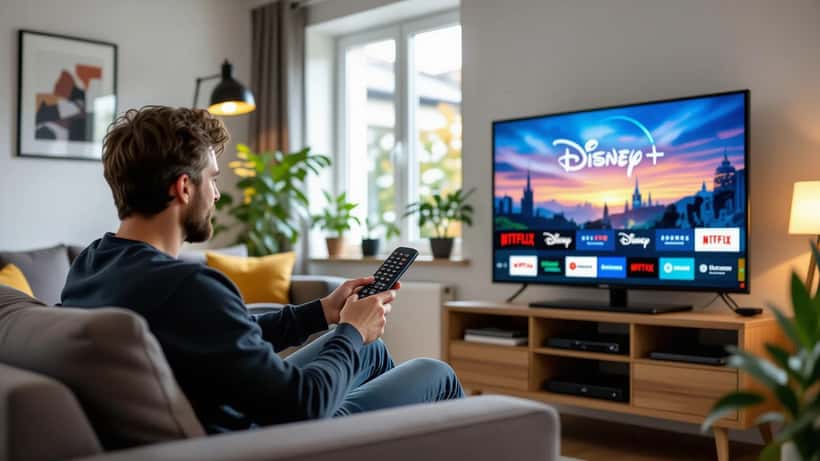
First, decouple from the aerial. Most modern smart TVs keep a built-in Freeview tuner that pulls in live channels the moment you connect an aerial. If you want a clean, licence-free home, unplug the aerial and rely on apps. A dedicated streaming stick or box — for example a mid-range 4K streamer — gives you Netflix, Prime, Disney+, ITVX and All 4 without ever surfacing a live broadcast feed.
Second, audit every app for live buttons. Many on-demand apps now bundle live channels behind a single tap. Remove or avoid the BBC iPlayer app, and be deliberate about "Watch Live" tiles inside ITVX and other services. If you never press them, you stay compliant; if you do, you need a licence.
Third, match the hardware to your bandwidth and screen. There is no point buying an 8K panel if your broadband cannot sustain 4K streams. A specialist will check your router placement, recommend a wired connection to the main TV where possible, and size the display to your viewing distance so you are not overpaying for resolution you cannot see. For sport and film fans who still want the big-match feel, a soundbar and a well-calibrated mid-size OLED often beats a larger, cheaper panel.
Tell TV Licensing before you assume you are covered
Cancelling is not automatic. If you no longer need a licence you should formally declare a "no licence needed" status with TV Licensing, otherwise you can still receive enforcement letters and visits. The official guidance on who needs a licence and how to notify a change is published by the government at gov.uk. Keep a record of the date you confirmed your streaming-only status, and remember the position changes the instant you watch anything live or open iPlayer.
The bottom line for 2026
The £180 fee is not disappearing, and the government has even floated extending the licence to some streaming users in a future charter — so the rules could tighten. For now, though, a correctly configured on-demand setup is a genuinely legal way to stop paying. The savings are real: £180 a year is roughly the cost of two mainstream streaming subscriptions, meaning many households can replace the licence entirely and still come out ahead.
If you are unsure whether your smart TV, games console or streaming box could accidentally tip you into needing a licence, a short consultation with a consumer electronics expert on Expert Zoom can map your exact hardware, disable the risky live pathways and confirm your home is compliant before you cancel. For a broader look at trimming your monthly outgoings, our guide to auditing UK streaming subscriptions is a useful next step, alongside advice on setting up a smart-TV programme guide without a live tuner.
