 Imogen Bennett
Fifty years ago, Barry Sheene crossed the finish line at the 1976 500cc World Championship and became Britain's first motorcycle world champion in over a decade. In 2026, Goodwood has dedicated its entire motorsport season to honouring that achievement — and just weeks before the first tribute event, Sheene's 1977 championship-winning Suzuki RG500 appeared at Bonhams with a pre-sale estimate of £160,000 to £200,000. For anyone who owns classic motorcycles, signed memorabilia, or sporting collectibles, Sheene's market moment is a sharp reminder that passion investments can become serious financial assets — ones that demand professional wealth planning long before the auction house calls.
The 2026 Goodwood Season and What It Signals for the Market
Sheene's back-to-back 500cc world titles in 1976 and 1977 remain unmatched. He is still the last Briton to win the premier class motorcycle championship. Goodwood, which hosts three flagship events each year — the Members' Meeting (April), the Festival of Speed (July) and the Revival (September) — announced in January 2026 that all three would be dedicated to Sheene's memory. It is the first time the estate has given an entire season to a single rider.
Up to 30 Grand Prix motorcycles spanning Sheene's career from 1974 to 1984 will appear across the season. His son Freddie Sheene is set to ride several of the machines at the Festival of Speed, which runs in July. The Goodwood Revival in September will feature the Barry Sheene Memorial Trophy races alongside a display of his championship-winning Suzukis.
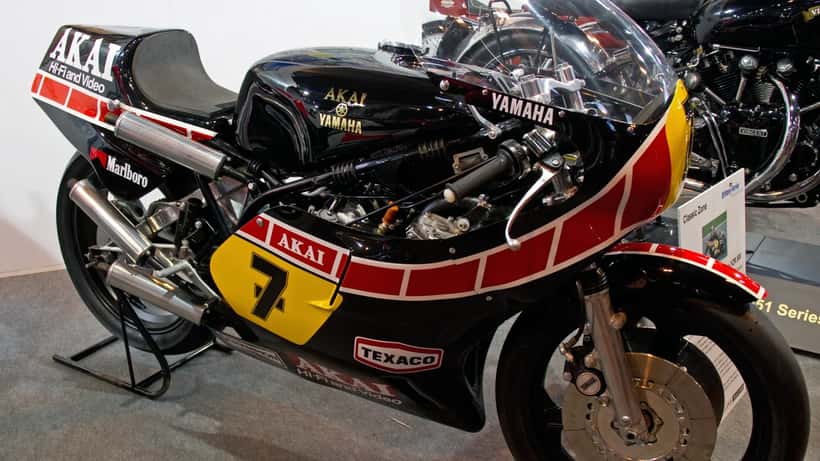
The commercial consequence of the announcement was almost immediate. According to Bonhams auction house, the 1977 Suzuki RG500 XR14 — Frame 1201, one of only two factory machines Sheene used to contest that title — came to market "for the first time in nearly 40 years" in March 2026. The pre-sale estimate was set at £160,000 to £200,000 without reserve. Before the Goodwood announcement, comparable machines from the same era typically traded in the £40,000 to £70,000 range. The combination of a 50th anniversary season and Goodwood's full institutional endorsement has, in effect, revalued an entire category of 1970s racing motorcycles in a matter of months.
Why Barry Sheene's Legacy Is Worth More in 2026 Than Ever Before
Classic motorcycles are among the fastest-appreciating alternative asset classes tracked in the UK. According to the Knight Frank Luxury Investment Index, classic motorcycles appreciated by an average of 13 per cent over the decade to 2025 — outperforming classic cars, rare whisky and coins over the same period. Machines with documented provenance — a racing history, a famous previous owner, a championship link — command premiums far above the category average.
Sheene's Suzuki RG500 illustrates the principle precisely. Its estimated value of £160,000 to £200,000 represents three to four times what a comparable Suzuki without his name and frame documentation would fetch. The premium is entirely attributable to provenance: race documentation, championship context, and the 50th anniversary narrative Goodwood has now placed around the machine.
This appreciation matters well beyond specialist collectors. When a family member dies and leaves a collection that includes a £150,000 motorcycle, a £20,000 race-worn helmet, or £40,000 in signed photographs and trophies, those assets attract inheritance tax at 40 per cent above the £325,000 nil-rate band — the same headline rate as a property or a share portfolio. Most UK families have no wealth plan in place for physical collectibles of this kind. Many do not hold accurate independent valuations, which means HMRC assessments after probate can go undisputed even when the declared values are substantially low — leaving later capital gains tax bills much higher than they needed to be.
What a Wealth Manager Actually Does With a Classic Motorcycle Collection
Wealth managers increasingly deal with what practitioners call "passion assets" — physical collectibles whose financial profile now rivals equities or bonds in some portfolios. A classic motorcycle collection, a cache of signed sports memorabilia, or a vintage vehicle fleet are no longer simply hobbies for a growing number of UK households. They are measurable, transferable wealth.
Three specific issues arise for the typical collector who has not yet sought professional advice:
Valuation: Classic vehicles and memorabilia must be valued by a specialist appraiser, not estimated at purchase price or sentimental value. Undervaluing assets risks an HMRC challenge at probate; overvaluing inflates insurance premiums. A formal valuation letter from a recognised auction house or accredited specialist is the foundation for any planning exercise.
Insurance: Standard home contents policies do not adequately cover high-value collectibles. A 1970s championship-linked machine kept in a private garage may be insured against fire or theft but not for its appreciated market value — meaning that if it is destroyed, a policy paying an outdated agreed value could leave the owner many tens of thousands of pounds worse off than current market exposure warrants.
Inheritance planning: A bike worth £150,000 left to a beneficiary without advance structuring can trigger a five-figure inheritance tax bill on an asset the recipient may not be able to sell quickly or at the right moment in the market cycle. Structuring a collection through trusts, lifetime gifting, or specialist insurance riders requires a wealth adviser with experience of alternative and physical assets — not a generalist financial planner. The risks are not unique to motorcycle collections: disputes over high-profile estates and intellectual property rights frequently arise precisely because no formal structure was put in place during the owner's lifetime.
A Concrete Case: The Cost of Planning Too Late
Consider a realistic scenario directly relevant to the current market. A retired engineer in Yorkshire inherited a collection of twelve classic motorcycles from his father in 2023, including a 1975 Suzuki TR750 — a machine closely related to the factory-specification bikes Sheene campaigned. At the time of inheritance, probate valued the collection at £85,000, with the TR750 assessed at £12,000.
By August 2026, with Goodwood's season-long tribute generating sustained media coverage and the RG500 auction placing six-figure valuations on the era, a specialist dealer has assessed the TR750 at £65,000 — a gain of £53,000 on the probated value in under three years.
Under current UK rules, if the engineer now sells the motorcycle for £65,000, he owes capital gains tax on the gain above the probate valuation — not the original purchase price paid by his father. That means approximately £53,000 of chargeable gain. At the higher rate of 24 per cent currently applicable to personal possessions, the CGT liability is approximately £12,720. This is a significant bill on a physical object he cannot easily divide or sell in tranches.
Had his father worked with a wealth manager five years before he died, a structured lifetime gifting plan or a specialist trust arrangement might have mitigated that bill substantially. The lesson for collectors: when a passion asset doubles or triples in value during a nationally covered anniversary season, the tax moment arrives faster than most families expect. Comprehensive guidance on capital gains tax for personal possessions is available through GOV.UK, but understanding the rules is only the starting point — applying them correctly to physical assets with complex provenance histories is where a wealth specialist earns their position.
The Practical Checklist for UK Collectors Right Now
The Sheene market surge in 2026 raises a clear set of actions for anyone who holds classic motorcycles, signed memorabilia, or vintage sporting equipment:
Get a current specialist valuation. A formal valuation from a recognised auction house or specialist appraiser provides the baseline for both insurance and inheritance planning. The window before Goodwood Revival in September is particularly relevant: tribute events tend to lift comparable market values in the months that follow as new buyers enter the category.
Review your insurance cover. Confirm that your policy insures the asset at its current agreed market value — not the value at the time you took the policy out, and not a generic "contents" estimate. High-value collectibles require specialist agreed-value policies that are updated in line with market movements.
Speak to a wealth adviser about inheritance tax exposure. If your collection, combined with your property and other savings, exceeds the £325,000 nil-rate band, or £500,000 where the residence nil-rate band applies, you have an inheritance planning problem that compounds with every year of market appreciation. The earlier a professional reviews the structure of your estate, the more options are available.
Document provenance comprehensively. For any classic vehicle or signed item, hold receipts, service records, race documentation, and photographs in one accessible file. Provenance is the single largest multiplier of auction value and the most important factor in a successful insurance claim. Without it, a machine worth £150,000 on the open market may realise far less under forced or estate sale conditions.
The families who engaged a wealth manager before the anniversary season are well positioned to capture the Sheene premium. Those who did not may find that a cherished garage asset has quietly become their single most valuable possession — and their most complex tax problem. As Freddie Sheene prepares to ride his father's machines at Goodwood Festival of Speed this July, the message to UK collectors is simple: the time to plan was yesterday. The next-best time is before September's Revival.
This article is for informational purposes only and does not constitute financial or tax advice. For personal planning, consult a qualified wealth manager or financial adviser.
