 Rebecca Taylor
Sri Lanka Women's cricket team completed one of the most dramatic comebacks of the 2026 Women's Asia Cup on 6 September 2026, recovering from 44 runs for the loss of five wickets to defeat Bangladesh Women by four wickets at Dubai International Stadium. Harshitha Samarawickrama's unbeaten 48 off 37 balls proved decisive, steering the chase from crisis to 115 with two balls to spare. Sri Lanka progressed all the way to the final before losing to India Women by 72 runs — India claiming a record eighth Women's Asia Cup title.
For the estimated 130,000 women and girls playing recreational cricket in England and Wales, the tournament raised a question far closer to home: how do cricketers at any level recognise when the physical cost of a season has crossed from fatigue into injury that requires professional attention?
The Physical Toll of a Compressed Tournament
The Women's Asia Cup 2026 was played across a 14-day window in Dubai, with daily temperatures regularly exceeding 38°C. Leading sides played between five and six matches during the group and knockout rounds, with rest windows as short as 48 hours between games.
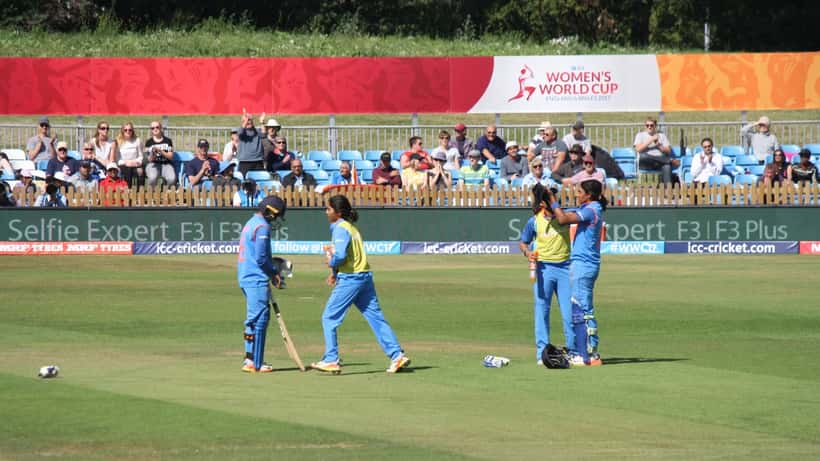
Sri Lanka's comeback win over Bangladesh was not merely a tactical victory. When Samarawickrama arrived at the crease with her team at 44/5 — needing 71 more runs from fewer than eight overs — every component of athletic performance was under pressure. The muscles central to T20 batting, particularly the rotator cuff, forearm flexors, and core stabilisers, were being called upon at peak fatigue. Bangladesh's bowlers, meanwhile, had delivered between 15 and 20 overs each across the tournament by this stage, accumulating significant cumulative load on their bowling-arm shoulders and elbows.
Sri Lanka's subsequent semi-final and final appearances added further match-load. By the time the tournament concluded, players from both nations were carrying the physical imprint of an intense international competition — a reality that extends, in miniature, to every UK women's club cricketer who completed a full county T20 season this summer.
Women's Cricket Injuries: A Growing Health Priority in the UK
Cricket's reputation as a low-contact sport obscures a significant injury burden, particularly in shorter formats. Research supported by the England and Wales Cricket Board has found that women's cricketers sustain overuse injuries — most commonly to the shoulder, lower back, and knee — at rates broadly comparable to those seen in racquet sports.
T20 cricket intensifies this pattern. The format demands explosive batting movements, sudden directional changes in the field, and diving catches that place acute load on joints and soft tissue that standard cricket conditioning does not fully address. For fast bowlers, the combination of shoulder rotation, back extension, and front-foot impact accumulates stress across a narrow range of movement over an entire season.
The NHS guidance on sprains and strains is consistent with sports medicine advice: pain that does not respond to 48 to 72 hours of rest and ice is a signal that professional assessment is warranted, not an instruction to push through. Many recreational cricketers manage persistent discomfort throughout the competitive season and reach autumn without having addressed underlying soft-tissue problems.
When to Consult a Health Professional: A Concrete Scenario
Consider the situation of a 27-year-old opening batter playing for a county women's second XI in Yorkshire. Across the 2026 T20 Blast Women's competition, she completed eleven matches over nine weeks. Since early August, she has been managing a dull ache in her dominant right shoulder — present during the follow-through of her cover drive and when throwing from the boundary. She managed this with ice, ibuprofen, and reduced fielding intensity.
By late September, the picture has changed. The ache is now present when reaching overhead for a kitchen shelf. She has noticed weakness in the shoulder when carrying bags on one side. These are clinical indicators of a rotator cuff strain — and in more advanced presentations, the beginnings of a partial tear.
The threshold for professional assessment is clear: if a musculoskeletal symptom persists for more than two to four weeks without improving with 48 to 72 hours of rest, it warrants evaluation by a sports medicine specialist or physiotherapist.
This player passed that threshold in August. Continuing to self-manage through October and November risks a measurable change in prognosis. A rotator cuff strain identified now typically requires four to six weeks of targeted physiotherapy and a structured return-to-play programme. Left unassessed until February, the same injury may have progressed to shoulder impingement syndrome — a condition that frequently requires cortisone injection and eight to twelve weeks of rehabilitation. That is a recovery period that would compromise the entire spring 2027 pre-season training window.
A first consultation in this scenario would run approximately 45 to 60 minutes. It would include range-of-motion testing, strength assessment, and where indicated an ultrasound referral. The difference between a four-week recovery and a twelve-week one often hinges on whether assessment happens in October or in January.
This article contains general health information and does not constitute medical advice. Anyone experiencing persistent pain or injury should seek assessment from a qualified healthcare professional.
Growing the Women's Game — but Who Supports Player Welfare?
The Women's Asia Cup 2026 arrived at a notable moment in the UK women's cricket landscape. The ECB's county development programme has expanded from 18 to 41 centres over the past four years, and The Hundred Women's competition — now in its fifth season — has delivered a structural pathway from grassroots to franchise cricket that did not exist a decade ago.
But professionalisation at the top of the game has not translated uniformly to welfare support at club level. Fewer than 14 per cent of county women's clubs in England report having access to a physiotherapist for match days. The large majority of recreational players rely on general practice consultations, self-management, or increasingly, digital platforms connecting them with sports health specialists.
The contrast is stark: Harshitha Samarawickrama, whose 48-run innings under pressure delivered the match-defining moment in the Sri Lanka vs Bangladesh encounter, would have returned to a comprehensive physiotherapy assessment within hours of the final ball. A club cricketer in Yorkshire, playing in conditions that differ from that Dubai stadium only in temperature and altitude, does not have that default safety net — unless she seeks it.
For background on the legal and eligibility dimensions affecting women's international cricketers, including selection rules for multi-nation events in Asia, see our earlier analysis of the BAN vs SL Asian Games cricket eligibility framework.
What UK Cricket Players Should Do Before Winter Training
The end of the outdoor season is the most clinically relevant moment to address injuries from the 2026 campaign. The window between late September and the start of indoor training in November gives players and coaches a defined period to seek assessment, complete any required treatment, and enter the winter training cycle with confirmed health status.
A sports medicine doctor or musculoskeletal physiotherapist can assess shoulder, back, and knee complaints from the 2026 season, identify any biomechanical risk factors that intensified through the summer, and advise on a return-to-play timeline for spring 2027. Early action consistently produces shorter recovery windows — the case for acting in October rather than December is supported by the numbers.
ExpertZoom connects UK-based patients with qualified health professionals specialising in sports injury assessment. Whether the concern is a recurring shoulder ache, a knee that swells after a long fielding session, or general fatigue that has persisted beyond the final match, an expert consultation provides clinical clarity and a structured treatment plan — before the winter training cycle begins and before an October problem becomes a March setback.
