 Amelia Davies
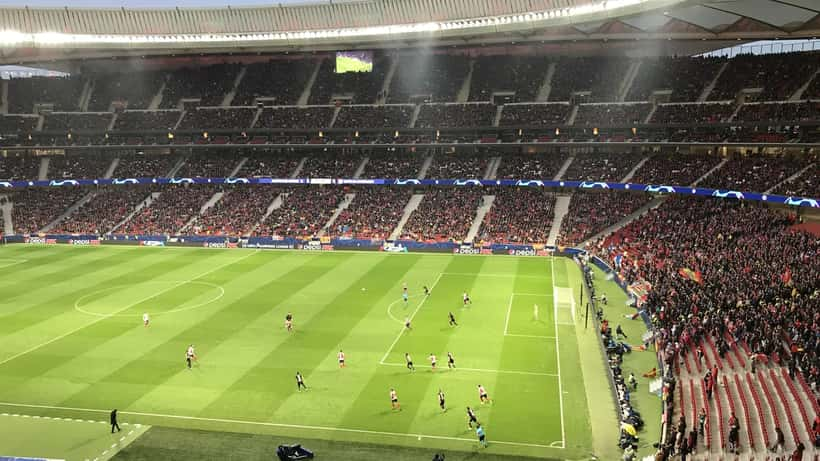
With Manchester United travelling to the Riyadh Air Metropolitano for tonight's UEFA Champions League league-phase fixture against Atlético Madrid (kick-off 8pm BST, 13 October 2026), thousands of Red Devils supporters have made the journey to the Spanish capital — spending anywhere from £350 to well over £1,000 on flights, hotels and away match tickets combined. Most will never stop to ask: what does UK law actually guarantee them if this trip goes wrong?
The Context: United on the Road in Europe
Manchester United arrive in Madrid carrying poor domestic form. The club has managed just one Premier League win in their last six matches — a run of results that will be under intense scrutiny regardless of tonight's outcome. Atlético, by contrast, sit second in La Liga behind FC Barcelona after four successive league victories, despite a 2-1 defeat to Liverpool in their own UCL opener earlier this season.
The Riyadh Air Metropolitano is one of European football's most atmospheric venues. Historically, Atlético have the better of this fixture: they have won three of the five all-time competitive meetings, with one draw and one United victory — that win arriving as recently as a pre-season friendly on 1 August 2026. Competitive encounter records tell a different story to August friendlies, and tonight's atmosphere will reflect that.
This is only the second league-phase fixture for both clubs in the 2026-27 Champions League format, where all 24 participants play eight matches each in the league phase. The top eight qualify automatically for the round of 16; places 9 to 24 enter a knockout playoff round. Results this early in the phase matter considerably.
Why Away Match Travel Creates Unusual Legal Exposure
Most UK fans book travel to European away matches in one of three broad ways: a full package combining flights, accommodation and sometimes transfers sold by a single operator; a DIY trip where each element is booked independently; or travel through an official supporters club scheme, which often blends elements of both.
Each carries a fundamentally different level of legal protection — and that gap is larger than most fans realise.
The UK Package Travel and Linked Travel Arrangements Regulations 2018 — the domestic instrument that retained and extended the EU's Package Travel Directive after Brexit — applies whenever a trader sells two or more travel services (flights, accommodation, transfers, or tourist services such as match tickets) as a single package for an all-inclusive price. The definition is deliberately broad: if your operator combined your Ryanair seat with your Madrid hotel into one booking confirmation, you almost certainly hold a package holiday, even if the word "holiday" never appeared on the confirmation.
Under the regulations, package holiday providers must hold ATOL protection when the package includes a flight. The ATOL scheme, administered by the UK Civil Aviation Authority, means that if your organiser becomes insolvent — before or during your trip — you are guaranteed not to be stranded abroad and will receive a refund for services not yet delivered. Operators who are members of ABTA additionally give consumers access to the ABTA Alternative Dispute Resolution service, which is free and binding on member companies.
If you booked each element separately — EasyJet through one platform, a hotel through Booking.com, your away ticket directly from Manchester United's ticketing portal — none of those package protections apply. Each provider's individual terms govern its respective element, and they have no obligation to coordinate with each other.
For the full statutory text, the 2018 Regulations are published at legislation.gov.uk.
Your Rights When the Unexpected Happens
If the match is postponed or relocated: Regulation 13 of the 2018 Regulations defines a "significant change to any of the main characteristics of the travel services" as grounds for the organiser to notify you and offer a choice between: accepting the change with a price reduction proportional to the lost value; accepting an alternative package of equivalent or higher quality at no extra cost; or receiving a full cash refund within 14 days. A match moved to a different stadium city, or postponed to a date that conflicts with your booked travel window, would typically meet the significance threshold — courts and adjudicators have generally interpreted "main characteristic" broadly when the changed element was the primary reason for the booking.
If your flight is cancelled or severely delayed: The UK's retained version of EU Regulation 261/2004 — commonly referred to as UK261 — operates independently of your package rights. It entitles passengers to fixed compensation for airline-caused cancellations or delays exceeding three hours: for a Manchester-to-Madrid route (classified under UK261 as an intra-EU-equivalent route of between 1,500km and 3,500km), the applicable figure is £220 per passenger. This is a statutory entitlement; you do not need to demonstrate you suffered that exact financial harm.
If your organiser collapses: ATOL protection means the Civil Aviation Authority will fund your repatriation and reimburse pre-departure payments. This scenario is rare, but specialist sports travel operators are a smaller segment of the industry and have a modest historical insolvency rate compared with large-volume leisure operators.
The legal complexity of these rights sits alongside the broader commercial structures now governing English football — structures examined in our earlier piece on the 2026 summer transfer window and competition law implications of agent fee regulation.
A Concrete Scenario: The Manchester Fan Who Missed Kick-Off
The following scenario is illustrative but grounded in realistic booking terms and statutory amounts.
A Manchester United supporter books a three-night Madrid trip in late September 2026 through a UK-registered sports travel specialist — a company that is both ATOL-registered and an ABTA member. The booking covers return flights from Manchester Airport, two nights in a hotel near Nuevos Ministerios, and a match-day shuttle transfer. Total package cost: £849, paid in full. The booking confirmation includes an ATOL certificate number.
On the morning of 13 October, the outbound flight is cancelled by the carrier due to a technical fault. A replacement flight is sourced, but the fan arrives in Madrid four hours and twenty minutes after kick-off — the match has ended, and the away end has long since cleared.
Under UK261, the airline-caused delay of over three hours (measured from the original scheduled arrival at Madrid-Barajas) triggers a £220 statutory compensation payment. The fan still travelled and used the accommodation; the compensation is owed regardless. Deadline to claim: six years from the date of the flight under the Limitation Act 1980.
The missed match element opens a separate, and more nuanced, claim against the package organiser. The match ticket formed a central characteristic of the package — indeed, it was the primary reason the trip existed. Because the fan's failure to attend resulted from the flight delay, and because the flight was part of the package rather than a separately booked component, a consumer law solicitor could advance a claim under Regulation 13 that a main characteristic of the package was not delivered. The proportional refund, if successful, would equate roughly to the match component's share of the £849 package — estimated at £100–£150 depending on how the operator allocated costs internally. Hotel nights and transfers that were actually delivered would not form part of the refund.
If, instead, UEFA had postponed the match at 48 hours' notice — a scenario that has occurred during severe weather events and stadium safety assessments in recent Champions League seasons — the calculus shifts significantly. A fan who has already departed the UK would have a much stronger claim for full package refund, since the primary characteristic of the booking no longer existed at the point they were committed to travel. Whether they could recover the full £849 or only a proportion would depend on what the organiser had already expended on their behalf, but the Regulation 13 framework provides the legal avenue to seek it.
What to Do If Your UCL Trip Goes Wrong
If something disrupts your attendance at tonight's match or any future Champions League away fixture, follow this sequence:
- Document in real time — take screenshots of cancellation notifications, delay alerts and airline correspondence as they happen. Evidence gathered on the day is substantially more compelling to adjudicators than records reconstructed weeks later.
- Notify your organiser in writing within 28 days — most ABTA member terms specify this window for service complaints. Missing it does not extinguish your claim, but it weakens your position before a dispute adjudicator.
- File your UK261 claim directly with the airline — airlines routinely issue a first refusal; do not be deterred. If the carrier refuses to pay a valid statutory entitlement, escalate to the Civil Aviation Authority, which operates a free enforcement complaints process.
- Raise a dispute through ABTA if the organiser is a member. The ABTA ADR service is free to consumers, takes around 90 days, and is binding on the operator — making it a cost-effective first step before legal action.
- Consult a consumer law solicitor if the organiser denies liability for the package failure, or if the amount at stake exceeds £1,000. A legal professional can assess whether Regulation 13 grounds apply specifically to your booking structure and whether a formal letter before action is likely to produce a faster resolution than continuing through ADR.
Tonight's fixture is 90 minutes of Champions League football. The legal framework governing how UK fans get there — and what they are owed when things go wrong — has considerably longer reach. Understanding it before you board is far simpler than asserting it after the fact.
This article provides general legal information for educational purposes only. It does not constitute legal advice. For specific disputes, consult a qualified solicitor.
