 Abigail Clarke
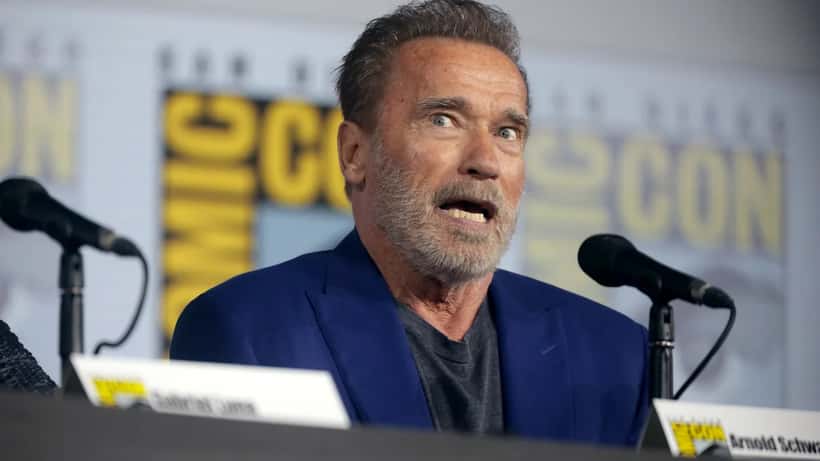
Arnold Schwarzenegger announced in April 2026 that he is returning to three of his most iconic film franchises — Conan the Barbarian, Predator, and Commando — at the age of 78. The news, revealed at the Arnold Sports Festival in Columbus, Ohio, has been greeted with disbelief and admiration in equal measure. But behind the Hollywood headlines lies a genuinely instructive story about staying physically and financially active well into later life.
The Comeback That Defies Convention
At 78, Schwarzenegger is not merely making a nostalgic appearance. He has been training daily at Gold's Gym in Venice, California, to prepare for the physical demands of King Conan — a sequel to the 1982 original, being developed by 20th Century Studios with director Christopher McQuarrie. He also announced interest in reprising roles in new Predator and Commando films.
For context, most professional actors retire from physically demanding roles in their 50s or 60s. Schwarzenegger, who has had multiple open-heart surgeries — including valve replacements in 1997 and 2018 — is doing it at nearly 80. He trains six days a week, follows a primarily plant-based diet, and has spoken publicly about the importance of structured routine in maintaining physical capacity as he ages.
His commitment is not just impressive — it is medically unusual enough to be worth examining.
What the Science Says About Staying Strong After 70
The decline in muscle mass and strength that accompanies ageing — a process known as sarcopenia — begins as early as your 30s, accelerating after 60. Without intervention, the average person loses between 3% and 8% of their muscle mass per decade after 30, and the rate increases significantly after 60. This contributes to falls, reduced mobility, slower recovery from illness, and loss of independence.
But the research is increasingly clear that much of this decline is preventable. According to the NHS physical activity guidelines for older adults, resistance exercise — lifting weights or using resistance bands — is the single most effective intervention for preserving muscle mass, bone density, and functional capacity in older adults. Even beginning strength training in your 70s produces measurable improvements in strength, balance, and quality of life within 12 weeks.
Schwarzenegger's continuation of structured strength training well into his 70s, even after major cardiac surgery, is consistent with guidelines from geriatric medicine specialists who argue that exercise is both safe and essential for most older adults — including those with managed heart conditions.
The Financial Side of Active Later Life
Schwarzenegger's comeback also raises a question that is increasingly relevant to millions of UK adults: what does it mean, financially, to stay active and productive well beyond the traditional retirement age?
In the UK, the state pension age is currently 66, rising to 67 between 2026 and 2028. But many people are choosing — or needing — to remain economically active into their 70s, whether through continued employment, freelance work, or investment income. This creates a set of financial planning challenges that are distinct from those faced by people who retire in their early-to-mid 60s.
Key considerations include:
- Pension drawdown strategy: If you continue earning into your 70s, the timing of when you access pension savings affects both your tax position and the longevity of your pot.
- Inheritance planning: The longer you remain financially active, the more complex your estate planning becomes — particularly if your asset base grows significantly after the traditional retirement age.
- Protection products: Life insurance, critical illness cover, and income protection policies all become significantly more expensive — or unavailable — after 70. Planning these in your 50s and 60s is far more cost-effective.
- State benefits interaction: Income from work or investments in later life can affect means-tested benefits and pension credit entitlements.
A wealth manager or independent financial adviser can help you model these scenarios based on your specific asset base, health status, and desired lifestyle. The earlier you plan for an extended active life, the more options you will have.
The NHS and Exercise After Cardiac Events
One aspect of Schwarzenegger's story that is worth addressing directly is exercise after cardiac surgery. He has had two open-heart procedures, and he continues to train intensively. This is not something most people should attempt without professional guidance.
The NHS recommends that adults who have experienced a cardiac event — a heart attack, bypass surgery, or valve replacement — undergo a structured cardiac rehabilitation programme before returning to exercise. These programmes, typically run through NHS hospitals and GP practices, combine supervised exercise with education about heart health, medication management, and lifestyle modification.
The evidence base for cardiac rehabilitation is strong: it reduces the risk of subsequent cardiac events by up to 26%, according to research published in the Cochrane Library, and significantly improves quality of life and exercise capacity. Yet uptake in the UK remains below 50% of eligible patients, partly because many people are uncertain about how hard they can safely exercise after a heart problem.
If you or a family member has had cardiac surgery and wants to resume physical activity — whether competitive sport or simply walking more — a consultation with a cardiologist or a specialist in cardiac rehabilitation is the right first step.
What Schwarzenegger's Example Actually Teaches Us
The lesson from Schwarzenegger's 2026 comeback is not that everyone should be lifting weights until 80 — it is that the trajectory of physical and financial decline that many people assume is inevitable is, in large part, a product of choices made decades earlier.
The habits that keep Schwarzenegger functioning at an elite level in his late 70s — structured exercise, nutritional discipline, medical monitoring, and career planning that extends beyond conventional retirement — are all things that health and financial experts recommend beginning in your 40s and 50s, not your 70s.
On ExpertZoom, you can speak to health professionals who specialise in fitness and wellbeing in later life, as well as wealth managers who can help you plan for a financially active older age. The best time to start is sooner than you think.
This article discusses public figures' health and fitness for educational purposes only. It does not constitute medical advice. Always consult a qualified healthcare professional before beginning or significantly changing an exercise programme, particularly if you have a pre-existing health condition.
