 Ben Davies
Apple's 'Surprise and Shine' event is confirmed for 9 September 2026, streaming live in the UK at 6pm BST. Expected to introduce the iPhone 18 Pro, the iPhone 18 Pro Max, and Apple's first-ever foldable smartphone — the iPhone Ultra — it will also mark the first major product launch under new chief executive John Ternus. For millions of UK consumers, the question is already urgent: upgrade or stay put? Before pre-orders open on 11 September, consumer electronics experts have a consistent message: get your current device properly assessed before you commit to four figures.
What Apple Is Revealing on 9 September 2026
The "Surprise and Shine" event at Apple Park in Cupertino represents a genuine inflection point. John Ternus, who assumed the chief executive role on 1 September 2026 following Tim Cook's 15-year tenure, is expected to open proceedings with Apple's boldest hardware lineup in years.
Based on confirmed reports from MacRumors and 9to5Mac ahead of the event, UK consumers can expect:
- iPhone 18 Pro — powered by the new A20 Pro chip, with significant AI and camera improvements, expected to start at approximately £1,099
- iPhone 18 Pro Max — the largest-screen option, expected to start around £1,199
- iPhone Ultra — Apple's first foldable smartphone, with a book-style design featuring a 5.4-inch outer display and a 7.7-inch inner screen when fully opened; pricing is estimated to start at the equivalent of approximately £1,800
UK pre-orders are expected to open on Friday 11 September, with devices reaching customers from Friday 18 September.
The event is genuinely significant in terms of product ambition. The foldable iPhone Ultra in particular represents the most consequential design change since the iPhone X in 2017. But significant does not automatically mean necessary — and that is precisely where a consumer electronics expert becomes valuable.
The Expert Verdict: Announcement Hype and What It Costs UK Consumers
Consumer electronics technicians across the UK see the same pattern repeat every September. Customers arrive convinced their iPhone is "on its last legs," presenting symptoms — sluggish performance, poor battery life, a cracked screen — that feel urgent but are, in most cases, entirely treatable.
"Battery degradation is the single most common driver of perceived obsolescence," notes the type of specialist available through ExpertZoom's Consumer Electronics professionals. "An iPhone 14 or 15 Pro with battery health at 74% behaves like a completely different phone to the one you bought. It throttles performance, heats up, and lasts half a day. A professional battery replacement at around £80 changes all of that within an hour."
Screen cracks, charging port corrosion, and software bloat are similarly misread as signs of terminal decline. Under the UK Consumer Rights Act 2015, UK consumers also retain statutory protections when goods develop faults within certain timeframes — protections that extend to repaired devices. Understanding both your repair options and your legal position gives you real leverage before spending £1,099 on new hardware.
The Numbers That Matter: A Real-World Repair vs Upgrade Comparison
This is the section that changes minds — and it is where a consumer electronics expert earns their fee before you spend a penny elsewhere.
Take a scenario that plays out repeatedly in repair workshops across the UK in September 2026. A buyer purchased an iPhone 15 Pro in October 2023 — one of the most capable smartphones released that year, with a triple camera system, titanium body, and USB-C connectivity. By September 2026, after nearly three years of daily use, the following has happened:
- Battery health: down to 74%, causing throttling, heat, and a daily runtime of under six hours
- Screen: a minor crack running 3cm along the bottom-right edge from a drop in January
- Performance: noticeable lag when switching between apps, attributed initially to "the phone being old"
The owner is eyeing the iPhone 18 Pro at £1,099 and assumes their phone is done.
Here is what a professional assessment actually finds — and what it costs:
Repair route: A battery replacement at £80 restores full performance and charging capacity. A screen repair for a minor crack in non-OLED territory costs £120. Total investment: £200.
After repair, the iPhone 15 Pro receives iOS software support until at least 2028 and performs on par with its launch-day capability. On the UK second-hand market, a repaired iPhone 15 Pro in good condition carries a resale value of approximately £300–£340.
Upgrade route: iPhone 18 Pro at £1,099, minus a trade-in or resale of the iPhone 15 Pro in its current (cracked, degraded) condition — approximately £220–£260. Net expenditure: £840–£880.
If the repaired iPhone 15 Pro runs reliably for another 18 to 24 months, the financial saving is between £640 and £680.
The logic a consumer electronics expert applies is precise: if your device's battery is above 70% health and there is no liquid damage indicator triggered, no corrosion on the logic board, and no OLED pressure damage beneath the screen, then professional repair will restore near-new performance at 15–25% of a replacement device's cost. If battery health has fallen below 65%, the phone fails to hold charge after a replacement, or the device is no longer receiving iOS security updates, the calculation shifts decisively toward a new purchase.
When the iPhone 18 Pro — or Ultra — Is the Right Call
Consumer electronics specialists are not anti-upgrade. They are anti-unnecessary-upgrade. There are genuine scenarios where the iPhone 18 Pro or even the iPhone Ultra is the correct decision:
Software support has ended: iPhone 12 models and earlier will not receive full iOS 20 support in 2026, meaning critical security patches and core app compatibility are no longer guaranteed. On a device used for banking, work email, or two-factor authentication, that is not a minor inconvenience — it is a security concern.
Camera requirements have grown professionally: The iPhone 18 Pro's A20 Pro chip introduces a rebuilt ultrawide sensor capable of 48-megapixel resolution and substantially improved low-light performance. For photographers, content creators, or small business owners relying on their phone for visual marketing, this is a meaningful functional upgrade, not a cosmetic one.
Repair costs approach 30–40% of device value: A cracked OLED display where replacement costs exceed £200, combined with a battery below 70% health, brings total repair investment close to £350–£400. At that point, the upgrade calculation becomes genuinely competitive — particularly if the repaired device's resale value is low.
The iPhone Ultra's form factor matters to you: A 7.7-inch inner display that folds flat into a jacket pocket is not an incremental change — it is a genuinely new category. For users who currently carry both a smartphone and tablet, or who work extensively from a screen while mobile, the Ultra may represent a consolidation that saves money and friction elsewhere.
What an Expert Checks Before You Decide
A professional consumer electronics consultation ahead of Apple's pre-order window typically takes one to two hours and covers more than a visual inspection:
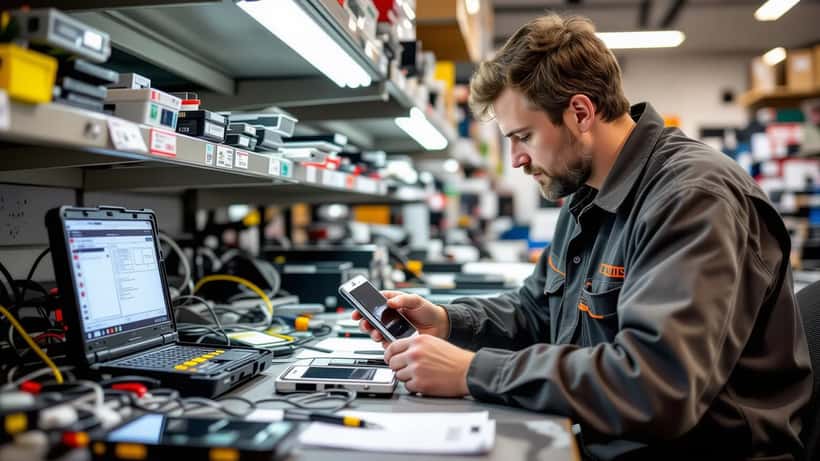
Battery diagnostics beyond the Settings percentage: Apple's built-in battery health reading is a simplified estimate. An expert-grade diagnostic reads actual cycle count, peak performance capability, and whether the cell is experiencing voltage drop under load — information that determines whether a battery replacement will genuinely restore your phone.
Logic board assessment: Liquid damage indicators, charging circuit health, and connectivity chip function — the components that a screen or battery swap cannot fix. A failed charging IC or corroded board changes the repair calculus entirely.
Display layer integrity: Cracks are visible, but pressure damage to the OLED layer beneath can cause colour shifting and touch failures that worsen over months. An expert distinguishes between a cosmetic crack and a functionally compromised screen.
Trade-in and resale benchmarking: A good specialist will tell you the realistic UK market value of your device in current condition and after repair — giving you a precise number to compare against Apple's upgrade pricing.
Note: This article provides general consumer information. Repair costs and device values vary by model, condition, and repair provider. It does not constitute financial or legal advice for your specific situation.
Book Before 11 September — Pre-Orders Open Fast
Apple's UK pre-order window opens on 11 September 2026. That gives you five days from the event to decide. It is not long, but it is enough time to get a definitive answer on whether your current iPhone needs replacing — or whether £200 and an hour of an expert's time is the smarter investment.
ExpertZoom connects UK consumers with vetted consumer electronics specialists who can carry out same-day diagnostics and, in most cases, same-day repairs for battery and screen issues. Whether you are in London, Manchester, Leeds, or Glasgow, an expert assessment before pre-order day turns what feels like an emotionally charged upgrade decision into a clear financial one.
The iPhone 18 Pro may well be worth having. But the only way to know for certain is to understand what you are actually leaving behind — and what it would cost to keep it going.
