 Harriet Price
Princess Diana's Lady-in-Waiting Banned from Driving: What Her Case Reveals About Exceptional Hardship Pleas and Your Rights in Court
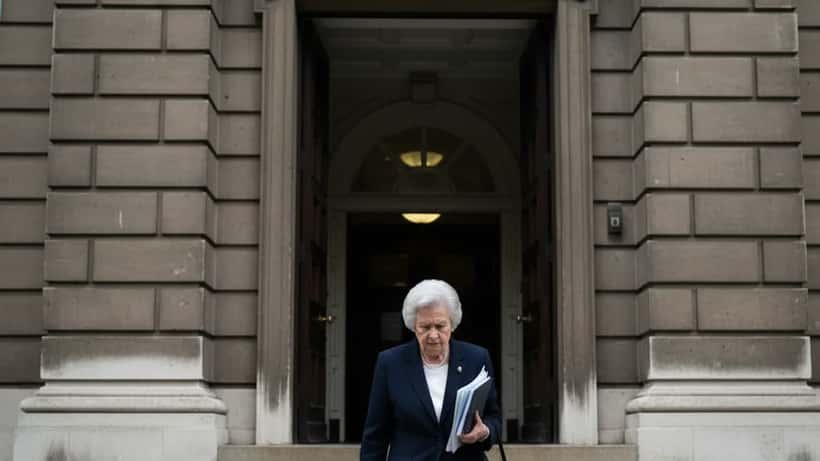
Anne Beckwith-Smith, 74, who served as Princess Diana's longest-serving lady-in-waiting from 1981 to 1997, was disqualified from driving for six months at Lavender Hill Magistrates' Court this week. The penalty followed her fourth speeding offence — she was caught driving at 36 mph in a 30 mph zone on South Street in Wilton, Wiltshire on 7 August 2025. Her case has drawn widespread attention not because of her royal connections, but because of what it reveals about one of the most misunderstood defences in UK motoring law: the exceptional hardship plea.
What Happened at Court
Beckwith-Smith pleaded guilty to the speeding offence. Because she had already accumulated 12 penalty points, she fell under the "totting up" provision of the Road Traffic Offenders Act 1988 — a mechanism that mandates a minimum six-month disqualification once a driver reaches this threshold.
Her legal team argued "exceptional hardship" on her behalf, claiming she needed to drive from her home in Onslow Square, South Kensington, to visit her ailing brother in Wiltshire. The magistrates heard the argument, considered it, and rejected it — finding that her circumstances did not meet the legal bar. She was also fined £307, ordered to pay £130 in court costs, and a £123 victim surcharge.
The total financial penalty was modest. The disqualification was not.
What "Exceptional Hardship" Actually Means in Law
The exceptional hardship defence is available under Section 35 of the Road Traffic Offenders Act 1988. It allows a driver who has reached 12 points to avoid disqualification — but the threshold is deliberately high.
The hardship claimed must be:
- Exceptional — not merely inconvenient or difficult, but genuinely severe and beyond what most people in the same situation would face
- Demonstrable — supported by evidence, not just a statement
- Primarily affecting others — courts are more sympathetic when the hardship falls on dependants, employees, or those relying on the driver, rather than on the driver themselves
Courts across England and Wales have consistently held that losing the ability to drive to work, or even to care for a family member, does not automatically constitute exceptional hardship. What matters is whether the consequences are genuinely extraordinary.
According to the Sentencing Council, the defence succeeds in roughly 30 to 40 percent of cases where it is argued — but those that succeed typically involve documented medical emergencies, sole-carer situations, or rural isolation with no alternative transport.
The Four-Strike Context: How "Totting Up" Works
Under UK law, drivers accumulate penalty points for most motoring offences. Speeding in a 30 mph zone typically carries three to six points. Once a driver accumulates 12 points within three years, the court must impose a minimum six-month ban under the totting-up provisions — unless exceptional hardship is proven.
Beckwith-Smith's case involved a fourth offence. Her previous three convictions had already taken her to the 12-point threshold or above. At this level, magistrates have limited discretion. The guidelines from the Sentencing Council allow for mitigation, but they do not permit leniency simply because a defendant is elderly, lives in a rural area, or has family responsibilities — these are, in the eyes of the law, ordinary life circumstances.
Drivers facing similar situations should be aware: the moment you approach 9 points, the legal calculus changes significantly. A solicitor specialising in road traffic law can help you understand your exposure before you receive another fixed penalty notice, not after.
What to Do If You're Approaching the 12-Point Limit
Many drivers don't consult a lawyer until they're already in court. That is often too late to gather the evidence needed to support an exceptional hardship plea. The steps that tend to matter are:
- Document dependencies — if others rely on you to drive them (elderly relatives, disabled dependants, employees), begin keeping records now
- Explore alternatives — courts expect you to have genuinely explored other transport options. If you haven't, the hardship is harder to argue
- Get specialist advice before any new offence — a road traffic solicitor can advise on the strength of a potential hardship case based on your specific circumstances
- Understand the totting-up timeline — points only count if they were imposed within the three years preceding the latest offence. An older point that falls outside this window doesn't trigger totting-up
The government's guidance on driving bans and penalty points is available on GOV.UK.
When to Consult a Solicitor
The Beckwith-Smith case is a reminder that court sympathy, social standing, or personal circumstance cannot substitute for legal preparation. Her legal team argued the case professionally — but without evidence sufficient to satisfy the legal standard.
If you are approaching 9 or 12 penalty points, or if you have received a summons related to a motoring offence that could trigger disqualification, a solicitor who specialises in road traffic law can review your case, help you understand whether exceptional hardship is arguable, and represent you at court if needed. The cost of a consultation is a fraction of the financial and practical disruption a six-month ban brings.
The case also raises a broader question about how older drivers plan for licence vulnerability — a topic that both motoring charities and legal professionals increasingly consider as the UK's driving population ages.
