 Imogen Bennett
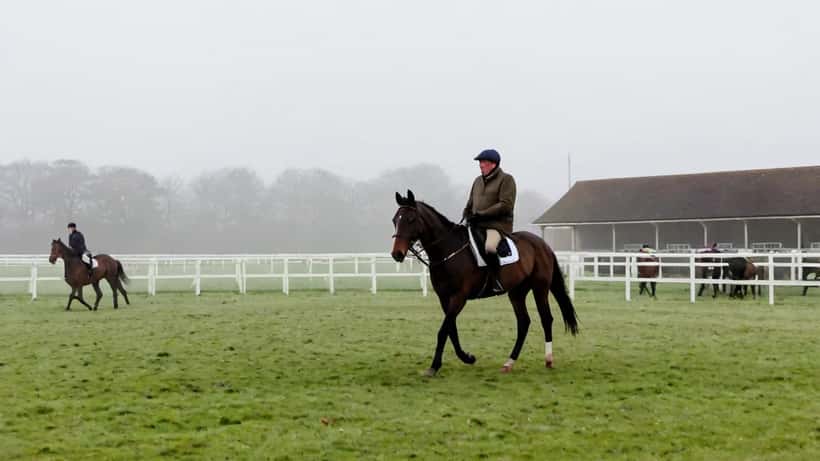
Andrew Balding, the Kingsclere-based racehorse trainer, has achieved a career-best season — recording 194 winners in 2025 and generating over £8.5 million in prize money. With Group 1 victories for Never So Brave, Gewan, and Kalpana, his Park House Stables operation has cemented its position among British racing's elite. The numbers are extraordinary, but for those involved in or considering an entry into thoroughbred ownership, they raise a fundamental question: how do you build and manage this level of wealth in a sport as volatile as horse racing?
The Economics of Elite British Racing
British horse racing generates approximately £4.1 billion annually for the UK economy, according to the British Horseracing Authority's 2025 economic impact report. Within that figure sits a complex wealth ecosystem: prize money, breeding rights, stud fees, sale proceeds, syndication income, and ancillary commercial revenue.
For a trainer like Balding — who oversees more than 100 horses at Park House Stables — the financial architecture is considerable. Training fees typically run between £55 and £80 per horse per day depending on operation size and location, meaning a 100-horse yard generates between £2 million and £3 million in training fees annually before any prize money or other income.
But this headline figure obscures significant cost and risk. Insurance, veterinary care, feed, staff wages, farriery, and facility maintenance represent major outlays. The business of training racehorses at elite level is operationally demanding and financially complex. Balding's family has been in the sport for generations — his grandfather Peter Hastings-Bass and uncle William Hastings-Bass were both prominent trainers — and that institutional knowledge of how to run a sustainable operation is as important as the wins themselves.
What Racehorse Ownership Actually Costs — and Returns
For the individuals who fund the horses Balding trains, the financial calculation is different. Racehorse ownership spans a spectrum from sole ownership — which can cost upwards of £100,000 per year for a single flat horse in training — to syndication, where multiple owners share costs and winnings.
Syndicates have democratised racing ownership considerably. A 10% share in a racehorse might cost £8,000-£15,000 annually depending on the calibre of trainer and horse. For many owners, this sits at the boundary of luxury hobby and genuine investment.
The critical distinction is that horse racing is not a reliable asset class. Prize money distribution in UK racing is highly concentrated: the top 5% of races by value account for a disproportionate share of total prize money. A horse placed consistently at listed and group level — the tier below the Group 1 races Balding has been winning — can return meaningful prize money. A horse that underperforms its purchase price at Tattersalls can leave owners nursing significant losses.
Capital appreciation through breeding is where the serious wealth is created. A stallion with strong Group 1 form can command stud fees of £20,000-£80,000 per covering. Mares with classic pedigrees retain residual value as broodmares. The wealthiest horse racing families in Britain — those behind operations like Juddmonte and Godolphin — have built their positions on breeding strategy as much as racing success.
The Tax Framework for Racing Wealth
Horse racing occupies an unusual position in UK tax law. For most individual owners, racehorse ownership is not treated as a trade for tax purposes — it is treated as a hobby. That means racing losses cannot be set against other income, and prize money is not subject to income tax.
However, this changes in specific circumstances. If an owner establishes a pattern of racing activity that looks commercial — particularly if they are also involved in breeding — HMRC may reclassify the activity as a trade. That classification has implications in both directions: trading losses become deductible, but prize money becomes taxable income.
Breeding income — stud fees, sale proceeds from foals — is typically treated as trading income, which means it is subject to both income tax and Class 4 National Insurance contributions. VAT applies to most horse-related services, and racing syndicates operate within a specific VAT framework that requires careful structuring.
Capital Gains Tax applies to the sale of horses that have been treated as capital assets rather than trading stock. For significant breeding animals, this can be a material liability. According to HMRC's guidance on the tax treatment of horses in racing and breeding, the classification of a horse as capital or revenue determines the tax treatment of disposal proceeds.
For owners whose racing activities involve significant sums — whether through direct ownership, breeding, or syndicate investment — the overlap of income tax, capital gains, VAT, and inheritance tax planning requires coordinated professional advice.
Wealth Management in a Volatile Sport
Horse racing wealth is cyclical and unpredictable in a way that differs from equity portfolios or property. A top racehorse purchased for £500,000 can be retired sound and become a stallion generating millions in stud fees — or it can suffer an injury in its first season and be worth nothing but sentiment.
This volatility means that racehorse-related wealth should almost never be the core of a financial plan. Serious participants in the sport — whether as owners, breeders, or syndicators — tend to treat their racing involvement as a high-risk alternative asset with emotional utility, rather than as their primary wealth vehicle.
The most durable racing fortunes in Britain have been built on diversified wealth: families who built businesses, accumulated property, and invested conventionally, then channelled a portion of their capital into racing as a passion project with upside potential. The racing component enhances the lifestyle and, occasionally, generates outsized returns. But it does not carry the whole financial picture.
For anyone in the UK who is entering racing ownership for the first time — whether via a syndicate, a sole purchase, or a part-share in a promising National Hunt prospect — speaking to a wealth manager and a tax adviser before signing documents is not overcaution. It is basic financial hygiene in an industry where the glamour can obscure the complexity.
Andrew Balding's 2025 season is a reminder of what elite preparation and long-term strategic thinking can produce in British racing. For the owners who share those winners, the returns are real. For those considering the sport, the advice is the same: know the costs, understand the risks, and get the right financial guidance before the race begins.
