 Sophia Hamilton
Alexander Harris, a 30-year-old British-Irish national and development consultant based in Islamabad, was found dead in the Pracha area of Mansehra district, Pakistan, on 2 September 2026 — three days after he disappeared while descending the 4,060-metre Musa Ka Musalla mountain in Khyber Pakhtunkhwa province. His death has thrown a spotlight on a question thousands of British adventurers never think to ask before they leave: what actually happens — legally and financially — when a UK citizen dies on a trek abroad?
Three Days on Musa Ka Musalla
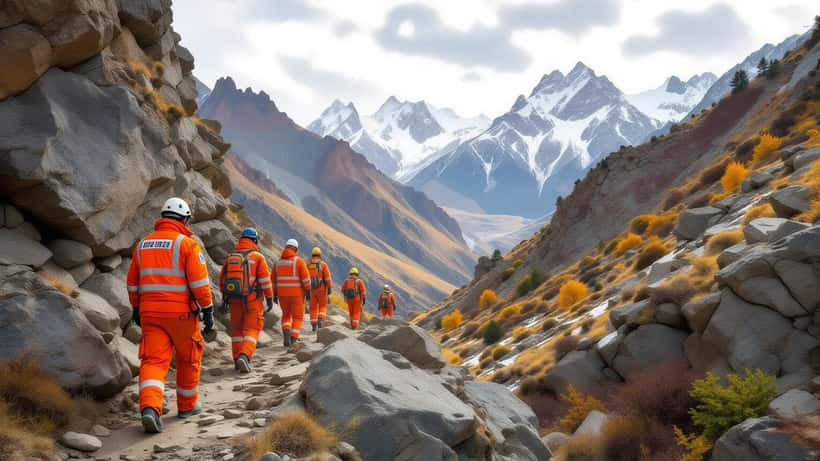
Harris set out on the weekend of 30–31 August 2026 to climb Musa Ka Musalla in the Siran Valley with fellow British national Alun David Cooper Cledwyn. The 4,060-metre peak sits in the Mansehra district of Khyber Pakhtunkhwa, a province that draws thousands of trekkers each year. While modest compared to Pakistan's famous 8,000-metre giants, the mountain offers serious exposure: steep descents, rapidly shifting weather, and terrain where losing a trail can be fatal.
The two men reached the summit. On the descent, they took separate routes, agreeing to meet in the town of Mandachucha below. Cledwyn arrived safely; Harris did not. Pakistani authorities launched a search-and-rescue operation involving around 200 people — police officers and personnel from Rescue 1122, the emergency response service for Khyber Pakhtunkhwa. After three days of searching, his body was recovered from a ravine reported to be some 200 feet below the trail, according to Yorkshire Live.
Harris worked for Adam Smith International, a British global development consultancy headquartered in London, at its Islamabad office. Police described him as an experienced trekker who had previously completed the same route. His dual Irish-British citizenship — confirmed by the Irish Times — means both the British High Commission in Islamabad and the Irish Embassy hold consular responsibilities — a situation that adds a layer of administrative complexity for grieving families navigating two governments simultaneously.
Pakistan has seen a surge in British nationals working and trekking in its northern regions in recent years. The appeal is understandable: dramatic landscapes, accessible routes, and relatively low costs. But the legal and financial infrastructure that follows a death in a remote Pakistani district is far more complex than most departing travellers anticipate.
The Legal Process When a British Citizen Dies Abroad
The Foreign, Commonwealth and Development Office (FCDO) operates a 24-hour consular assistance line — +44 20 7008 5000 — and British embassies and high commissions worldwide can advise families on local legal requirements, issue a formal consular report of death, and refer next of kin to reputable repatriation specialists.
What the FCDO cannot do is fund any part of the process. The government is explicit on its official guidance page: it cannot pay for repatriation, burial, cremation, or any debts or expenses incurred abroad. Every cost that follows a death in a country like Pakistan falls entirely to the family — or to a travel insurance policy, which may or may not pay out depending on the circumstances.
The legal sequence typically runs as follows. First, Pakistani authorities must certify the cause of death. In cases involving an accident — a fall, a drowning, a vehicle collision — a post-mortem examination may be required before a local death certificate is issued, and this process can take several days. Second, the British High Commission issues a consular report of the death, which is the document the UK government formally recognises. Third, once the body is repatriated to England, Wales, or Northern Ireland, the local coroner must be notified and will decide whether to open an inquest. Scotland operates a separate fatal accident inquiry process. Both can take months or longer to conclude, particularly where foreign proceedings have occurred in parallel.
If the deceased held assets in Pakistan — a salary, a local bank account, employer-contributed funds — a separate process of winding up those assets under Pakistani law may be required before funds can be transferred to the UK. This is often overlooked in the immediate weeks of bereavement and can extend the legal process considerably.
The £7,500 Question: What It Actually Costs
This is where abstract legal process meets concrete family reality. The numbers are significant and often come as a shock.
Consider a 34-year-old British woman from Leeds who works for a development NGO in Islamabad and dies in a trekking accident in northern Pakistan in autumn 2026. Her family contacts the FCDO within hours of the rescue service's notification. Here is what the bill looks like:
Pakistani post-mortem and death certification: three to seven working days, with official fees running approximately £200–£400. The process cannot be shortened by the family; it is entirely in the hands of Pakistani authorities.
International repatriation from Pakistan to the UK: air transport requires a zinc-lined sealed coffin — a legal requirement for human remains on international flights — along with professional embalming to international standards, Pakistan-side airport handling fees, and a UK-side reception by a licensed funeral director. In 2026, repatriation specialists quote £5,000–£8,000 for South Asia routes. Total costs including ancillary fees average over £7,500 for Pakistan-specific cases, according to industry figures.
Cross-border estate and succession legal work: if the woman held a Pakistani bank account or an employer-paid provident fund, her family may need a Pakistani solicitor to wind up those assets before funds are repatriable. A UK solicitor specialising in cross-border succession typically charges £1,500–£4,000 for this, depending on complexity.
The decisive if-then rule: if her travel insurance policy did not include an explicit "adventure trekking" or "high-altitude" endorsement — a standard omission on many annual multi-trip policies, which commonly exclude trekking above 2,000 or 4,000 metres — then the entire repatriation and legal bill falls to her family out of pocket. The annual policy premium she paid: around £60. The uninsured cost her family now faces: potentially more than £10,000.
In Harris's case, dual nationality introduces further administrative steps: both the British and Irish consular teams must coordinate, documents may require processing through two separate national bureaucracies, and the timeline for repatriation is extended accordingly.
What Legal Advisers Recommend Before Any High-Altitude Trek
The death of Alexander Harris follows a pattern seen repeatedly in cases involving British nationals in remote mountain regions: experienced, careful trekkers encountering hazards that no amount of prior experience fully eliminates. What legal and financial advisers consistently find, in the aftermath of such cases, is that the financial exposure was preventable — even when the tragedy itself was not.
Check the elevation exclusion clause in your travel policy. This is typically buried in the "hazardous activities" or "adventure sports" schedule. Standard annual policies frequently void at 2,000m or 4,000m; specialist trekking insurers will cover altitudes up to 5,500m or 6,000m for an additional premium of £30–£80 per trip. At 4,060 metres, Musa Ka Musalla sits precisely in the exclusion zone of many basic policies.
Register with the FCDO's LOCATE service before you depart. This free, confidential online registration gives the government a point of contact for your emergency next of kin if something goes wrong in an area with limited communications — the exact situation that played out in Mansehra district over 30 August to 2 September 2026.
Make a will that is valid in the UK before travelling to a high-risk destination. Intestacy rules vary significantly across international jurisdictions, and assets held locally — including employer-held savings — can become frozen in a foreign legal process if no valid will exists. A British solicitor can ensure UK-based instructions are enforceable and coordinate with local counsel where needed.
Leave a physical itinerary with someone at home. The search for Harris was triggered quickly because a plan existed and a co-trekker reported his failure to appear. A copy of your route, accommodation names, and emergency contacts left with family or an employer can cut hours off consular notification time.
British nationals already living and working abroad may want to review what consular protection they are entitled to, and how the rules apply differently to those resident outside the UK — a question covered in the recent Expert Zoom guide on British expats' legal rights under EU and non-EU jurisdictions.
This article addresses legal processes in general terms and does not constitute legal advice. Individuals dealing with a bereavement abroad should seek specialist legal counsel. Cross-border estate and succession law varies significantly by jurisdiction.
What Comes Next
As of early September 2026, both the British High Commission and Irish Embassy in Islamabad are understood to be supporting Harris's family. Pakistani authorities in Mansehra district have completed the recovery operation; a formal cause-of-death investigation is under way. No repatriation timeline has been confirmed publicly.
For any family facing this situation, the UK government's official guidance on what to do when someone dies abroad sets out the full step-by-step legal checklist — from local death certification through coroner notification to UK registration. Solicitors with cross-border succession experience can be consulted through Expert Zoom's Legal directory for tailored advice on repatriation costs, insurance disputes, and foreign estate administration.
