 Imogen Bennett
On 29 September 2026, Airbus's A350F freighter completed its maiden flight from Toulouse-Blagnac Airport at 10:20 local time, launching a certification programme that will reshape the global air cargo market. For UK investors, pension holders, and anyone with exposure to FTSE-listed aerospace equities, this milestone carries real financial implications — both an upside case if the programme stays on schedule, and measurable downside risk if it does not.
The A350F's Maiden Flight: What Happened
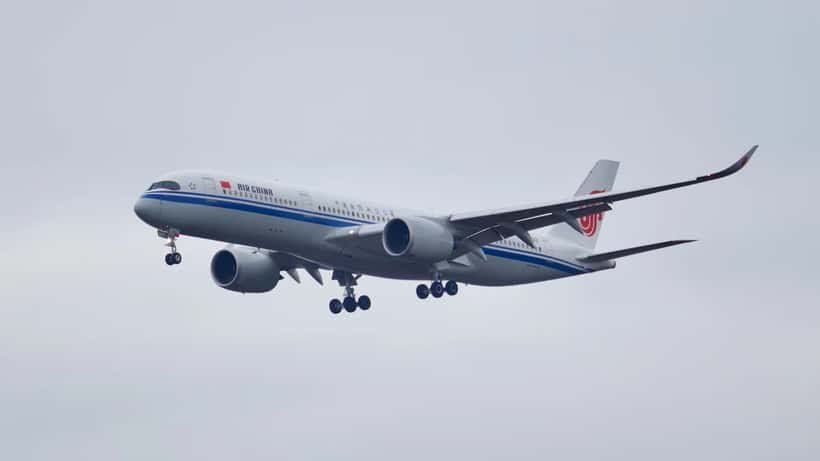
The aircraft that lifted off on Tuesday — MSN700, registration F-WXLD — is Airbus's answer to the retirement wave of ageing Boeing 747-400 freighters that still make up a large portion of the world's long-haul cargo fleet. Built around the proven A350-1000 passenger airframe, the A350F is the only large freighter currently in production with a predominantly carbon-fibre fuselage, reducing structural weight significantly versus conventional aluminium-alloy designs.
The performance figures confirm its ambition: 111 tonnes of maximum payload, a range of 4,700 nautical miles (approximately 8,700 km), and fuel burn roughly 20% lower per tonne-kilometre than the Boeing 747-8F it is intended to replace, according to Airbus. The aircraft is powered exclusively by Rolls-Royce Trent XWB-97 engines — two per aircraft — a detail that has significant implications for UK investors.
Following Tuesday's first flight, Airbus plans a certification campaign of approximately 400 flight-test hours involving two test aircraft over around nine months. EASA and FAA type certification are targeted for 2027, with the first commercial deliveries scheduled for the second half of that year. The A350F's order book currently stands at 107 aircraft from at least 14 customers, including Atlas Air (20 aircraft — the largest single order), Air China Cargo (10 aircraft, increased as recently as May 2026), CMA CGM, and Singapore Airlines Cargo.
The Rolls-Royce Factor: A UK Equity Lens
Every A350F delivered carries two Rolls-Royce Trent XWB-97 engines. At 107 aircraft on order, that is a confirmed pipeline of over 200 engine deliveries for Rolls-Royce Holdings (RR.L), the UK's largest listed aerospace manufacturer by market capitalisation. But the headline delivery number understates the financial significance. Each Rolls-Royce engine delivered to an airline triggers a long-term TotalCare maintenance agreement, under which Rolls-Royce earns a fee per engine flight hour for the aircraft's operational lifetime — typically 25 to 30 years. In practical terms, each A350F entering service adds a small but permanent annuity to Rolls-Royce's recurring revenue base.
Rolls-Royce's management has explicitly identified widebody engine deliveries and the growth of the installed engine base as the primary drivers of its free cash flow improvement targets through 2027 and beyond. A successful A350F certification expands this installed base, increases long-term maintenance income, and improves the revenue visibility that equity analysts use to set price targets. First-flight confirmation — particularly following the earlier-than-expected 29 September date — is the kind of programme milestone that can prompt analysts to revise their earnings estimates upward.
The A350F's exclusive engine arrangement means Rolls-Royce has no competition risk within this programme for the foreseeable future, since changing engine suppliers mid-certification would be prohibitively costly for both Airbus and its customers.
The Wider UK Aerospace Supply Chain
Rolls-Royce is not the only UK-connected beneficiary of the A350F programme. The aircraft's carbon-fibre wing box and structural components involve advanced manufacturing processes in which UK firms — including GKN Aerospace and a network of precision-engineering suppliers based in Bristol, Derby, and Belfast — hold long-standing Airbus production contracts.
The UK aerospace sector employs approximately 120,000 people directly and generates around £36 billion annually in economic output, according to ADS Group, the trade body for UK aerospace and defence. Each new Airbus widebody programme that enters service sustains orders for spare parts, component upgrades, and maintenance kits from this supply chain across the aircraft's entire operational life. Investors focused on UK smaller companies or regional equity funds with exposure to precision engineering and advanced manufacturing will find the A350F's certification timeline directly relevant to the order books of these second-tier suppliers.
What This Means for Your Portfolio: A Concrete Case
Consider a UK investor in their mid-40s with a self-invested personal pension (SIPP) holding £50,000 across three funds: a FTSE 100 passive tracker (40%, so £20,000), a global equity fund (40%, so £20,000), and a UK smaller companies fund (20%, so £10,000).
Within the FTSE 100 tracker, Rolls-Royce carries an approximate index weighting of 1.8%, giving this investor roughly £360 of effective Rolls-Royce exposure. If A350F certification proceeds on schedule through 2027 and Rolls-Royce delivers a full-year earnings upgrade citing programme progress — a move consistent with the 15–20% share price reratings the company saw in 2023 and 2024 when widebody engine deliveries recovered — the gain on this position would be approximately £54 to £72.
Within the global equity fund, Airbus SE typically carries a 2–4% weight in European-allocated global funds. A 5% upward revision in Airbus's share price following a smooth certification campaign would add roughly £20–£40 to the same portfolio.
If, however, certification is delayed by six months or more — a plausible scenario; Airbus's A320neo LEAP engine certification in 2017 slipped by almost a year — both stocks typically trade down 8–12% on the uncertainty, reducing this portfolio's paper value by roughly £65–£110 across the two positions. That is less than 0.2% of the total SIPP, but the same pattern at scale across a £500,000 pension creates a £650–£1,100 downside swing that is worth planning for.
A qualified wealth management adviser can map your exact aviation exposure across all funds, run scenario analysis against the A350F certification timeline, and help you decide whether any position adjustment is warranted.
ESG Considerations: Is the A350F a Green Investment?
For UK investors whose pensions or ISAs apply ESG screening criteria — an increasingly common feature of ethical investment platforms and workplace pensions — the A350F introduces a genuine analytical complexity.
On the efficiency side, the aircraft's carbon-fibre airframe and next-generation engines deliver roughly 20% lower fuel burn per tonne-kilometre versus the aircraft it replaces. Airbus has confirmed the A350F is compatible with 100% Sustainable Aviation Fuel (SAF) blends under current ASTM standards, and the Trent XWB-97 engines meet the latest ICAO CAEP/12 noise and emissions standards. According to the International Air Transport Association, aviation accounts for approximately 2.5% of global CO₂ emissions, and fleet renewal with more efficient aircraft is one of the primary levers for reducing aviation's carbon intensity.
On the expansion side, however, a more efficient and longer-range freighter reduces the economic barriers to air shipping long-haul cargo, which can stimulate higher overall volumes. Whether the A350F is ESG-positive depends substantially on the methodology your fund applies: per-asset intensity tests will show clear improvement; net sector expansion tests are more nuanced.
An adviser with specialist ESG credentials can clarify exactly how your fund's screening process treats new-generation aviation assets and whether today's first-flight headline changes anything for your specific holdings.
What to Do Before Certification Arrives
The A350F's first flight is confirmed. The next material catalyst — EASA type certification — is approximately nine to twelve months away, giving UK investors a planning window before markets are likely to price the event in fully. Between now and certification, Airbus will publish flight-test progress milestones, and Rolls-Royce's full-year results in early 2027 will quantify the A350F programme's contribution to its order book and long-term maintenance pipeline.
This interval is the right time to review your aviation exposure — not after a certification announcement has already moved markets. Checking your current portfolio allocation to aerospace, understanding the specific engine programme risk embedded in your Rolls-Royce or FTSE 100 tracker position, and stress-testing your holdings against a plausible delay scenario are all tasks that a qualified wealth management adviser on ExpertZoom can handle quickly and cost-effectively.
The A350F may well represent the most commercially significant new freighter aircraft of this decade. Whether that is good news for your specific portfolio depends entirely on what you currently hold and how you have sized those positions.
Financial disclaimer: This article is for informational purposes only and does not constitute financial advice. The value of investments can go down as well as up, and you may get back less than you invest. Past performance is not a reliable indicator of future results. Consult a qualified financial adviser before making any investment decisions.
