 Amelia Davies
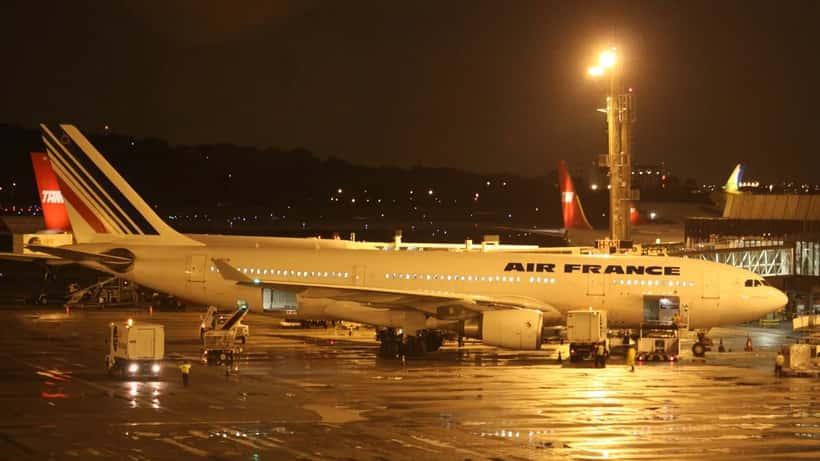
On 21 May 2026, a Paris appeals court found Air France and Airbus guilty of involuntary manslaughter over the crash of Flight AF447 on 1 June 2009, which killed all 228 people aboard. The verdict reverses a 2023 lower court acquittal and formally assigns criminal responsibility to both companies for the first time in 17 years. For aviation passengers, UK families of victims, and anyone with an interest in corporate accountability, the ruling is the most significant aviation liability judgment in a generation.
What Happened to Flight AF447
Air France Flight 447 departed Rio de Janeiro at 22:29 on 31 May 2009, bound for Paris Charles de Gaulle. At approximately 02:10 on 1 June, the aircraft entered a stall from which it did not recover. It struck the Atlantic Ocean at high speed, killing all 216 passengers and 12 crew. The wreckage and flight recorders were not recovered until 2011, two years after the crash.
The official investigation, completed in 2012, identified a combination of factors: ice crystals blocked the aircraft's pitot tubes, disabling the autopilot and triggering erratic airspeed readings. The pilots failed to recover from the resulting stall, applying incorrect control inputs that deepened the aircraft's dive. The investigation also found that Airbus had been aware of pitot tube failure issues before 2009 and that Air France's pilot training for high-altitude manual flying was inadequate.
At first trial in 2023, the court found both companies had been negligent — but acquitted them, ruling that prosecutors had not proved a direct causal link between the negligence and the deaths. Families and prosecutors appealed.
The 2026 Verdict: What the Court Found
The Paris Court of Appeal found both Air France and Airbus guilty of "involuntary manslaughter" on 21 May 2026 and ordered each to pay the maximum criminal fine of €225,000 — approximately £192,000 per company.
The court ruled both companies were "solely and entirely responsible" for the deaths and rejected the lower court's finding that causation could not be established. The appeals judges concluded that Airbus's failure to replace defective pitot tubes promptly, combined with Air France's insufficient pilot training, constituted the chain of causation that killed 228 people.
The fines are widely described as symbolic. Air France and Airbus have paid billions in civil damages to victims' families since 2009. The criminal conviction, however, carries a different weight: it is a formal finding by a court that corporate negligence caused these specific deaths, not merely that procedures were substandard.
Both companies are expected to appeal to France's highest court, the Cour de cassation. That process could take several more years.
Why UK Passengers and Families Should Know This
Several British nationals were among the 228 people who died in the AF447 crash. Beyond those directly affected, the case has practical significance for every UK traveller on long-haul routes — because the regulatory and training changes driven by AF447 affect every commercial flight today.
Following the 2012 investigation, aviation regulators worldwide — including the UK Civil Aviation Authority — mandated new requirements for pilot upset recovery training. Manufacturers were required to replace faulty pitot tube models across their fleets. The crash is now cited in airline training programmes globally as a defining case study in automation dependency and manual flying skills.
The 2026 verdict reinforces that aviation regulators and courts are prepared to hold manufacturers and airlines criminally liable for foreseeable design failures and training gaps — not just for pilot error.
What the Verdict Means for Aviation Legal Claims
The AF447 judgment raises a significant question for aviation lawyers: does a criminal conviction for involuntary manslaughter affect the landscape for civil damages claims in other jurisdictions?
In France, the civil damages claims for AF447 were largely settled years ago. In the UK, aviation accident claims are governed by the Warsaw Convention and Montreal Convention frameworks, which provide structured compensation for air travel fatalities irrespective of criminal proceedings. However, a criminal conviction — particularly one in which the appeals court established a direct causal chain from corporate negligence to death — can strengthen the negotiating position of families pursuing civil action or appealing existing settlements.
Aviation lawyers note that the verdict's precedent applies most directly to future cases where manufacturers or airlines face both criminal and civil liability for systemic failures. UK families involved in any ongoing aviation litigation should seek specialist advice on whether the AF447 verdict has any bearing on their position.
The Broader Corporate Accountability Lesson
The AF447 case illustrates how corporate entities can be held criminally liable even where the proximate cause of a disaster was crew action. The appeals court's reasoning focused on the systemic failures — the failure to replace known-defective components, the failure to provide adequate training — that made the crew's errors inevitable rather than exceptional.
This reasoning is increasingly visible in UK courts as well. Corporate manslaughter convictions in the UK, under the Corporate Manslaughter and Corporate Homicide Act 2007, require proof of a gross breach of a relevant duty of care caused by senior management failures. The AF447 judgment is a reminder that systemic negligence at board level — not just frontline error — can constitute the basis for corporate criminal liability.
Seeking Advice After an Aviation Incident
UK passengers, travel companions, or families affected by aviation incidents have legal rights under the Montreal Convention, including compensation for delays, injuries, and fatalities. These rights apply regardless of where the carrier is registered.
If you are involved in an aviation claim, a personal injury or aviation specialist solicitor can advise on applicable conventions, time limits, and how criminal proceedings in another jurisdiction may interact with your civil claim. ExpertZoom connects UK residents directly with legal specialists who handle aviation and travel claims.
The UK Civil Aviation Authority publishes guidance on pilot training standards and safety initiatives — the direct regulatory legacy of the lessons learned from AF447 — and is the authoritative source on aviation safety requirements in the UK.
