
An online tutor can transform a struggling student into a confident learner — but only if you choose the right one. With UK demand for online tutoring rising 35% since 2022 [Tutoring Association, 2024], the market is flooded with platforms and freelance tutors. This guide breaks down costs, qualifications, and the practical steps to find a tutor who actually delivers results.
What Does an Online Tutor Actually Do?
An online tutor is a qualified educator who delivers one-to-one or small-group lessons via video call. Sessions typically last 50–60 minutes and cover a single subject at the learner's own pace.
Unlike pre-recorded courses, live online tutoring adapts in real time. A tutor spots mistakes as they happen, adjusts explanations, and sets targeted homework. The British Council recommends live interaction for language learning because it builds fluency faster than passive methods [British Council, 2024].
Online tutors work across every age group — from Key Stage 2 maths to A-level chemistry to adult professional skills. Many specialise in exam preparation for GCSEs, A-levels, or university entrance tests. Others focus on English as a second language, music, or coding.
Key point: The best online tutors hold teaching qualifications (QTS or PGCE) or a relevant degree plus a valid DBS check. Always verify credentials before booking.
How Much Does Online Tutoring Cost in the UK?
Online tutoring prices in the UK vary widely depending on the tutor's experience, subject complexity, and platform fees. Knowing the typical ranges helps you spot overcharging — and underpaid tutors who may lack qualifications.
Platform-based tutors tend to charge 10–20% less than independent tutors because the platform handles marketing and payment processing. However, independent tutors keep 100% of their fee, which often means more experienced professionals prefer working directly with families.
Budget-conscious families should consider trainee teachers or university students, who typically charge £15–£20 per hour while still delivering solid exam results.
How to Choose the Right Online Tutor for Your Needs

Selecting an online tutor requires more than browsing profiles. A structured approach saves time and prevents wasted sessions with a poor match.
Check Qualifications and DBS Status
Every tutor working with under-18s in the UK should hold an enhanced DBS (Disclosure and Barring Service) check. Reputable platforms like MyTutor and Tutorful verify this automatically. For independent tutors, ask to see the certificate or check their DBS Update Service number online at GOV.UK.
Look for a relevant degree in the subject they teach, plus a teaching qualification (QTS, PGCE) or significant tutoring experience. Subject-specific knowledge matters more than generic teaching credentials.
Book a Trial Lesson
Most platforms offer a free or discounted trial session. Use it to assess three things: does the tutor explain concepts clearly? Do they adapt to the learner's pace? Does the student feel comfortable asking questions? A trial reveals chemistry that no profile can predict.
Read Reviews and Track Record
Look beyond star ratings. Read written reviews for mentions of specific improvements: "My daughter's maths grade went from 4 to 7" carries more weight than "Great tutor." Platforms that display exam results or grade improvements provide the most reliable evidence.
À retenir : A qualified tutor with verified DBS, strong reviews, and a successful trial lesson is worth paying a premium — the results compound over months.
Online Tutoring Platforms vs Independent Tutors
Choosing between a tutoring platform and an independent tutor depends on your priorities: convenience and safeguards versus flexibility and price.
| Feature | Platform (MyTutor, Tutorful) | Independent tutor |
|---|---|---|
| DBS verification | Automatic | You must request it |
| Price range | £20–£50/hr | £15–£75/hr |
| Scheduling | Built-in booking system | Arranged directly |
| Payment protection | Platform holds payment | Direct bank transfer |
| Tutor vetting | Qualifications checked | Self-reported |
| Cancellation policy | Standardised | Negotiable |
Platforms suit parents who want a safety net — verified tutors, secure payments, and easy cancellations. They also handle matching, which saves hours of searching.
Independent tutors work best for learners with specific requirements: a particular exam board specialism, flexible scheduling outside platform hours, or a long-term relationship where the tutor tailors a multi-year study plan.
"The best tutoring outcomes happen when families commit to consistency — same tutor, same time, every week. Platforms make that easy to maintain." — Dr Sarah Chen, Education Researcher, UCL Institute of Education
For families new to online tutoring in the UK, a platform is usually the safest starting point. Once you know what works, switching to an independent tutor for advanced subjects can save 15–20% on fees.
Getting the Most From Online Tutoring Sessions
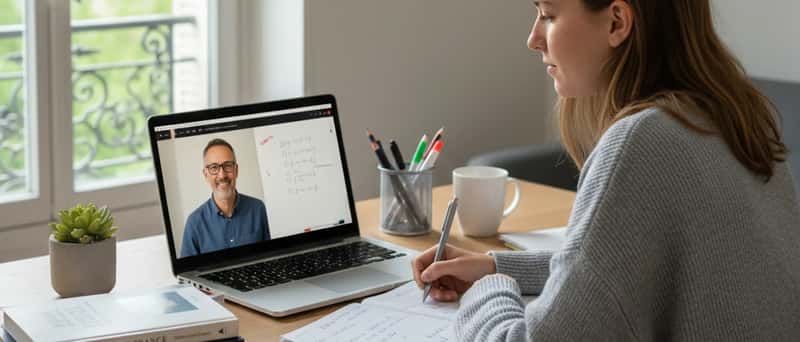
Booking an online tutor is step one. Making the sessions productive requires preparation from both the student and the family.
Set Clear Goals Before the First Session
Share the student's current grades, target grades, and any specific topics causing difficulty. A good tutor uses this to create a structured plan rather than ad-hoc revision. For GCSE students, align sessions with the exam board syllabus (AQA, Edexcel, or OCR) — each has different question styles and mark schemes.
Create a Distraction-Free Environment
Online learning demands more focus than classroom learning because there is no physical teacher presence to maintain attention. The student needs a quiet space, a stable internet connection (minimum 10 Mbps), and a webcam at eye level. Closing all tabs except the lesson platform eliminates the temptation to browse.
Review Between Sessions
The National Tutoring Programme (NTP) found that students who completed homework between sessions improved 1.5 times faster than those who only attended lessons [Education Endowment Foundation, 2024]. The EEF's tutoring guidance confirms that structured practice between sessions is one of the strongest predictors of progress. Encourage 20–30 minutes of independent practice between each tutoring session for compounding returns.
When Online Tutoring Might Not Be the Right Fit
Online tutoring works brilliantly for most learners, but some situations call for alternatives. Recognising these early prevents frustration and wasted money.
Children under eight often struggle with screen-based learning because their attention spans are shorter and they respond better to physical interaction. For this age group, in-person tutoring or small learning pods tend to deliver stronger outcomes.
Students with severe learning difficulties — such as profound dyslexia or ADHD requiring constant redirection — may benefit more from a specialist educational psychologist or a SEN (Special Educational Needs) tutor trained in face-to-face adaptive techniques.
Finally, if the student actively resists tutoring, forcing online sessions rarely works. Address the underlying motivation first. A conversation with their school teacher or a qualified educational professional can help identify whether an underlying issue — such as anxiety or attention difficulties — needs addressing before academic support begins.
À retenir : Online tutoring suits self-motivated learners from age eight upwards. For younger children or complex learning needs, explore in-person alternatives first.
Frequently Asked Questions
How many hours of online tutoring per week do students need? Most students benefit from one to two sessions per week (50–60 minutes each). For intensive exam revision, three sessions per week in the lead-up to GCSEs or A-levels is common. More than three risks burnout without proportional improvement.
Can online tutoring help with university applications? Yes. Many online tutors specialise in UCAS personal statements, Oxbridge interview preparation, and entrance exams like the UCAT or LNAT. Expect to pay £40–£75 per hour for this level of specialism [Sherpa Online, 2025].
Is online tutoring as effective as face-to-face tutoring? Research from the Education Endowment Foundation (EEF) shows that high-quality online tutoring delivers equivalent learning gains to in-person tutoring for students aged 10 and above [EEF, 2024]. The key variable is tutor quality, not the delivery format.
What technology do I need for online tutoring? A laptop or tablet with a webcam, a stable broadband connection (10+ Mbps), and headphones with a microphone. Most platforms run in a web browser — no special software required. An interactive whiteboard app like Bitpaper or Miro enhances maths and science sessions.
Disclaimer: The information on this page is provided for informational purposes only and does not constitute educational advice. Individual learning needs vary — consult a qualified educator for personalised guidance.