
Finding a dentist near you in the UK means choosing between NHS and private care, understanding costs that range from £26.80 to over £300 per visit, and knowing how to register when most practices have closed their lists. This guide breaks down every step — from locating an NHS dentist accepting new patients to handling a dental emergency at 2 a.m. on a Sunday.
Around 26 million adults in England saw an NHS dentist in the 24 months to June 2024, yet the British Dental Association (BDA) estimates that over 4 million people tried and failed to secure an appointment during the same period [BDA, 2024]. The gap between supply and demand has widened since the pandemic, making an informed search more important than ever.
NHS vs Private Dentist: What Each Option Actually Costs
NHS dental charges in England follow three fixed bands set by the Department of Health and Social Care. Band 1 covers an examination, diagnosis and preventive care for £26.80. Band 2 adds fillings, root canals and extractions for £73.50. Band 3, which includes crowns, dentures and bridges, costs £319.10 [NHS England, 2024–2025].
Private dental fees vary widely. A routine check-up at a private practice in London typically costs between £80 and £250, while practices outside the South East may charge £50 to £120 [BDA, 2024]. Treatment costs scale accordingly: a single private crown often exceeds £500, compared with the £319.10 NHS Band 3 cap that covers the crown plus any other work in the same treatment course.
Scotland, Wales and Northern Ireland operate different NHS dental charge structures. In Scotland, NHS charges are capped at 80% of the treatment cost up to a maximum of £384. In Wales, there are no NHS dental charges for under-25s. Always check the rules specific to your nation before assuming England's banding applies.
Key takeaway: NHS dental care is significantly cheaper, but availability is limited. If your nearest NHS practice has a closed patient list, a private practice guarantees immediate access — at a higher price.
How to Find an NHS Dentist Accepting New Patients
The NHS "Find a Dentist" tool at nhs.uk/service-search/find-a-dentist is the official starting point. Enter your postcode, and the tool returns practices within a set radius, showing whether each one is currently accepting NHS patients. The results update regularly, but practice availability can change daily.
Step-by-Step Registration Process
- Search by postcode on the NHS website or call NHS 111 for a verbal list of available practices.
- Phone each practice directly — online listings sometimes lag behind real-time availability, so calling confirms an open list.
- Attend a new-patient appointment where the dentist examines your mouth, records your dental history and creates a treatment plan.
- Provide ID and proof of exemption if you qualify for free NHS dental care (under-18s, pregnant women, income-based benefits holders).
- Stay active — if you do not attend for 24 consecutive months, the practice may remove you from its list.
If no practice nearby accepts NHS patients, contact your local Integrated Care Board (ICB). Under NHS regulations, the ICB has a duty to help you access dental services in your area. Phone 111 and explain the situation — you will be referred to the ICB dental commissioning team.
"Patients often assume they're permanently locked out when a practice says its list is full. In reality, lists re-open frequently — calling back every two to four weeks is the most effective strategy I recommend." — Dr Sarah Mitchell, BDS, NHS general dental practitioner, Manchester
Key takeaway: Registration is not a one-time event. Staying registered means attending at least one appointment every 24 months.
Choosing a Private Dentist: What to Look For
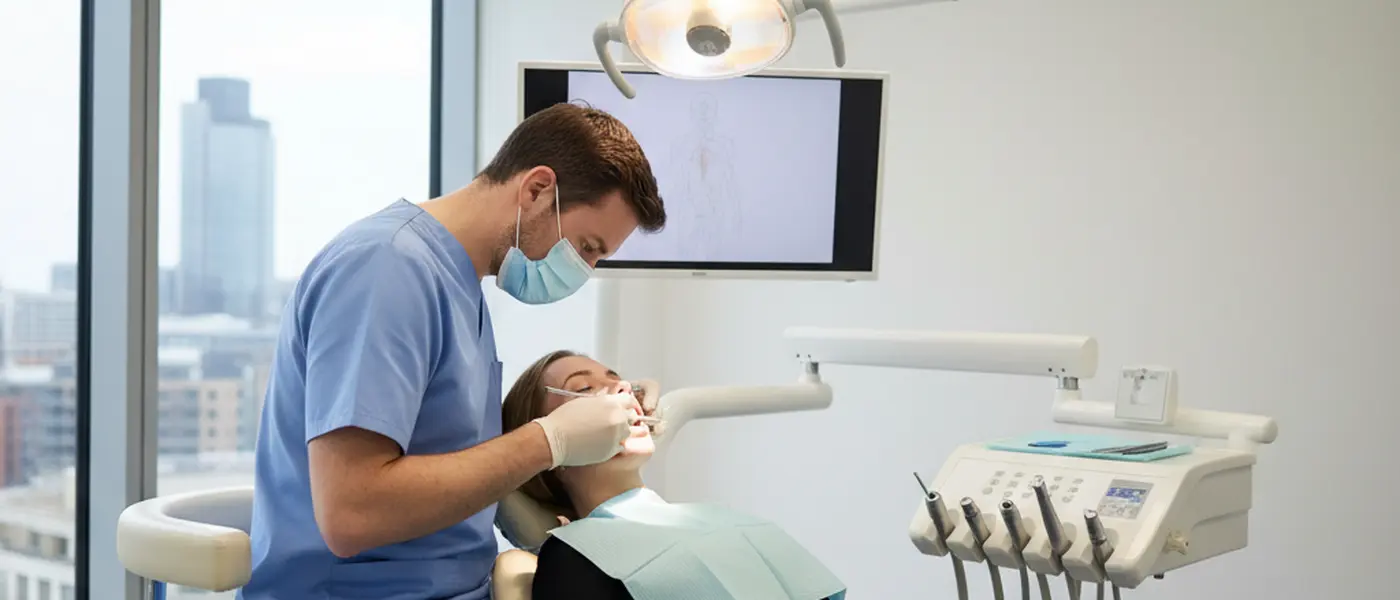
Private dental care in the UK operates outside the NHS contract system, meaning practices set their own fees and appointment schedules. The General Dental Council (GDC) regulates all dentists equally, whether NHS or private, so clinical standards are identical [GDC, 2024].
Credentials and Red Flags
Every practising dentist must be registered with the GDC. You can verify any dentist's registration status at gdc-uk.org/check-a-professional. The practice should also display its GDC registration number prominently. A dentist who is unwilling to share their GDC number is a clear warning sign.
Look for membership in professional bodies such as the British Dental Association (BDA) or the Faculty of General Dental Practice (FGDP). These are voluntary memberships that signal ongoing professional development. Check recent Care Quality Commission (CQC) inspection reports for the practice — every dental surgery in England is inspected and rated by the CQC.
Comparing Costs Transparently
Private practices are legally required to display a price list. Request a written treatment plan with itemised costs before consenting to any procedure. Some practices offer dental plans — monthly subscriptions covering check-ups and hygiene visits, typically £15 to £40 per month — which can reduce the total annual cost compared to pay-as-you-go appointments.
Key takeaway: Private does not mean better. Both NHS and private dentists hold the same qualifications. The difference is in appointment availability, cosmetic options and waiting times.
What to Do in a Dental Emergency

A dental emergency includes severe toothache, a knocked-out tooth, significant bleeding from the mouth, or swelling that affects breathing or swallowing. The NHS classifies these as urgent care needs that should not wait for a routine appointment [NHS England, 2024].
During Practice Hours
Call your registered dental practice first. Most surgeries reserve emergency slots each morning. If your practice cannot see you the same day, call NHS 111. The service triages your symptoms and directs you to the nearest available urgent dental care centre.
Outside Practice Hours (Evenings, Weekends, Bank Holidays)
NHS 111 operates 24 hours a day, 365 days a year. The operator assesses your symptoms and either books you into an out-of-hours dental clinic or advises you to attend A&E if the situation is life-threatening. Out-of-hours treatment falls under NHS Band 1 (£26.80) for an emergency examination and is free for exempt patients.
Knocked-Out Tooth: Immediate Action
Pick up the tooth by the crown — never touch the root. If clean, place it back into the socket and hold it in place by biting on a clean cloth. If that is not possible, store the tooth in milk or saliva and reach a dentist within 60 minutes. Reimplantation success drops sharply after one hour [Royal College of Surgeons, 2024].
Key point: For dental emergencies outside working hours, NHS 111 is the fastest route to treatment. A&E cannot perform dental procedures but will manage life-threatening complications.
Who Qualifies for Free NHS Dental Care
NHS dental treatment in England is free for specific groups. Exemptions cover a significant portion of the population, yet many eligible patients pay unnecessarily because they do not claim their entitlement [NHS Business Services Authority, 2024].
Automatic exemptions apply to:
- Under-18s (or under 19 and in full-time education)
- Pregnant women and new mothers (up to 12 months after the baby's birth — apply for a maternity exemption certificate via your midwife or GP)
- People receiving qualifying benefits including Universal Credit (with earnings below the threshold), Income Support, income-based Jobseeker's Allowance, or Pension Credit Guarantee Credit
- NHS Low Income Scheme (HC2/HC3 certificate) holders — a partial or full help scheme for those on low incomes who do not receive qualifying benefits
Claiming an exemption you are not entitled to carries a penalty charge of up to £100 plus the cost of the original treatment. If in doubt, use the NHS costs checker before your appointment.
How Often Should You Visit Your Dentist
The National Institute for Health and Care Excellence (NICE) recommends dental check-ups at intervals tailored to your risk level, not a blanket "every six months" rule. Low-risk adults may safely extend intervals to 12–24 months, while high-risk patients (smokers, diabetics, those with gum disease) should attend every 3–6 months [NICE Clinical Guideline CG19, updated 2023].
Your dentist assesses your individual risk at each visit and recommends the next recall interval. Factors that shorten the interval include active tooth decay, periodontal disease, high sugar intake, dry mouth caused by medication, and a history of dental restorations.
Regular hygienist appointments (typically every 6 months) complement check-ups. A hygienist removes calculus and plaque that brushing misses, reducing the risk of gum disease — the leading cause of tooth loss in UK adults [Oral Health Foundation, 2024].
Connecting with the right healthcare provider near you extends beyond dental care. If you are also looking for specialist medical support, the same principles of checking credentials and comparing NHS versus private options apply.
Key takeaway: Ask your dentist for a personalised recall interval based on NICE guidelines. Attending more often than necessary costs money without improving outcomes.
Frequently Asked Questions
Can I register with an NHS dentist if I am not a UK resident?
Anyone in England can access NHS dental care, regardless of nationality or immigration status. You do not need proof of address, an NHS number or a GP registration. Treatment charges still apply unless you qualify for an exemption.
How long does it take to get an NHS dental appointment?
Waiting times vary enormously by area. In some regions, routine appointments are available within two weeks. In areas with severe shortages — particularly parts of the South West, East of England and rural communities — waits can exceed six months. The BDA's access tracker publishes regional availability data.
Is an online dental consultation a realistic alternative?
Online dental consultations can help with triage — a dentist reviews photos of your teeth and symptoms via video call, then advises whether you need in-person treatment. Several platforms operate in the UK, and some private online doctor consultation services now include dental triage. However, online consultations cannot replace physical examinations, X-rays or hands-on treatment.
What should I do if my dentist removes me from the NHS list?
Contact the practice to understand why. Common reasons include non-attendance for over 24 months or a failure to respond to recall notices. You can re-register at the same practice if its list is open, or search for a new practice using the NHS Find a Dentist tool. If no practice is available, contact your local ICB.
Disclaimer: The information on this page is provided for general guidance only and does not constitute medical or dental advice. Consult a qualified dental professional for advice specific to your situation. NHS charge bands quoted are for England and are subject to annual review.