
A single dental implant in the UK costs between £2,000 and £5,500 privately, while NHS coverage remains extremely limited — most patients pay out of pocket. With over 200,000 implant procedures performed annually in Britain [British Dental Association (BDA), 2024], understanding your options before sitting in the chair can save thousands of pounds and months of frustration.
This guide breaks down NHS versus private implant routes, compares costs across English regions and the devolved nations, and walks you through every stage of treatment so you know exactly what to expect.
What Are Dental Implants and Why Do They Matter?
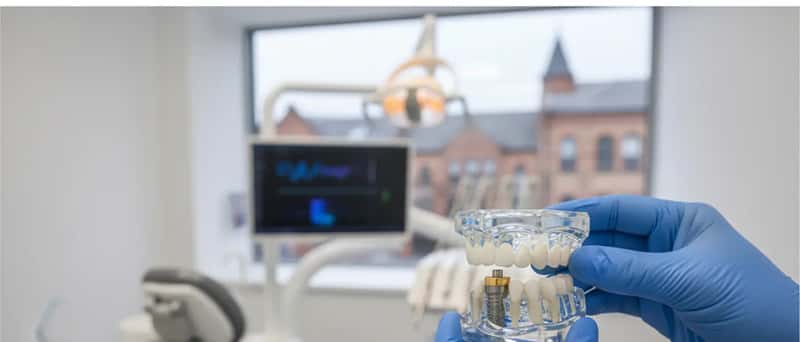
A dental implant is a titanium post surgically placed into the jawbone to replace a missing tooth root. Once the post fuses with the bone — a process called osseointegration — a custom-made crown is attached on top. The result looks, feels, and functions like a natural tooth.
Unlike dentures, implants do not slip or require adhesive. Unlike bridges, they do not rely on grinding down healthy adjacent teeth. The National Institute for Health and Care Excellence (NICE) recognises implants as a clinically effective long-term solution for tooth loss, with success rates above 95% over ten years [NICE Clinical Guideline CG19, updated 2023].
Tooth loss affects roughly 27% of adults over 65 in England [NHS Digital Adult Dental Health Survey, 2019]. Left untreated, missing teeth cause bone resorption, shifting of neighbouring teeth, and difficulty eating. Dental implants halt bone loss because the titanium post stimulates the jaw just like a natural root.
Key takeaway: Dental implants are the only tooth-replacement option that preserves jawbone density. Bridges and dentures address the visible gap but do not prevent the bone deterioration that follows extraction.
NHS vs Private Dental Implants: What the NHS Actually Covers
The NHS does not routinely fund dental implants. Under Band 3 treatment — the highest NHS dental charge at £319.10 in England as of April 2025 [NHS Business Services Authority] — patients receive dentures or bridges, not implants.
When the NHS Does Provide Implants
Exceptions exist, but they are narrow. NHS implants may be approved when:
- Teeth were lost through trauma (accident, assault) rather than decay
- The patient cannot wear conventional dentures due to severe jawbone resorption
- Reconstruction is needed following oral cancer treatment or congenital conditions
Referrals go through a specialist NHS restorative dentistry consultant. Wait times average 12 to 18 months, and approval is never guaranteed. Each Integrated Care Board (ICB) sets its own criteria, so eligibility varies by postcode.
The Private Route
Most patients opt for private treatment. Private clinics offer shorter waiting times — typically 2 to 6 weeks for a consultation — and a wider choice of implant systems (Straumann, Nobel Biocare, Osstem). You choose your implantologist, and treatment plans are tailored rather than constrained by NHS formularies.
"Patients often assume the NHS will cover implants because they're a medical necessity. In practice, NHS funding criteria are so restrictive that fewer than 5% of implant procedures in England are NHS-funded." — Dr. Sarah Langford, BDS MJDF, implant dentist, Birmingham
The trade-off is cost. A single private implant runs £2,000 to £5,500 depending on location, complexity, and the implant brand used.
How Much Do Dental Implants Cost Across the UK?
Prices vary significantly by region. London and the South East command the highest fees, while practices in the North of England, Scotland, and Wales tend to charge less. The table below reflects 2025 averages for a single implant with crown, based on fee surveys from the Association of Dental Implantology (ADI).
What Drives the Price Difference?
Several factors explain the regional gap:
- Clinic overheads — London rents push practice costs 40-60% above national averages
- Implant brand — Premium systems like Straumann (Swiss) cost clinics more than Korean alternatives like Osstem
- Bone grafting — If your jaw lacks sufficient bone density, a graft adds £400 to £1,500 to the total
- Sedation — IV sedation adds £300 to £600 per session; local anaesthetic is included in the base price
- Number of visits — Some clinics offer same-day implants (higher upfront cost), while conventional placement requires 2 to 3 appointments over 3 to 6 months
The Dental Implant Procedure: Step by Step
Understanding each stage removes uncertainty and helps you plan time off work and budget for follow-up visits. A standard single-tooth implant follows this timeline.
1. Initial Consultation and Imaging
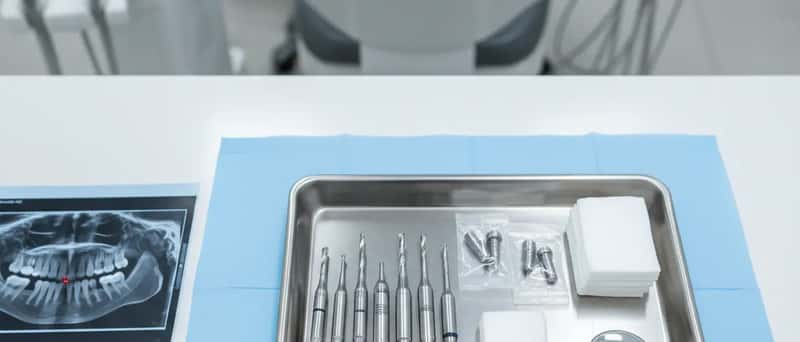
Your implantologist examines your mouth, takes a cone-beam computed tomography (CBCT) scan, and assesses bone quality. This appointment typically costs £50 to £200, sometimes deducted from the treatment fee if you proceed.
2. Treatment Planning
Using the CBCT data, the dentist plans the exact implant position digitally. If bone grafting is needed, it may be scheduled as a separate procedure 3 to 6 months before implant placement.
3. Implant Placement Surgery
Under local anaesthetic (or IV sedation if preferred), the titanium post is inserted into the jawbone. The procedure takes 30 to 60 minutes per implant. Most patients describe the discomfort as less than a tooth extraction.
4. Osseointegration (Healing Period)
The implant fuses with the jawbone over 8 to 16 weeks. During this period, you may wear a temporary denture or leave the gap if it is not visible. Smoking significantly impairs healing — the NHS advises quitting at least 2 weeks before surgery.
5. Abutment and Crown Fitting
Once osseointegration is confirmed via X-ray, the dentist attaches an abutment (connector piece) and takes impressions for your permanent crown. The crown is usually fitted 2 to 4 weeks later.
Key point: From first consultation to final crown, expect 4 to 9 months for a straightforward single implant. Complex cases involving bone grafts can take 12 months or more.
Financing Options: How to Make Dental Implants Affordable
The upfront cost of dental implants puts many patients off, but several financing routes exist that spread the expense over months or years.
0% interest finance plans — Many private clinics partner with lenders like Chrysalis Finance or Tabeo to offer 0% APR over 12 months. A £3,000 implant becomes £250 per month with no interest. Plans extending to 24 or 36 months are available but usually carry 9-15% APR.
Dental insurance — Most standard UK dental plans (Denplan, Bupa Dental) do not cover implants. However, some premium policies cover a portion (typically 50%) up to an annual cap of £2,000 to £5,000. Check your policy wording for "surgical implantology" rather than generic "dental treatment" — the latter usually excludes implants.
NHS dental charge exemptions — While implants themselves are rarely NHS-funded, the following groups pay nothing for NHS dental care, including any NHS-funded implant treatment they qualify for: those receiving Universal Credit, pregnant women, people under 18, and those with an HC2 certificate (full help with health costs) [NHS Low Income Scheme].
Health savings and tax relief — Self-employed individuals and limited company directors may claim dental treatment as a business expense if it affects their ability to work. Speak with your accountant about allowable health-related deductions.
Key takeaway: Always ask the clinic for a full treatment breakdown before signing a finance agreement. The quoted "implant price" sometimes excludes the CBCT scan, bone graft, abutment, or final crown — each of which adds to the total.
Who Is a Good Candidate for Dental Implants?
Not everyone qualifies immediately. Your implantologist assesses several clinical factors before recommending treatment.
Ideal candidates have:
- Sufficient jawbone density (or willingness to undergo bone grafting)
- Healthy gums with no active periodontal disease
- Good general health — conditions like uncontrolled diabetes or autoimmune disorders increase failure risk
- Non-smoker status, or commitment to stop before and after surgery
Cases requiring extra assessment:
- Patients on bisphosphonate medication (for osteoporosis) face higher risk of osteonecrosis of the jaw (ONJ). The Faculty of General Dental Practice (FGDP) recommends a specialist referral before proceeding [FGDP Clinical Guidance, 2022].
- Patients under 18 are not suitable because the jaw has not finished growing.
- Heavy bruxism (teeth grinding) requires a night guard post-implant to protect the crown.
James, a 58-year-old retired teacher from Leeds, lost two molars after years of avoiding the dentist. His GP referred him to an NHS restorative consultant, but the 14-month waiting list and uncertain approval pushed him toward a private clinic. Two implants at £4,200 total, placed over two visits, restored his ability to eat properly for the first time in three years.
Risks, Aftercare, and Long-Term Maintenance
Dental implants carry a success rate above 95% at ten years, but complications do occur. Understanding risks upfront helps you spot problems early.
Potential Risks
- Infection at the implant site — occurs in roughly 5-10% of cases [British Journal of Oral and Maxillofacial Surgery, 2023]. Antibiotics and good oral hygiene reduce this risk substantially.
- Nerve damage — rare, but lower jaw implants can affect the inferior alveolar nerve, causing numbness in the lip or chin. Precise CBCT planning minimises this risk.
- Implant failure — the post does not integrate with the bone. This happens in 2-3% of cases and is more common in smokers and diabetics.
- Peri-implantitis — a form of gum disease around the implant. Affects up to 22% of implant patients over 10 years [Journal of Clinical Periodontology, 2023]. Regular cleaning prevents it.
Aftercare Routine
- Brush twice daily with a soft-bristled toothbrush — electric brushes with pressure sensors work well around implants
- Use interdental brushes (not floss) around the implant post daily
- Attend hygienist appointments every 6 months — implants need professional cleaning just like natural teeth
- Avoid biting hard objects (ice, pen caps, bottle tops) with the implant crown
- If you grind your teeth, wear the prescribed night guard every night
Implant crowns typically last 10 to 15 years before needing replacement. The titanium post itself can last a lifetime with proper care.
Long-Term Value Compared to Alternatives
While implants cost more upfront, the 20-year cost picture tells a different story. A bridge lasts 7 to 10 years on average before requiring replacement, and each replacement risks further damage to the anchor teeth. Over 20 years, two bridge replacements at £1,200 each plus potential root canal work on damaged anchor teeth (£600 to £1,000 per tooth) can exceed the one-time cost of an implant.
Dentures need relining every 2 to 3 years (£150 to £300 per reline) and full replacement every 5 to 7 years. They also accelerate jawbone loss, which changes facial structure over time — a hidden cost measured in quality of life rather than pounds.
The British Society for Restorative Dentistry notes that dental implants, when maintained correctly, represent the lowest total cost of ownership over a 20-year horizon compared to bridges and removable dentures [BSRD Position Statement, 2023].
Frequently Asked Questions About Dental Implants
Are dental implants painful?
Most patients report less pain than expected. The procedure itself is performed under local anaesthetic, so you feel pressure but not sharp pain. Post-operative discomfort typically lasts 3 to 5 days and responds well to over-the-counter painkillers like ibuprofen. IV sedation is available for anxious patients at an additional cost of £300 to £600.
How long do dental implants last?
The titanium post can last a lifetime with proper oral hygiene. The crown on top typically lasts 10 to 15 years before it needs replacing due to normal wear. Regular hygienist visits and avoiding excessive force (crunching ice, opening packaging) extend the crown's lifespan.
Can I get dental implants on the NHS?
In very limited circumstances — primarily trauma, cancer reconstruction, or severe jawbone conditions that prevent denture use. Fewer than 5% of UK implant procedures are NHS-funded. Your dentist can refer you to an NHS restorative consultant, but expect a 12 to 18-month wait and no guarantee of approval.
What is the alternative to dental implants?
The main alternatives are bridges (which require filing down adjacent teeth, costing £500 to £1,500 on the NHS or privately) and dentures (£300 to £800 privately for a partial denture). Implants cost more upfront but avoid the bone loss and replacement cycles associated with bridges and dentures.
Is dental implant tourism worth it?
Clinics in Turkey, Hungary, and Poland offer implants at 40-60% less than UK prices. However, the General Dental Council (GDC) cannot investigate complaints against overseas practitioners. Follow-up care, warranty claims, and managing complications become significantly harder when your dentist is 2,000 miles away.
Disclaimer: The information on this page is provided for informational purposes only and does not constitute medical or dental advice. Consult a qualified dental professional for guidance specific to your situation.