
Finding a doctor in the UK involves more than a quick search. Around 60 million people are registered with a General Practitioner (GP) through the National Health Service (NHS) [NHS Digital, 2024], yet one in six patients reports difficulty booking an appointment [British Medical Association, 2025]. Whether you need routine care, a specialist referral, or a private consultation, understanding how the system works saves time and reduces frustration. This guide covers GP registration, private options, costs, and practical steps to get the care you need.
How the UK Doctor System Works
The UK healthcare system splits into two tracks: NHS and private. NHS care is funded through taxation and free at the point of use for all registered residents. A doctor working as a GP serves as your first point of contact for almost every health concern, from recurring headaches to chronic conditions like diabetes.
Every person living in the UK can register with a GP practice. You do not need proof of address, immigration status, or an NHS number to register — this is a legal right confirmed by NHS England guidelines. GPs handle around 300 million consultations per year across England alone [NHS Digital, 2024].
Private doctors operate outside the NHS framework. They charge directly for consultations, offer shorter waiting times, and sometimes provide services not available on the NHS. Both tracks employ fully qualified medical professionals regulated by the General Medical Council (GMC).
Key point: A GP referral is typically required before seeing an NHS specialist. Private patients can self-refer to most consultants directly.
Registering with a GP: Step by Step
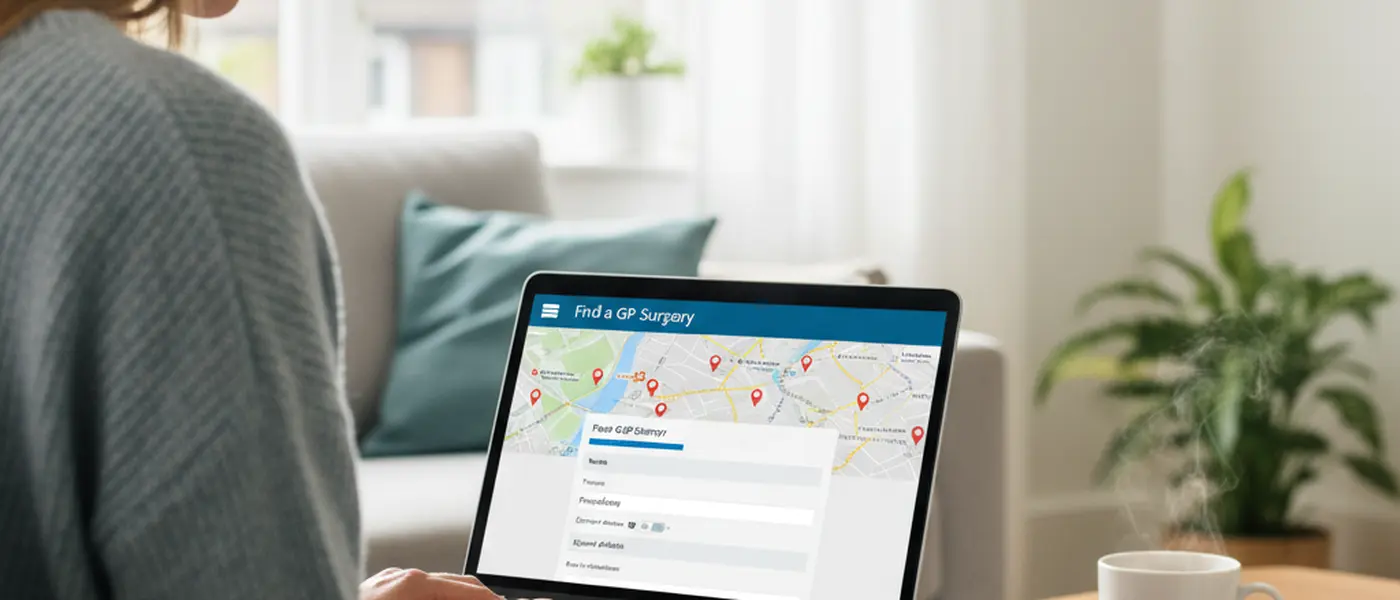
Registration with a GP practice is straightforward but varies slightly between England, Scotland, Wales, and Northern Ireland. The process follows a standard pattern across all four nations.
- Find practices near you — Use the NHS Find a GP tool. Enter your postcode to see nearby surgeries, their opening hours, and patient reviews.
- Check catchment areas — Most practices accept patients who live within a defined boundary. Call the surgery or check its website to confirm you fall within their catchment.
- Complete a GMS1 form — This registration form asks for basic personal details. You can fill it in at the surgery or download it online. No ID is legally required, though some practices may request it.
- Attend a new patient health check — Many surgeries invite new registrants for a brief appointment covering medical history, allergies, and current medications.
- Receive confirmation — The practice notifies NHS England, and your medical records transfer automatically from your previous GP.
The entire process takes between one and three weeks. Practices cannot refuse registration because you lack proof of address or identification [NHS England, 2024].
NHS vs Private Doctor: Costs and Waiting Times
Choosing between NHS and private care depends on urgency, budget, and the specific service required. Both options have distinct advantages.
NHS GP appointments are free, but the average wait for a non-urgent appointment sits at roughly 2 to 4 weeks in many areas [BMA Patient Survey, 2025]. Urgent same-day slots exist, though availability varies by practice.
Private GP consultations typically cost between £50 and £250 depending on location and appointment length. London prices sit at the higher end. Private patients benefit from longer appointment slots — usually 30 minutes compared to the NHS standard of 10 minutes — and faster access to diagnostics.
"The NHS remains excellent for emergencies and long-term chronic care. Private services fill the gap when patients need quick access to diagnostics or specialist opinions without a referral wait." — Dr Sarah Mitchell, General Practitioner, London
Key point: Many UK residents use a hybrid approach — registered with an NHS GP for ongoing care while using private services for specific needs like travel vaccinations or occupational health assessments.
When to See a Doctor: Urgent vs Routine
Not every health concern requires a GP appointment. Understanding the right service to contact prevents delays and reduces pressure on overstretched practices.
Call 999 or go to A&E for chest pain, difficulty breathing, severe bleeding, suspected stroke, or loss of consciousness. These are medical emergencies.
Contact NHS 111 for urgent but non-life-threatening issues — a high fever that won't respond to paracetamol, a painful ear infection, or a suspected broken bone. NHS 111 operates 24 hours a day, 7 days a week, and can direct you to the nearest urgent care centre or out-of-hours GP.
Book a GP appointment for persistent symptoms lasting more than two weeks, medication reviews, mental health concerns, or routine check-ups. Many practices now offer online consultations, where you describe your symptoms via a digital form and receive a callback, prescription, or face-to-face slot.
A 2024 report by the Care Quality Commission (CQC) found that 42% of GP contacts in England were handled remotely — by phone, video, or online form [CQC, 2024]. Remote triage has reduced unnecessary in-person visits while maintaining clinical safety.
Online Doctor Services: A Growing Alternative

Online doctor platforms have expanded rapidly across the UK. Services like NHS GP at Hand, Boots Online Doctor, and Livi allow patients to consult a GMC-registered doctor from home, often within hours.
James, a 34-year-old software developer in Manchester, needed a prescription renewal for his asthma inhaler. His GP surgery had no appointments for 10 days. He used an online consultation platform, spoke with a doctor via video call within 2 hours, and had his prescription sent to a local pharmacy the same afternoon.
Online doctor services work best for straightforward consultations: prescription renewals, skin conditions (via photo upload), sexual health screening, and travel health advice. They are less suited to complex diagnoses requiring physical examination.
Costs vary by platform. NHS-affiliated services like GP at Hand are free. Private platforms charge between £30 and £100 per consultation. Most private health insurance policies now cover online GP visits.
If you are exploring digital healthcare options, our guide on online doctor consultation covers the main UK platforms, pricing, and what to expect during a virtual appointment.
Key point: Online doctor services complement rather than replace your registered GP. Maintain your NHS registration for continuity of care, prescriptions, and specialist referrals.
Frequently Asked Questions
Can I register with a GP without proof of address?
Yes. NHS England confirms that GP practices must register patients regardless of whether they can provide proof of address, identification, or an NHS number. Practices that refuse are in breach of NHS England's Primary Care Commissioning guidance [NHS England, 2024].
How long does it take to see a specialist through the NHS?
NHS England's Referral to Treatment (RTT) target is 18 weeks from GP referral to the start of consultant-led treatment. As of early 2025, the median wait was 14.4 weeks, though some specialties like orthopaedics exceeded 20 weeks [NHS England RTT Data, 2025].
Are prescriptions free in the UK?
Prescriptions are free in Scotland, Wales, and Northern Ireland. In England, a standard prescription costs £9.90 per item (2025 rate). Exemptions apply for under-16s, over-60s, pregnant women, and patients with certain long-term conditions.
What qualifications should a UK doctor have?
All practising doctors in the UK must hold a medical degree, complete a two-year Foundation Programme, and be registered with the General Medical Council (GMC). GPs complete an additional three-year specialty training programme. You can verify any doctor's registration on the GMC register.
Disclaimer: The information on this page is provided for general guidance only and does not constitute medical advice. Consult a qualified healthcare professional for advice specific to your situation.