
Finding the right divorce lawyer near you can reduce legal costs by up to 30% and cut the average case duration from 12 months to 6. Choosing a solicitor who specialises in family law — and practises locally — gives you direct access to someone who understands your regional court's procedures. This guide walks through exactly how to search, what qualifications to check, and how to compare fees before your first consultation.
Why Location Matters When Choosing a Divorce Solicitor
A divorce lawyer near you offers practical advantages that remote firms cannot match. Local solicitors attend hearings at your regional Family Court, which means they know the judges, the procedural expectations, and the typical timelines for that specific court. In England and Wales, divorce proceedings are handled by one of 42 designated Family Court centres [Courts and Tribunals Judiciary, 2025].
Proximity also reduces costs. Face-to-face meetings — still preferred for sensitive discussions around child arrangements or financial settlements — do not incur travel surcharges. According to the Law Society's annual fee survey, the average hourly rate for a family solicitor outside London ranges from £150 to £250, compared to £300 to £450 in central London [The Law Society, 2024].
"Clients who instruct a solicitor within their own court circuit often see faster resolution times, because the lawyer already understands local case management directions." — Family law practitioner, Resolution member
Local lawyers are also more likely to have established relationships with local mediators, barristers, and financial advisers, creating a smoother process if your case requires specialist input.
How to Search for a Divorce Lawyer Near You

The most reliable starting point is the Law Society's Find a Solicitor directory. Filter by "family law" and enter your postcode to see regulated solicitors in your area. Every result holds a current practising certificate verified by the Solicitors Regulation Authority (SRA).
Step-by-Step Search Process
- Check the Law Society directory — search by postcode and select "divorce and separation" as the practice area.
- Verify SRA registration — enter the solicitor's name at sra.org.uk/consumers/register to confirm they are authorised and check for any disciplinary history.
- Look for Resolution membership — solicitors who belong to Resolution commit to a non-confrontational code of practice, which can reduce conflict and costs.
- Read independent reviews — check Google Reviews, Trustpilot, or the Legal 500 for client feedback specific to divorce cases.
- Book a free initial consultation — many firms offer a free 30-minute appointment. Prepare a list of questions about their experience, fee structure, and estimated timeline.
Citizens Advice also provides a free legal aid checker if your household income is below £2,657 per month, which may entitle you to fully funded legal representation.
What Qualifications and Accreditations to Look For
Not every solicitor who handles divorce has the same level of specialisation. The Law Society awards the Family Law Accreditation to solicitors who demonstrate advanced competence in divorce, finances, and children matters. Only around 3,000 solicitors across England and Wales currently hold this mark [The Law Society, 2024].
Key credentials to verify:
- SRA-authorised — mandatory for any practising solicitor in England and Wales.
- Family Law Accreditation — voluntary but signals specialist expertise.
- Resolution member — commits to constructive, non-adversarial practice.
- Legal Aid Agency contract — relevant if you qualify for legal aid under the Legal Aid, Sentencing and Punishment of Offenders Act 2012 (LASPO).
Barristers can also handle divorce cases directly under the Public Access scheme. However, for most straightforward divorces, a solicitor provides end-to-end case management that a barrister typically does not.
Understanding Divorce Solicitor Fees in the UK
Divorce solicitor fees vary widely depending on complexity, location, and whether the case is contested. Understanding the fee structure upfront prevents surprises.
Since April 2022, England and Wales operate a no-fault divorce system under the Divorce, Dissolution and Separation Act 2020. The court fee for a divorce application is currently £593 [HM Courts & Tribunals Service, 2025]. This fee applies regardless of whether you use a solicitor.
Key takeaway: Always ask for a written fee estimate at your first meeting. The SRA requires solicitors to provide clear costs information before you commit. Compare at least three quotes from local firms.
What to Expect at Your First Consultation
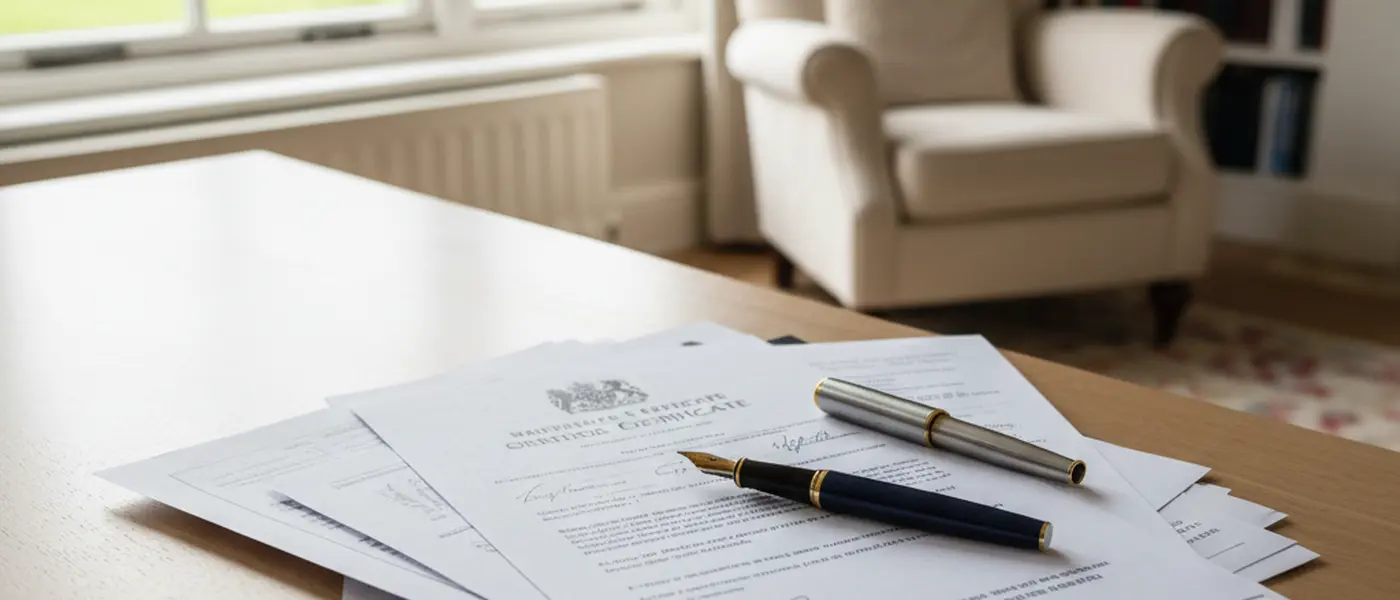
The initial meeting with a divorce lawyer sets the direction for your entire case. Most family solicitors in the UK offer a free or fixed-fee first appointment lasting 30 to 60 minutes.
Bring these documents to your consultation:
- Your marriage certificate (original or certified copy).
- A summary of your financial position: income, savings, pensions, debts, and property ownership.
- Any existing court orders or pre-nuptial agreements.
- A timeline of key events if domestic abuse or safeguarding concerns are involved.
During the meeting, the solicitor will assess whether your divorce is likely to be uncontested or contested, outline the expected process under the no-fault system, and explain options such as mediation or collaborative law. Under the Children and Families Act 2014, you are required to attend a Mediation Information and Assessment Meeting (MIAM) before making a court application for child arrangements, unless an exemption applies.
Key point: A good divorce lawyer near you will explain your options clearly, give a realistic fee estimate, and not pressure you into immediate action.
Frequently Asked Questions
Can I get a free divorce lawyer in the UK?
Legal aid for divorce is available in limited circumstances, primarily where domestic abuse or child abduction is involved. You must meet the financial eligibility criteria set by the Legal Aid Agency. Use the GOV.UK legal aid calculator to check your eligibility.
How long does a divorce take with a solicitor?
Under the no-fault divorce system introduced in April 2022, the minimum timeframe is 26 weeks from application to final order [Ministry of Justice, 2023]. Uncontested cases with agreed financial settlements typically conclude within 6 to 9 months. Contested financial proceedings can extend the process to 12 months or longer.
Should I choose a solicitor or a mediator?
Mediation is often faster and cheaper for couples who can communicate, costing between £500 and £2,000 for the full process [Family Mediation Council, 2024]. A solicitor is essential when significant assets are at stake, when there is a power imbalance, or when one party is uncooperative. Many people use both: a mediator to negotiate terms and a solicitor to formalise the agreement into a legally binding consent order.
What is the difference between a divorce solicitor and a family solicitor?
A family solicitor covers a broad range of family law matters including child custody, domestic abuse, adoption, and divorce. A divorce solicitor focuses specifically on the divorce process and financial settlement. In practice, most solicitors advertising as "divorce lawyers" are family law specialists who handle all related matters.
Disclaimer: The information on this page is provided for informational purposes only and does not constitute legal advice. Consult a qualified solicitor for advice on your specific situation.