
NHS or private? Finding the right dental office near you starts with understanding what each option offers — and what it costs. Around 24 million adults in England used NHS dental services in the 12 months to June 2024, yet nearly half of UK adults report difficulty getting an appointment [NHS Digital, 2024]. Whether you need a routine check-up or emergency treatment, choosing between practices depends on availability, budget, and the specific care you need.
NHS Dental Care: What You Get and What It Costs
NHS dental offices provide treatments at fixed, government-regulated prices. As of April 2024, the three NHS charge bands in England are:
These prices apply in England. Scotland, Wales, and Northern Ireland set separate rates — NHS dental care is entirely free in Scotland for all patients.
The main challenge is availability. According to the British Dental Association (BDA), only 74% of dental practices in England accepted new NHS patients in 2024. Rural areas face even steeper shortages. To find an NHS dental office near you, use the NHS Find a Dentist tool or call NHS 111 for urgent referrals.
Private Dental Offices: Flexibility at a Higher Price
Private dental practices offer shorter waiting times, longer appointments, and a wider range of treatments including cosmetic dentistry. You choose your dentist and can typically book within days rather than weeks.
The trade-off is cost. A routine check-up at a private dental office typically costs between £50 and £150, depending on location and practice [Which?, 2024]. A single dental implant ranges from £1,500 to £3,000. Treatments such as teeth whitening (£300–£700) and veneers (£400–£1,000 per tooth) are not available on the NHS at all.
Private dental plans from providers like Denplan or Bupa Dental Care can reduce per-visit costs. Monthly premiums range from £10 to £40, covering routine check-ups and offering discounted rates on treatments. These plans work well if you visit the dentist regularly and want predictable expenses.
Key point: A private dental office near you is not necessarily "better" than NHS. For routine care, NHS pricing is hard to beat. Private excels when you need specialist treatments, cosmetic work, or faster access.
How to Find a Reliable Dental Office Near You
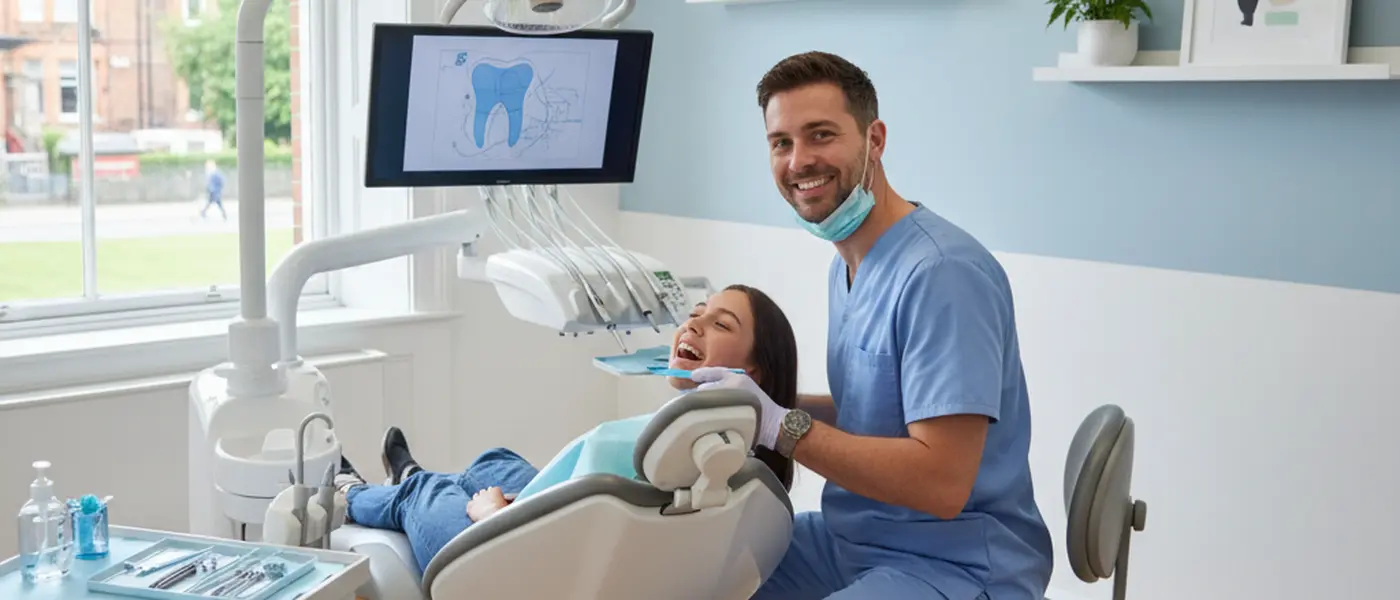
Searching "dental office near me" returns dozens of results. These five steps help you narrow down the right practice:
- Check registration. Every legitimate dental practice in the UK must be registered with the Care Quality Commission (CQC). Search their database to verify any practice and read inspection reports.
- Read the CQC rating. Practices are rated Outstanding, Good, Requires Improvement, or Inadequate. Aim for Good or above.
- Verify the dentist's credentials. All practising dentists must be registered with the General Dental Council (GDC). Use the GDC register to confirm qualifications.
- Ask about availability. Call the practice directly. Ask whether they accept new NHS patients, their typical waiting time for routine appointments, and emergency availability.
- Visit first. Many practices offer a free initial consultation. Use it to assess the environment, meet the staff, and ask about treatment costs upfront.
Sarah, a teacher from Manchester, spent three months searching for an NHS dental office after relocating. She finally found a practice accepting new patients by calling six offices listed on the NHS website. "I wish I'd known to check CQC ratings first," she says. "The practice I chose has an Outstanding rating, and the care has been excellent."
NHS vs Private: Side-by-Side Comparison
| Criteria | NHS Dental Office | Private Dental Office |
|---|---|---|
| Check-up cost | £26.80 (Band 1) | £50–£150 |
| Waiting time | 2–8 weeks (varies) | Days to 1 week |
| Appointment length | 15–20 minutes | 30–60 minutes |
| Cosmetic treatments | Not available | Full range |
| Emergency access | NHS 111 referral | Direct booking |
| Dentist choice | Assigned | You choose |
| Treatment materials | Standard | Premium options |
Neither option is universally superior. Many patients register with an NHS practice for routine care while using a private dental office for cosmetic or specialist treatments. This "hybrid approach" gives you affordable preventive care alongside faster access to advanced procedures when needed.
What to Expect at Your First Dental Visit
A first appointment at any dental office near you follows a similar pattern, whether NHS or private. The dentist examines your teeth, gums, and mouth for signs of decay, gum disease, or oral cancer. X-rays may be taken to assess bone health and detect hidden problems.
Expect the dentist to ask about your medical history, medications, and any concerns. Be honest about dental anxiety — around 12% of UK adults experience extreme dental fear, according to the Oral Health Foundation. Most modern practices offer sedation options and take steps to make nervous patients comfortable.
What to bring: your NHS number (if registering as an NHS patient), a list of current medications, and details of any allergies. If transferring from another practice, your previous dental records can be requested directly between offices.
When a Dental Office Near You Is Not Enough
Some dental conditions require specialist referral beyond your local dental office. Orthodontic treatment (braces, aligners), oral surgery, and periodontal disease may need a specialist consultation.
Your general dentist can refer you to an NHS specialist, though waiting times can stretch to several months. Private specialists typically see patients within two to four weeks. The GDC register lists specialists by location and discipline, making it straightforward to find accredited professionals in your area.
Red Flags to Watch for When Choosing a Dental Practice
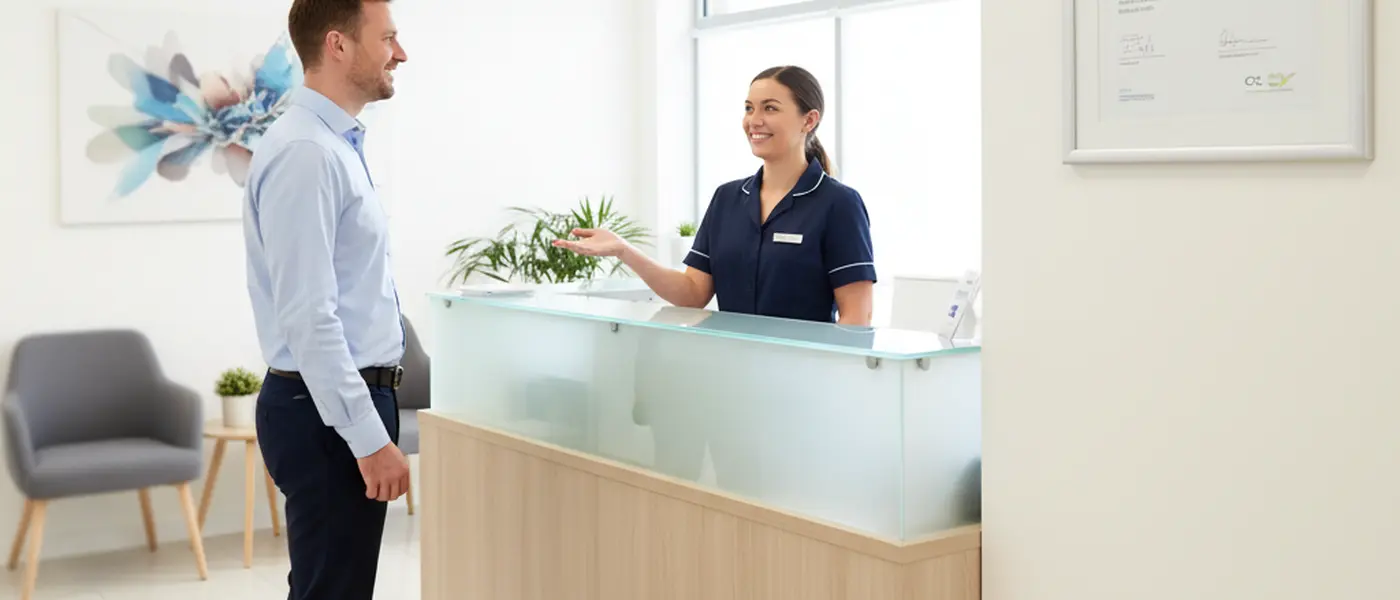
Not every dental office meets the standards you deserve. Watch for these warning signs before committing to a practice:
- No CQC registration displayed. Legitimate practices display their CQC certificate in the waiting area or on their website. If you cannot find it, ask — or check the CQC website directly.
- Pressure to accept private treatment. Some mixed practices steer patients toward private options without fully explaining NHS alternatives. A trustworthy dentist presents all options transparently.
- Unclear pricing. The practice should provide a written treatment plan with costs before starting any work. NHS band prices are fixed; private fees should be listed on the website or available on request.
- No infection control protocols visible. Sealed instrument packs, disposable gloves, and clean surfaces are non-negotiable. The CQC inspects infection control as part of its rating.
- High staff turnover. Frequent changes in dentists can disrupt continuity of care. Ask how long the lead dentist has been at the practice.
A reliable dental office near you will welcome questions. If a practice discourages enquiries about qualifications, costs, or treatment options, consider it a red flag. The GDC's Standards for the Dental Team outlines what patients should expect from any registered dental professional.
Disclaimer: The information on this page is provided for informational purposes only and does not constitute medical advice. Consult a qualified dental professional for guidance on your specific situation.