 Rebecca Shaw
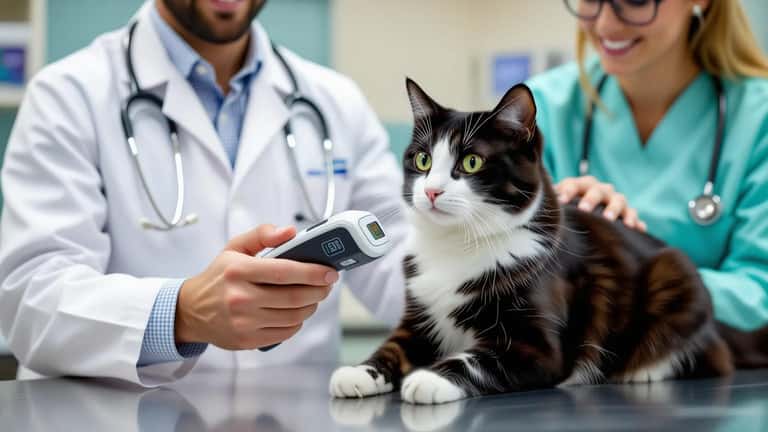
Mandatory cat microchipping has been the law in England since 10 June 2024, yet thousands of cat owners remain non-compliant — some unaware the rule exists, others unsure whether their existing chip registration is up to date. The legislation, introduced under The Microchipping of Cats and Dogs (England) Regulations 2023, applies to every cat over 20 weeks old, regardless of whether the animal ever goes outdoors. Failure to comply can result in a fine of up to £500.
This guide sets out the exact steps you need to take in 2026 to confirm your cat meets the legal standard — from checking chip status and booking an appointment to updating your contact details and understanding what happens if a local authority flags you as non-compliant.
Step 1: Understand Exactly What the Law Requires
The Microchipping of Cats and Dogs (England) Regulations 2023 places two distinct duties on cat owners. First, every cat aged 20 weeks or older must be implanted with an International Organization for Standardization (ISO) compliant microchip — a 15-digit identifier that meets ISO Standard 11784/11785. Second, the owner's current contact details must be registered on an approved database and kept accurate at all times. Having a chip implanted but failing to register the data, or holding an outdated address on the database, counts as non-compliance.
The law applies across England. If you own cats in Wales, Scotland, or Northern Ireland, check the relevant devolved legislation, as separate regulations govern those nations.
Who counts as the keeper? The person responsible for the cat's day-to-day welfare is legally the keeper and bears the compliance duty. This matters for shared households: if two people co-own a cat, the registered keeper on the microchip database is the one legally accountable.
Cats under 20 weeks old are exempt until they reach that age. Breeders selling kittens must chip them before the sale takes place, irrespective of the buyer's plans.
Step 2: Check Whether Your Cat Is Already Microchipped
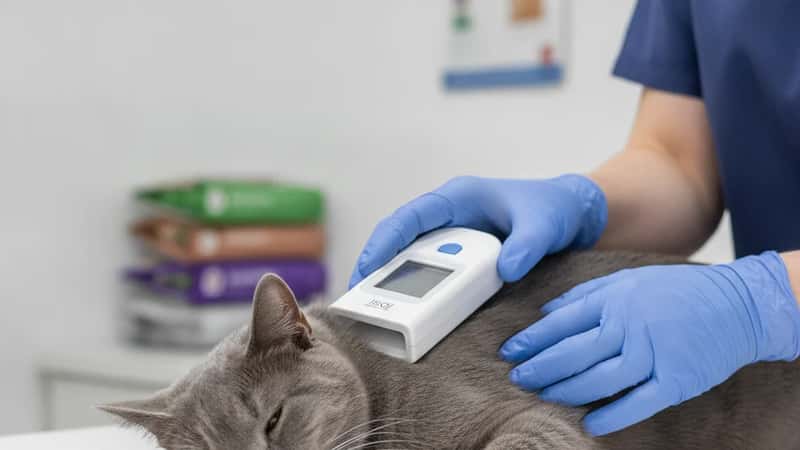
Many cats, particularly those adopted from rescue centres or born before 2024, were chipped voluntarily before the law came into force. If you are uncertain, your first step is a simple scan at any registered vet, nurse-led clinic, or animal warden — the equipment is standard and the check takes under a minute.
If a chip number is found, ask the vet to record it. You then need to trace which approved database holds the registration. In England, approved databases include Petlog (operated by The Kennel Club), Anibase, Identibase, and PetDatabase.com, among others. The government-endorsed lookup tool at check-a-chip.co.uk allows any member of the public to enter a chip number and identify the correct database.
Once you know which database holds your cat's record, log in or call their helpline to confirm:
- Your current name matches the registration
- The address on file is your present address
- Your active phone number is listed
Outdated records are one of the most common compliance failures identified by local authorities. Moving house without updating the database is technically a breach of the regulations, even if the chip itself is functioning.
Key point: A microchip that cannot be traced to a current address defeats the law's entire purpose. Checking your record takes five minutes online and costs nothing to verify.
Step 3: Book a Microchipping Appointment If Your Cat Is Not Yet Chipped
Microchipping is a straightforward veterinary procedure. A vet, veterinary nurse, or trained implanter injects a rice-grain-sized chip beneath the skin at the back of the neck, between the shoulder blades. Most cats tolerate it without sedation, and the procedure typically takes under 30 seconds. There is no recovery period.
Finding an Affordable Appointment
Registered vets charge between £20 and £30 in most parts of England [RSPCA, 2024]. Charitable organisations including the PDSA (People's Dispensary for Sick Animals), Blue Cross, and Cats Protection regularly run subsidised or free microchipping clinics, particularly for owners on low incomes. Local councils occasionally fund community events through animal welfare budgets.
When booking, confirm that the implanter will register your details on an approved database on the same day. Some lower-cost services chip the cat but hand the registration to the owner, leaving a compliance gap if the owner forgets to complete it.
Recent regulatory changes have also affected what vets can charge for related services: as of 2026, prescription fees at registered vet practices are now capped, making routine compliance visits more predictable. You can read more about what these changes mean for cat owners in our guide to UK vets' new prescription fee cap.
Step 4: Keep Your Contact Details Current After Any Life Change
Microchipping is not a one-time task. The chip itself is permanent, but the contact details attached to it need active maintenance. The Regulations require that your details are accurate at all times — meaning every time your circumstances change, you must update the database record.
Common life events that require a database update:
| Life event | Action required | Typical database fee |
|---|---|---|
| Moving house | Update address on registration | Free–£5 depending on database |
| Changing phone number | Update contact number | Free |
| Rehoming the cat to someone else | Transfer registered keeper | £10–£20 (varies) |
| Cat taken in by a rescue | Notify database; rescue takes over | Coordinated by rescue |
| Owner passes away | Next of kin or estate contacts database | Case by case |
When rehoming a cat, the legal responsibility for updating the microchip record lies with the previous keeper before or at the point of transfer. Passing on the chip number and database login to the new owner is not sufficient — the formal transfer must be completed.
Most databases allow owners to update address and phone details free of charge online. Transferring keeper status usually carries a small administrative fee, which varies by provider.
Step 5: Understand How Non-Compliance Is Identified and Enforced
Local authorities — primarily district and borough councils through their animal welfare officers — are responsible for enforcing the Regulations. Non-compliance is most commonly identified when a stray or lost cat is brought in by a member of the public, when a cat is involved in a road traffic incident, or during routine welfare checks.
If an officer identifies a cat over 20 weeks old that is either unchipped or whose chip cannot be linked to current keeper details, the keeper is issued a formal notice. The notice gives 21 days to rectify the situation by either microchipping the cat or updating the database record. If the keeper fails to act within that period, the local authority can arrange for the cat to be microchipped and recover the cost from the keeper — and may additionally issue a civil penalty of up to £500.
The enforcement approach is designed to achieve compliance rather than to penalise, and most cases are resolved during the notice period without a fine being issued [UK Government, 2024].
Being proactive removes all risk. If your cat is lost, a current chip record is also the fastest route to reunion — rescue centres and vets scan every stray as a matter of routine. Like the compliance requirements under the UK Crossbow Act 2026, the cat microchipping rules are part of a broader pattern of updated owner responsibility legislation that carries real financial consequences for inaction.
Frequently Asked Questions About the UK Cat Microchipping Law
Is the cat microchipping law already in force in 2026?
Yes. The law came into force on 10 June 2024 under The Microchipping of Cats and Dogs (England) Regulations 2023. In 2026, the rules have been active for two years, and enforcement is ongoing. There are no grace periods remaining.
Does the law apply to indoor cats?
Yes. The Regulations apply to all cats over 20 weeks old in England, regardless of whether they ever go outdoors. Indoor-only cats must be microchipped and their details kept current.
Can I face a fine even if my cat was chipped before the law?
If your cat was chipped before 2024 but the database record shows an old address or phone number, you are technically non-compliant and could receive a notice to update your details. Verify your record even if the chip was fitted years ago.
What if I cannot afford the microchipping fee?
Contact your local PDSA practice, Cats Protection branch, or Blue Cross centre — all three organisations regularly offer subsidised or free microchipping to owners who meet income criteria. Some local councils also fund community events.
Disclaimer: The information in this article is provided for general guidance only and does not constitute legal advice. Regulations may differ in Scotland, Wales, and Northern Ireland. Consult your local council or a qualified solicitor for advice specific to your circumstances.