What qualifies as a genuine pet emergency, and what should you do when your regular vet is closed? Every year, roughly 1.1 million UK pets receive emergency veterinary treatment outside normal hours [British Veterinary Association, 2024]. Knowing the difference between a true emergency and a condition that can wait until morning saves time, money, and — most critically — your pet's life.
This guide answers the most common questions UK pet owners ask when facing an after-hours crisis, from recognising danger signs to understanding what an emergency vet visit actually costs.
What Counts as a Pet Emergency?
A pet emergency is any condition where delaying treatment by even a few hours could result in permanent harm or death. The Royal Veterinary College (RVC) classifies these as the most common emergencies seen at UK out-of-hours clinics:
- Breathing difficulties — laboured, rapid, or absent breathing
- Suspected poisoning — ingestion of chocolate, grapes, xylitol, rodenticide, or antifreeze
- Seizures lasting more than 2 minutes, or clusters of seizures
- Road traffic accidents — even if the pet appears uninjured, internal bleeding is common
- Bloat (gastric dilatation-volvulus) — distended abdomen, retching without vomiting, restlessness
- Collapse or sudden inability to stand
- Profuse or uncontrollable bleeding
Not every after-hours concern needs an emergency vet. Mild vomiting, a small cut that has stopped bleeding, or a slight limp can typically wait for a morning appointment. If you are unsure, many emergency practices offer a free triage phone line — call first and describe the symptoms before making the journey.
Key point: When in doubt, phone an emergency vet clinic. A two-minute call can confirm whether you need to come in immediately or can safely wait.
How Do You Find an Emergency Vet Near You?
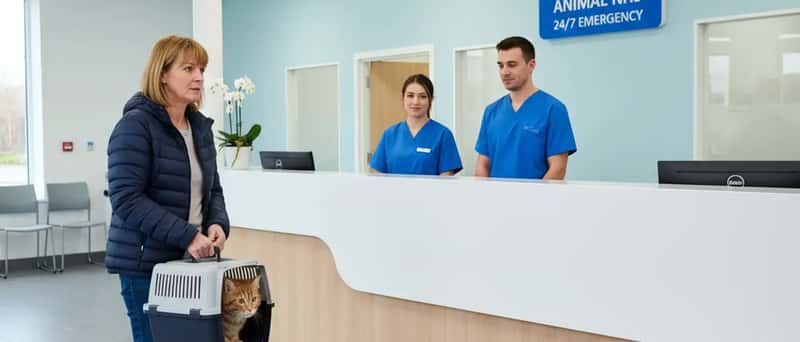
Emergency veterinary care in the UK operates through two main models. Large dedicated emergency hospitals — such as Vets Now, which runs over 60 out-of-hours clinics — stay open evenings, weekends, and bank holidays. Smaller independent practices often share on-call duties with neighbouring clinics under a rota system.
Steps to locate emergency care quickly
- Check your registered vet's answerphone — UK practices are legally required to provide an out-of-hours contact or redirect under the RCVS Code of Professional Conduct. The recorded message will direct you to the covering emergency service.
- Search the RCVS "Find a Vet" tool — the Royal College of Veterinary Surgeons maintains a public register at rcvs.org.uk that includes out-of-hours providers.
- Use a dedicated emergency locator — services like Vets Now and Veteris publish real-time availability on their websites with postcode search.
- Save the number in advance — add your nearest emergency vet to your phone contacts before a crisis happens.
Your regular vet's clinical notes transfer to the emergency provider in most cases, so the emergency team can review your pet's history and medications.
How Much Does an Emergency Vet Visit Cost in the UK?
Emergency veterinary fees are significantly higher than standard consultations because they cover unsociable-hours staffing, specialist equipment, and 24-hour nursing. The British Veterinary Association (BVA) notes that out-of-hours care typically costs two to four times a daytime consultation [BVA, 2024].
Pet insurance significantly reduces the financial shock. According to the Association of British Insurers (ABI), the average pet insurance claim in 2023 was £936 for dogs and £793 for cats [ABI, 2024]. If you do not have insurance, most emergency clinics accept payment plans or direct insurance billing — ask before treatment begins.
Key takeaway: Always ask for a written estimate before consenting to emergency treatment. UK veterinary practices are encouraged by the RCVS to provide transparent pricing, and you have the right to request a breakdown of costs.
What Should You Do While Waiting for Emergency Vet Care?
The minutes between noticing a problem and reaching the emergency vet clinic matter. First aid for pets follows a simple principle: stabilise, protect, and transport safely.
Practical first-aid steps
- Stay calm — your pet picks up on your stress. Speak quietly and move slowly.
- Restrict movement — if you suspect a fracture or spinal injury, keep the pet as still as possible. Use a rigid board or a blanket as a makeshift stretcher.
- Control bleeding — apply firm pressure with a clean cloth. Do not apply a tourniquet unless trained to do so.
- Do not induce vomiting unless specifically instructed by a vet. Some toxins cause more damage on the way back up.
- Note the time and details — when symptoms started, what the pet ate, any medications given. This information speeds up the emergency vet's assessment.
- Transport safely — cats should be placed in a carrier; dogs can be secured on the back seat with a harness or gently wrapped in a blanket.
Call the emergency vet while travelling if someone else can drive. The clinic can prepare for your arrival and talk you through any interim measures.
Can You Use the PDSA or Blue Cross for Emergency Treatment?
The PDSA and Blue Cross provide veterinary care — including emergencies — to pet owners who receive certain means-tested benefits. Eligibility typically requires the owner to be in receipt of Housing Benefit, Council Tax Support, or Universal Credit [PDSA, 2025].
PDSA Pet Hospitals operate in 48 locations across the UK. Blue Cross runs animal hospitals in London, Grimsby, Merton, and Victoria. Neither charity covers every postcode, so check their eligibility tools online before travelling:
For owners who do not qualify for charity provision, the RSPCA can sometimes assist with emergency treatment costs on a case-by-case basis. Your local council may also hold a list of veterinary practices that offer reduced-rate consultations.
Key takeaway: Charity-funded emergency care exists, but availability is limited. Check eligibility before a crisis — registering in advance speeds up access when time is short.
How Can You Prepare for a Pet Emergency Before It Happens?
Preparation reduces panic. A 2023 PDSA Animal Wellbeing Report found that 49% of UK pet owners had no emergency plan for their animal [PDSA, 2023]. Building one takes less than 30 minutes.
Your emergency preparedness checklist
- Store your emergency vet's number in your phone and on the fridge — include the clinic name, address, and postcode for sat-nav.
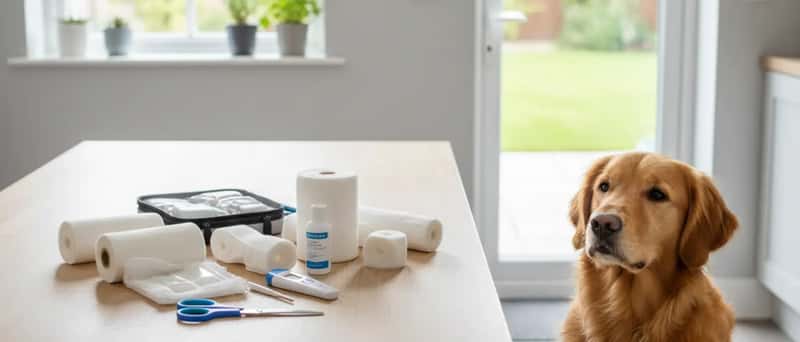
- Assemble a pet first-aid kit — gauze pads, adhesive bandage (not self-adhesive human plasters), blunt-ended scissors, a digital thermometer, and a tick remover.
- Keep insurance documents accessible — your policy number, the claims phone line, and a photo of your pet's vaccination card stored digitally.
- Know your pet's baseline vitals — a healthy dog's resting heart rate is 60–140 bpm depending on size; a cat's is 120–220 bpm [RVC, 2024].
- Identify toxic household items — the Animal Poison Line (charged service) and the VPIS provide 24-hour telephone guidance.
Regular health check-ups with your registered veterinarian reduce the likelihood of emergencies by catching problems early. Dental disease, heart murmurs, and lumps often progress silently until they become urgent.
Frequently Asked Questions About Emergency Vets
Is an emergency vet open 24 hours? Most dedicated emergency vet hospitals operate 24/7, including Christmas Day and bank holidays. Smaller rota-based services cover evenings (typically 6 pm to 8 am) and weekends. Confirm hours when you call.
Will an emergency vet treat my pet without upfront payment? Emergency vets are legally entitled to request payment before or at the time of treatment. Many accept credit cards and offer interest-free payment plans. If you have pet insurance, some clinics bill the insurer directly — ask when you arrive.
Can I go to any emergency vet, or must I use the one my practice refers to? You can attend any emergency vet clinic. However, using the one your practice refers to ensures seamless records transfer. If you choose a different clinic, bring any medications your pet takes and a summary of their history.
What should I bring to the emergency vet? Bring your pet's vaccination record, any medications they take, your insurance documents, and a sample of any substance they may have ingested. A phone with a torch is useful for late-night car park navigation.
How long will the emergency vet visit take? A straightforward consultation with treatment typically takes 1–2 hours. If your pet needs X-rays, blood tests, or surgery, expect 4–8 hours or overnight hospitalisation.
Disclaimer: The information on this page is provided for general guidance only and does not constitute veterinary advice. In any pet emergency, contact a qualified veterinarian immediately. For ongoing health concerns, consult your registered vet for advice tailored to your pet's specific needs.