 Eleanor Dubois
Victoria Day 2026: 5 Legal Facts About Fireworks Every Canadian Should Know
Victoria Day weekend falls on May 18-19, 2026, and Canadians across the country are planning backyard fireworks. Around one third of all fireworks-related injuries in Canada occur in the two weeks surrounding Victoria Day and Canada Day — roughly 70 of the 210 injuries documented in the national injury surveillance database. Burns account for 61% of those injuries. Eye injuries make up another 19%.
Before you buy consumer fireworks this weekend, there are five legal facts that could protect you from injury, a fine, or a civil liability claim you did not expect.
1. The Federal Minimum Age Is 18 — and It Applies Everywhere
Natural Resources Canada sets a federal minimum age of 18 years to purchase or use consumer fireworks anywhere in Canada. This is not a provincial suggestion — it is a regulatory requirement under the Explosives Act, and it applies nationwide.
Consumer fireworks are classified as Type F.1 explosives. Selling fireworks to anyone under 18 is a federal offence. Parents who knowingly allow minors to use consumer fireworks can face civil liability if an injury results, particularly if they were present and aware.
2. Municipal Bylaws Often Override Federal Permissiveness
Federal law permits consumer fireworks use on private property, but municipal bylaws frequently impose much stricter rules. In Toronto, consumer fireworks are only permitted on Victoria Day and Canada Day, between dusk and 11 p.m., on private property. Using them at any other time or location is a bylaw violation.
Restrictions vary significantly across provinces and cities. Some Quebec municipalities restrict fireworks to designated public spaces. Several BC municipalities have banned consumer fireworks entirely following fire risk assessments. Checking your local bylaw before buying is not optional — a violation can result in a fine of $500 or more in many jurisdictions, and it can affect your legal position if someone is injured during your display.
3. Homeowner Insurance May Not Cover a Fireworks Injury Claim
If you host a backyard display and a guest is injured, your homeowner's liability coverage may apply — but it is not guaranteed. Many standard Canadian homeowner policies explicitly exclude injuries arising from the use of explosives or pyrotechnic devices.
If your policy covers the incident, the injured party would file a claim against your liability coverage. If it excludes fireworks, you could face a personal civil lawsuit for medical costs, lost wages, and pain and suffering. In a serious burn or eye injury case, those damages can reach six figures.
Before Victoria Day, review your homeowner policy for exclusions related to fireworks, explosives, or pyrotechnic devices. Your broker can tell you in writing whether your coverage applies — and this is exactly the question brokers exist to answer.
4. Display-Grade Fireworks Are Illegal Without a Certified Pyrotechnician
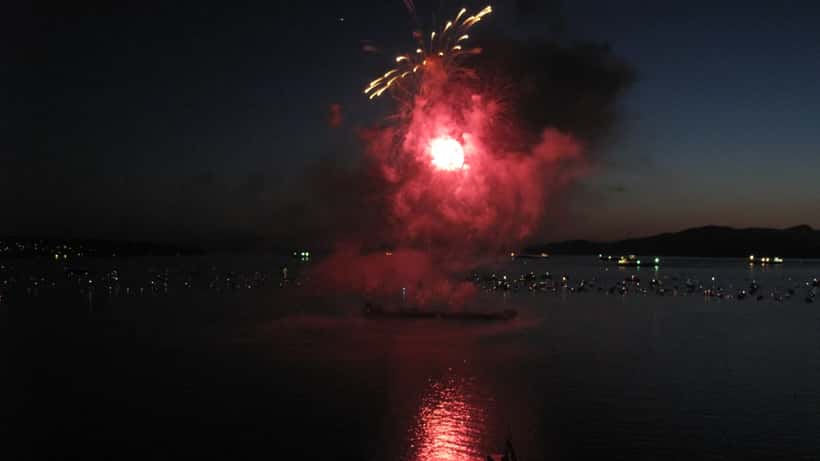
The large aerial shells and professional-grade fireworks used at public municipal displays are classified as Type F.2 explosives in Canada. Using them requires a certified pyrotechnician and the appropriate permits. Using Type F.2 fireworks without certification is illegal under the Explosives Act, regardless of where you obtained them.
Type F.2 products are occasionally sold through informal channels, including online marketplaces and cross-border imports. Consumer products purchased internationally sometimes exceed the legal limits for Type F.1 classification. If you acquire and use non-compliant fireworks and someone is injured, both the person who supplied them and the person who used them can face criminal charges under the Explosives Act, in addition to civil liability for injuries caused.
5. Bystander Injuries Create Direct Personal Liability
Even if you comply with all federal and municipal regulations, you can still face civil liability if a bystander is injured by your fireworks. Canadian courts apply a negligence standard: did you take reasonable precautions to prevent foreseeable harm?
Foreseeable harm from consumer fireworks includes burns from misdirected shells, eye injuries from fragments, and property fires caused by burning debris landing on dry grass or structures. A reasonable precaution standard means maintaining a clear safety perimeter around spectators, keeping a water source available, never using fireworks in high-wind conditions, and never attempting to re-ignite a dud that failed to launch.
A "dud" that explodes when handled causes a disproportionate number of serious fireworks injuries. If a shell misfires, soak it in water and wait at least 30 minutes before approaching.
What to Do If Someone Is Injured
If a person is injured at your backyard fireworks display, your first obligation is medical. For serious burns or eye injuries, call 911 immediately. Do not attempt to treat a chemical burn from a fireworks compound with standard first-aid burn treatments without medical guidance.
Once the person is stable, document the incident — the product used, what happened, who witnessed it, and any safety measures you had in place. This documentation matters for both your insurance claim and any potential civil proceedings.
If the injury occurred at a public municipal display, a different liability framework applies. Municipal entities can face claims if they failed to maintain adequate safety perimeters, deploy certified pyrotechnicians, or provide medical response capability. A personal injury lawyer can advise on whether the municipality's conduct fell below the standard of care required under provincial occupiers' liability legislation.
For detailed guidance on the federal classification and legal requirements for consumer and display fireworks in Canada, the authoritative source is Natural Resources Canada's consumer fireworks safety page, which outlines the regulatory framework for both Type F.1 and Type F.2 products.
Victoria Day is a celebration. Understanding the legal rules before you light the fuse is the simplest way to keep it one.
This article provides general legal information only. For advice specific to your situation, consult a qualified lawyer.
