 Isla Henderson
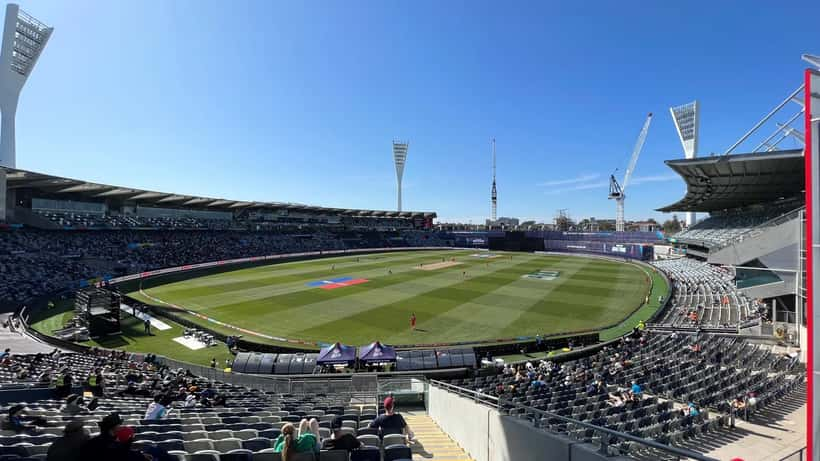
As Zimbabwe and South Africa lock horns in the FNB T20I Tri-Series in Windhoek this week, cricket fans across Australia are watching closely — but beyond the boundary ropes, a quieter story is unfolding about money, strategy, and the moment a life-changing sum suddenly lands in your lap.
The Namibia T20I Tri-Nation Series, running from 28 August to 6 September 2026, is about more than warm-up cricket. With the 2027 ICC Men's Cricket World Cup set to be co-hosted by Namibia, South Africa, and Zimbabwe, every match matters for preparation — and every performance shapes the financial futures of players whose earning windows are narrow.
The Numbers Behind ZIM vs SA
The prize money figures from the 2026 ICC Men's T20 World Cup tell a striking story. The ICC distributed a record $11.25 million in players' prize money across the 20 competing nations.
Here is how the key teams stacked up:
| Team | Stage Reached | Prize Money (USD) |
|---|---|---|
| India | Winners | $2,639,423 |
| New Zealand | Runners-up | $1,422,692 |
| South Africa | Semi-finalists | $1,005,577 |
| Zimbabwe | Super 8s exit | $491,538 |
| All teams (base) | Group stage | $225,000 |
South Africa earned more than double what Zimbabwe received, despite both squads training, travelling, and competing at elite international level. For Zimbabwe's 15-man squad, the $491,538 total works out to roughly $32,769 per player before tax — meaningful, but not the career-defining payday that popular imagination often conjures.
South Africa's $1,005,577 — split across a similar squad — yields approximately $67,000 per player, still a fraction of what players in the Indian Premier League or Australia's Big Bash League can command per season.
These figures matter because they illustrate a pattern that applies well beyond cricket: the difference between a good financial result and a great one often comes down not to the amount earned, but to how that amount is managed once it arrives.
Why Sudden Money Is Harder to Handle Than It Looks
Financial research consistently shows that unexpected or irregular windfalls — prize money, redundancy payouts, inheritances, business sale proceeds — carry a disproportionate risk of being depleted within two to five years. The problem is not a lack of funds. It is a lack of a framework to receive them.
For professional cricketers from associate nations like Zimbabwe, this challenge is acute. Many players hold part-time employment or run small businesses alongside their cricket careers, operating within tight budgets for months at a time before an international tournament delivers a significant lump sum. Without a structured approach, that money can absorb into everyday spending or disappear into impulsive investments before any long-term benefit is secured.
The same dynamic plays out in everyday Australian life. According to the Australian Taxation Office's guidance on concessional super contributions, Australians regularly encounter irregular income events — from employer bonuses and superannuation death benefits to inheritance and property settlements — where the absence of professional guidance leads to avoidable tax penalties and missed investment opportunities.
The parallels between a Zimbabwean cricketer pocketing $32,000 after months of preparation and an Australian employee receiving a $50,000 performance bonus are closer than they appear. In both cases, the financial challenge is identical: how do you convert a one-time sum into lasting wealth?
What Would You Do with $491,538? A Concrete Australian Scenario
Consider this situation, which reflects the experience of many Australians seeking wealth management advice.
Tom is a 38-year-old project manager in Brisbane. After a business partnership dissolves, he receives a $491,000 settlement payout — almost exactly Zimbabwe's T20 World Cup earnings — in a single bank transfer in September 2026.
Tom's instinct is to pay off the remaining $185,000 on his mortgage immediately, invest $150,000 in shares, and keep $156,000 in a high-interest savings account "for flexibility."
Here is what a wealth management adviser would flag for Tom:
If Tom pays off the mortgage outright: He eliminates $185,000 in debt — but at a current owner-occupier variable rate of around 6.1%, the net interest saving is roughly $11,285 per year. That is meaningful, but it is also the least tax-efficient use of the entire sum if Tom is in the 37% or 45% marginal tax bracket.
If Tom maximises concessional superannuation contributions instead: He can contribute up to $30,000 per year at the 15% concessional tax rate. A one-off catch-up contribution (permitted under the carry-forward rules for balances below $500,000) could allow Tom to shift significantly more into super at the lower rate, reducing his taxable income for the year by $30,000+ and potentially saving him $4,500 to $9,000 in income tax compared to holding the funds in a savings account.
The if/then calculation: If Tom acts without advice and simply holds the $491,000 in a savings account earning 4.8% interest, he generates approximately $23,568 in interest income — which is fully taxable at his marginal rate. If his marginal rate is 45% (income above $180,000), his after-tax return is roughly $12,962 — less than the mortgage interest he would have saved, and substantially less than the optimised super-and-offset strategy a qualified adviser would model for his specific situation.
The difference between Tom acting alone and Tom consulting a wealth management expert in the first 60 days of receiving the payout could be worth $8,000 to $15,000 annually — compounding forward over a decade into a materially different retirement outcome.
The Expert Advantage: Four Moves Advisers Make First
When a client arrives with a sudden windfall — whether $50,000 or $500,000 — a qualified Australian wealth management adviser typically prioritises four steps before any investment is made.
1. Tax positioning. The ATO treats different income sources differently. Prize money received directly may be subject to income tax if it is connected to employment or professional activity. A settlement payment may be partially tax-exempt. An inheritance is generally not taxable to the recipient, but the underlying assets may carry embedded capital gains. Getting the tax classification right before deploying funds is the foundation of every other decision.
2. Debt sequencing. Not all debt is created equal. A mortgage at 6.1% is not necessarily the first thing to pay down if the client carries credit card debt at 19.9% or a business loan at 8.5%. Advisers map the full debt picture and sequence repayments by effective interest rate and tax-deductibility.
3. Super optimisation. The concessional and non-concessional contribution caps, the carry-forward rules for unused cap amounts, and the total super balance threshold at $500,000 create a short window for many Australians to inject funds into super at a reduced tax rate. This window is time-sensitive — the ATO resets cap calculations each 1 July, so a payout received in September 2026 may allow contributions under the current year's cap before 30 June 2027.
4. Risk-appropriate investing. The temptation to convert a windfall into speculative investments — cryptocurrency, unlisted property, small-cap stocks — is well documented in behavioural finance research. A structured investment plan, diversified across asset classes appropriate to the client's age and risk tolerance, consistently outperforms reactive decision-making over 10-year horizons.
What the Namibia Series Is Really About
The FNB T20I Tri-Nation Series in Windhoek is, at its core, a series about preparation and compounding advantage. South Africa (ranked 5th globally) and Zimbabwe (ranked 12th) are using these matches to sharpen their game ahead of the 2027 World Cup on home soil. Every session, every run, every wicket is an investment in a future that is still 18 months away.
That same logic — invest deliberately now, harvest the result later — is precisely what wealth management advisers ask their clients to apply when a financial windfall arrives.
Zimbabwe's cricketers earned $491,538 from the T20 World Cup this year. Whether that becomes a career-defining foundation or a figure that quietly evaporates will depend, in part, on the quality of the financial advice available to them. The same is true for every Australian who receives a significant lump sum in 2026 — bonus, settlement, inheritance, or sale.
The match between ZIM and SA is trending. But the financial match between acting now and acting with advice is the one with the longer-term score.
If you have recently received a lump sum or are expecting a financial windfall, a qualified wealth management expert can model the tax, super, and investment scenarios specific to your situation. Find a verified adviser through Expert Zoom's Wealth Management network.
This article is for general informational purposes only and does not constitute financial advice. Tax rules and contribution caps change annually. Consult a qualified Australian financial adviser or accountant before making decisions about a lump-sum windfall.
