 Andrew Thompson
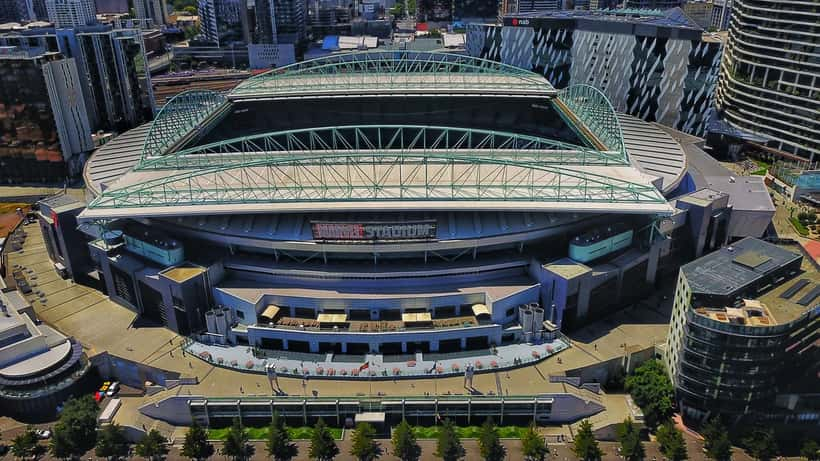
Zach Bryan announced his first Australian headline tour on 14 October 2026: six stadium shows in December 2027, two nights each at Marvel Stadium in Melbourne, Accor Stadium in Sydney and Suncorp Stadium in Brisbane. Presales open on Wednesday 21 October and the general sale follows on Friday 23 October. Within hours, fans were asking the question that follows every stadium announcement: how do I avoid getting burned?
The question fans are actually asking
The announcement itself is straightforward. According to Backseat Mafia and Blunt Magazine, the "Young Manhood and Other Donatable Organs" tour runs on 3-4 December (Melbourne), 10-11 December (Sydney) and 17-18 December (Brisbane) in 2027, with Vance Joy and Emma Ogier supporting on every date. Blunt Magazine reports the shows are all ages and that local general-sale times are 11am in Melbourne, 1pm in Sydney and 2pm in Brisbane. Ticket details sit on the Frontier Touring website.
What the announcement does not say is what tickets will cost. Neither outlet lists prices. That gap matters, because the single most useful number for any buyer is the face value: it is the benchmark every resale rule and every refund claim is measured against.
Bryan's last Australian appearance, a 2023 show at Flemington Racecourse, sold out within minutes, according to Backseat Mafia. Fast sell-outs are exactly the conditions in which fake listings, inflated resale prices and "I have two spare" social media posts multiply.
Is it legal to resell a ticket for more than you paid?
It depends on the state, and on the show. There is no national law capping ticket resale prices, which is why the three cities on this tour are treated differently.
In New South Wales, Part 4A of the Fair Trading Act 1987 caps the advertised resale price at 10 per cent above the original cost, according to a state-by-state summary published by Beat. The same summary lists maximum penalties of 200 penalty units (currently $22,000) for an individual and 1,000 penalty units ($110,000) for a company. The NSW rule applies to events held in the state, which covers both Sydney nights at Accor Stadium.
Victoria is narrower. The cap applies only to events declared under the Major Events Act 2009, so whether a Marvel Stadium show is covered depends on whether it has been declared. Queensland's rule has historically applied to specific venues operated by Stadiums Queensland, so a Suncorp Stadium listing should be checked against the current rules rather than assumed.
These summaries are drawn from industry fact sheets dated between 2019 and 2022, so confirm the current position with the relevant state fair trading office before relying on it. This article is general information, not legal advice.
What is the practical risk with resale and scam listings?
There are three distinct problems, and they call for different responses.
Price gouging. A listing far above face value is not necessarily a scam, but in New South Wales it may be unlawful. A seller who advertises a Sydney ticket well above the cap is exposing themselves to the penalties above.
Fake or duplicated tickets. A screenshot of a barcode can be sold to several buyers at once. Only the first person scanned at the gate gets in. Scamwatch, run by the ACCC, lists ticket scams among its buying-and-selling scam categories and advises buyers to use authorised sellers. Blunt Magazine's coverage of this announcement gives the same advice: buy only through sellers authorised by the promoter.
Payment method. Direct bank transfers to a stranger are the hardest payments to recover. Paying by credit card on a platform with a buyer guarantee gives you a dispute route that a transfer does not.
A worked example: the two-ticket Sydney buyer
Prices have not been announced, so the figures below are illustrative only. Suppose a fan misses the 23 October sale and finds a post offering two tickets to the Friday 10 December 2027 Sydney show. The original face value was $180 each, so the pair cost $360 originally.
Under a 10 per cent cap, the most a lawful NSW resale listing could ask is $198 per ticket, or $396 for the pair. The seller instead asks $450 each, $900 in total. That is $504 above the lawful ceiling for the pair, or about 150 per cent over face value.
Now the if/then logic. If the seller is a private individual advertising the ticket at $450, then the listing is above the cap and may breach NSW law, and the buyer has a strong reason to walk away and report it. If the seller asks for a bank transfer and offers only a screenshot, then the buyer has no dispute route and no proof of the ticket's validity, and a lost $900 is realistically unrecoverable. If the listing is on an authorised resale platform at or under $396 and paid by card, then the buyer has both a lawful price and a chargeback option.
The three outcomes differ by hundreds of dollars and by whether the money can be recovered. A lawyer is rarely needed in the first scenario, but is relevant when a purchase has gone wrong and the question is whether the seller breached the Australian Consumer Law, whether the platform shares responsibility, or whether a bank should refund a transaction.
What happens if the show changes or is cancelled?
The tour is more than a year away, and a lot can change in that time. Dates move, venues shift and artists withdraw. Refund rights depend on how and where you bought, so keep the original confirmation email and the receipt, because a screenshot from a third party will not prove what you paid.
Our earlier coverage of refund rights after a concert cancellation explains how this works when an event is called off, and our piece on what to do after a sold-out tour covers the scalping side in more detail.
Six checks before 21 October
- Register on the official presale. Use the link published by Frontier Touring, not a link forwarded in a group chat.
- Decide your ceiling now. Setting a maximum price in advance protects you from panic buying at 1pm on sale day.
- Know the face value. Once prices are published, save the screenshot. It is your benchmark for any resale cap.
- Pay by card, never by transfer, for any peer-to-peer purchase.
- Check the state. A Sydney listing sits under the NSW cap. A Melbourne or Brisbane listing may not.
- Keep everything. Messages, listing screenshots, receipts and the seller's profile can all matter later.
When to get professional advice
Most ticket problems are small and are resolved by a platform refund or a bank dispute. Professional advice becomes worthwhile when the amount is significant, when a seller has disappeared, when a company has refused a refund you believe the Australian Consumer Law requires, or when you have been caught up in a scam and need to understand your options for recovery and reporting. A consumer or commercial lawyer can assess whether the seller, the platform or the payment provider carries responsibility.
Report scams to Scamwatch as soon as you spot one. Reports help the ACCC track fake-ticket activity and warn other buyers before the general sale opens. If money has already left your account, contact your bank first and then speak to an ExpertZoom legal expert about your next step.
