 Olivia Taylor
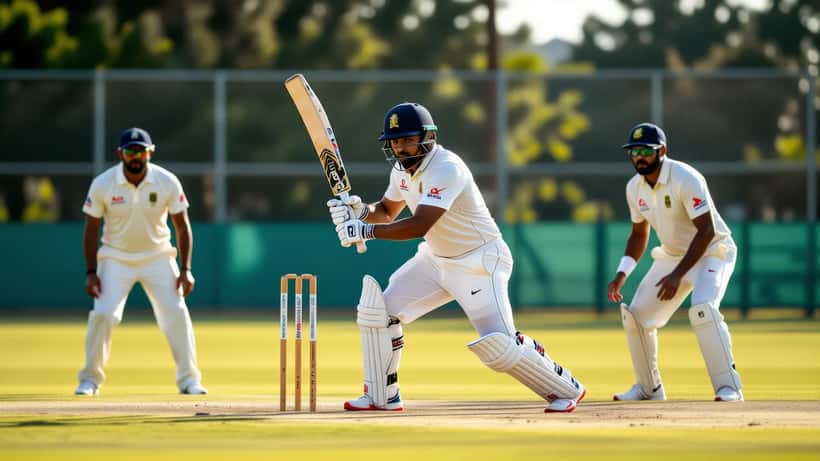
West Indies lead New Zealand 1-0 in their five-match ODI series after a seven-wicket win in Providence, Guyana, on 11 July 2026, with the second one-dayer set for the same ground on Monday 13 July 2026. According to ESPNcricinfo, Shai Hope's home side is exploiting familiar conditions while Mitchell Santner leads a heavily rotated Black Caps squad fresh off a Test tour of England. For Australian fans watching the early-morning broadcasts, the series is also a reminder of something closer to home: the physical toll cricket takes on bowlers, and how often weekend players ignore the warning signs that professionals never do.
Why a rotated squad tells an injury story
New Zealand's decision to rest and rotate players after a long Test tour is not just tactics. Elite cricket schedules are now built around managing fatigue and soft-tissue load, because the fast-bowling action is one of the most punishing repetitive movements in sport. When a national selector rotates a squad, they are effectively acting on the advice of sports physicians and physiotherapists who track every over bowled.
Amateur cricketers rarely get that safety net. A club fast bowler in a Sydney or Perth grade competition may bowl 15 overs in a single innings with no load monitoring at all. That gap between professional care and weekend reality is exactly where preventable injuries happen.
The two injuries that dominate fast bowling
Two problems account for a large share of fast-bowler breakdowns, and both are common in club cricket.
Side strain is the tearing of the internal or external oblique muscles, or their attachments to the ribs and pelvis, during the explosive trunk rotation that generates pace. It is strikingly specific to quicks: more than 90% of reported side strains in cricketers over the past two decades have occurred in fast bowlers, and side and abdominal strains represent roughly 5.5 new injuries per 100 male Australian cricketers each season, ranking second only to hamstring injuries among pace bowlers.
Hamstring strains are the other headline injury, accounting for around 15% of all cricket injuries. They are driven by the high-speed running and explosive delivery stride that bowling demands. Notably, research on Australian professional cricketers has found that playing in Australia, rather than overseas, is associated with a higher hamstring-injury risk, a pattern often linked to harder grounds and hotter conditions.
When soreness becomes a reason to see a professional
Most club cricketers treat a sore side or a tight hamstring as part of the game. The problem is that side strains in particular tend to worsen with continued bowling, and playing through one can turn a two-week issue into a two-month one.
A sports physician or physiotherapist can distinguish ordinary post-match soreness from a genuine muscle tear. As a general guide, an amateur player should seek professional assessment when pain is sharp rather than dull, when it appears suddenly during a delivery or sprint, when swelling or bruising develops, or when the same area keeps flaring up across successive matches. Pain that stops you bowling at full effort, or that lingers beyond a few days of rest, is not something to diagnose on the boundary rope.
Australia's national health service, Healthdirect, sets out clear first-aid and recovery guidance for muscle sprains and strains, including when self-care is enough and when medical review is warranted. You can read the official advice on the Healthdirect sprains and strains page. It is a sensible starting point, but it is not a substitute for a hands-on assessment when an injury is recurring or severe.
What prevention actually looks like
The encouraging news is that the same measures elite squads use are well within reach of club players. Targeted core strengthening is the foundation of side-strain prevention, with oblique-focused work such as side planks and their progressions, Copenhagen planks, resistance-band rotations and medicine-ball chops and throws. These programs need only 15 to 20 minutes per session and minimal equipment, and they slot easily into ordinary team training.
For hamstrings, the principle is gradual loading. Players should build pre-season running, throwing and bowling volume in steady steps rather than sudden leaps, and keep at least one short sprint session in the weekly routine, because even brief speed exposure helps reduce the "first-sprint" strains that catch under-prepared players.
A qualified sports physiotherapist can turn these general principles into a program tailored to your action, your workload and your injury history, which is where consulting an expert pays for itself.
The takeaway for Australian cricketers
The West Indies versus New Zealand series is compelling cricket, and the rotation of the Black Caps squad shows how seriously the professional game treats bowling load. Recreational players deserve the same respect for their bodies. If you are turning your arm over in grade or social cricket this season, treat recurring side pain or hamstring tightness as a signal, not background noise.
Booking a session with a sports physiotherapist or physician early, ideally before the season peaks, is far cheaper and quicker than rehabilitating a full tear mid-summer. For readers following the wider cricketing calendar, our coverage of the India vs England 2026 series offers more on the demands of the modern game.
This article is general information only and is not medical advice. If you have a suspected muscle injury, consult a qualified health professional for diagnosis and treatment.
