 Olivia Taylor
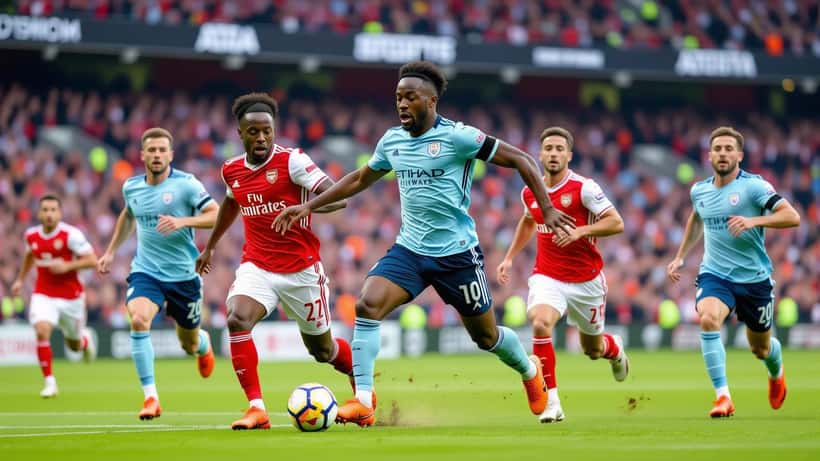
Arsenal controlled 68% of possession at the London Stadium on Sunday, 10 May 2026, yet the Premier League leaders could not score against a West Ham side fighting to avoid relegation. For 45 minutes, the Gunners passed, pressed and probed — and came away with nothing.
Arsenal entered the match in first place with 76 points. West Ham sat 18th with 36 points. By every statistical measure, Arsenal should have dominated the scoresheet. They had scored in each of their previous 13 Premier League matches. Yet under the spotlight of a title race and a hostile crowd, their clinical edge dissolved.
Sport psychologists have a name for this. It is called a pressure-induced performance decrement — and it is more common than most coaches admit.
Why Elite Teams Freeze at the Worst Moment
When athletes enter high-stakes, high-visibility situations — a must-win title clash or a survival showdown — the body's stress response floods the system with cortisol and adrenaline. In moderate doses, these hormones sharpen reaction time and focus. In excess, they tighten muscles, narrow attention, and disrupt the fine motor coordination required for precise passing and finishing.
Arsenal were not playing badly on Sunday. They were playing the same possession-based game that put them top of the table. But under extreme pressure — with a title within reach against a desperate opponent — the margin between brilliant and ordinary collapsed. Players who normally rely on automatic muscle memory began consciously directing their movements. That millisecond of hesitation is often the difference between a goal and a near-miss.
This is not unique to football. It affects athletes at every level, from Olympic sprinters to weekend warriors. The phenomenon was first described scientifically in 1984 and has since been replicated across sports, music performance, and high-stakes workplace presentations.
What the Science Says About Performing Under Pressure
The Australian Institute of Sport (AIS) runs a dedicated Mental Performance in Competition (MPC) program, designed to help elite athletes maintain their best when stakes are highest. The AIS identifies three core challenges athletes face in pressure situations: attentional narrowing, overthinking of learned skills, and disrupted pre-performance routines.
Attentional narrowing means focusing on outcomes — "we must score" — rather than process. The moment an athlete's attention shifts from "what do I need to do right now" to "what happens if I fail," performance suffers. The automatic quality of elite skill breaks down.
The AIS Mental Performance in Competition program offers structured techniques to address this, including cognitive load management, attention control protocols, and breathing-based arousal regulation. These are not motivational speeches. They are evidence-based, clinically tested methods that the AIS delivers to national sporting organisations across Australia.
Research published in the International Review of Sport and Exercise Psychology found that athletes with structured mental performance training were significantly less likely to experience choking under pressure than those relying on willpower alone.
West Ham's Survival Instinct: When Fear Helps
There is a striking counterpoint to Arsenal's pressure paralysis. West Ham — the side with everything to lose — produced one of their most disciplined defensive performances of the season on Sunday.
For teams in a relegation battle, fear can function as a performance enhancer rather than a brake. When players know that defeat likely means dropping out of the top flight — losing contracts, relocating families, ending careers — the focus sharpens rather than freezes. There is no future to overthink. Every clearance becomes an immediate, concrete goal.
Sport psychologists call this "productive anxiety": a moderate level of physiological arousal that focuses attention without overloading it. The Yerkes-Dodson curve, a foundational model in performance psychology, shows that performance improves with arousal up to a point — then declines sharply beyond it. Arsenal's excellence-under-expectation may have tipped them past that peak. West Ham's desperation landed them right in the optimal zone.
What This Means for Australian Athletes and Weekend Warriors
You do not need to be a Premier League footballer to experience what Arsenal are going through. Australian sportspeople — from club cricketers and netballers to competitive swimmers and Saturday morning football coaches — regularly encounter the same psychological patterns in big moments.
A swimmer who trains all year for a state championship may find her start block technique falling apart in the final. A tennis player who drills backhands for hours every week shanks three in a row during a club semi. These are not failures of talent. They are failures of pressure management — and they are addressable.
The research is consistent: mental rehearsal, attention control routines, and structured breathing before high-pressure moments significantly improve performance outcomes. Techniques like process cues ("keep the head still on contact"), pre-shot routines in golf, or breathing patterns used by elite archers are all forms of attention management designed to keep the conscious mind from interfering with automatic skill execution.
Signs It May Be Time to Speak to a Sports Health Expert
If you or a young athlete in your family regularly underperforms in competitions compared to training, it may be worth consulting a qualified sports psychologist or sports health professional. Key indicators include:
- Skills that execute perfectly in training consistently breaking down under match conditions
- Persistent pre-competition anxiety that disrupts sleep or daily routine
- Overthinking movements that have been rehearsed thousands of times
- A pattern of early exits from competitions despite clear talent and strong training results
Sports psychologists in Australia are registered with the Australian Health Practitioner Regulation Agency (AHPRA). Many offer direct appointments without a GP referral, though a referral may make sessions eligible for Medicare rebates. See how other Premier League contexts relate to expert health support, or use ExpertZoom to find a qualified sports health specialist near you.
This article provides general information about sports psychology and performance science. It is not a substitute for professional medical or psychological advice. If you are experiencing significant mental health difficulties, please consult a registered psychologist or your GP.
