 Andrew Thompson
On 6 May 2026, Netflix dropped the second season of "Worst Ex Ever," featuring the case of Wade Wilson — the Florida death row inmate known as the "Deadpool Killer" for his face tattoos and his coincidental name-match with the Marvel character. The timing is deliberate: Wilson's case is one of the most legally significant capital punishment disputes in the United States right now. On 5 February 2026, the Florida Supreme Court rejected his constitutional appeal in under four minutes. His lawyer has since announced plans to petition the US Supreme Court — and the outcome could reshape the death penalty across multiple American states.
Who is Wade Wilson and why is he on death row?
Wade Wilson, 36, was convicted in 2024 of the 2019 murders of two women in Cape Coral, Florida: Kristine Melton, 35, and Diane Ruiz, 43. He was sentenced to death in August 2024 — but he was not sentenced unanimously. His jury voted 10 to 2 in favour of death.
That 10-2 split is the heart of the legal battle.
In 2023, Florida lowered the threshold for a death sentence from a unanimous 12-member jury verdict to an 8-of-12 majority. The law was specifically enacted after the Parkland school shooter's jury, which could not reach unanimity, spared him from execution. Wilson's crimes occurred in 2019 — four years before the law changed. His sentence was handed down under the new, lower threshold.
The constitutional argument: can you change the rules mid-game?
Wilson's defence attorney, Michael Ufferman, has mounted a challenge based on the ex post facto principle — a foundational rule of criminal law that prohibits governments from retroactively applying laws that disadvantage a defendant. In common-law systems, including Australia's, this principle is considered fundamental to a fair justice system.
The argument is straightforward: Wilson was accused of crimes committed in 2019 under a legal framework that required jury unanimity for a death sentence. Changing that requirement in 2023 — and then applying it to a 2019 crime — effectively altered the rules after the fact in a way that made it easier to execute him.
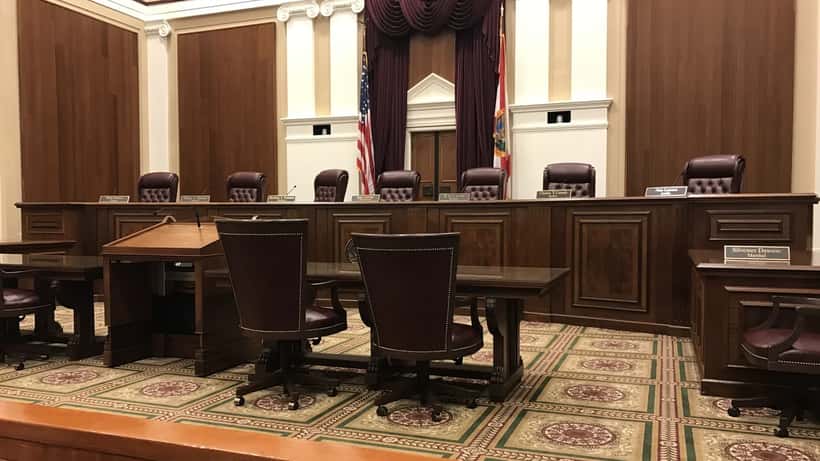
On 5 February 2026, Ufferman appeared before the Florida Supreme Court. The hearing lasted approximately four minutes. Ufferman acknowledged the court had already dismissed similar arguments in other cases and declined to re-argue the point, telling the justices: "I don't intend to waste this court's time." The court swiftly rejected the appeal.
What happens next: the US Supreme Court path
Ufferman has announced he will petition the US Supreme Court. If the court accepts the case, the constitutional question — whether retroactively applying a non-unanimous death penalty law violates ex post facto protections — could affect not just Wade Wilson but every Florida death row inmate sentenced under the 2023 law.
This is not merely procedural. It touches on one of the oldest protections in criminal law: the idea that the state cannot change the rules of punishment after the crime has occurred.
As of May 2026, no execution date has been set for Wilson. Florida cannot execute a prisoner while appeals remain active. The state's average time between sentencing and execution is 13 to 14 years — Wilson has been on death row for less than two years.
Why this matters for criminal law — including in Australia
Australia abolished the death penalty federally in 1973. The last execution on Australian soil was in 1967. From an Australian legal perspective, the Wilson case is a window into the unresolved tensions within the world's most litigated criminal justice system — and it raises principles that resonate in any common-law jurisdiction.
Jury unanimity in serious criminal cases is a cornerstone of Australian law. Under Australian state and territory criminal law, verdicts in murder trials must generally be unanimous, or near-unanimous in some jurisdictions that allow majority verdicts after deliberation time. The idea that a government would lower the threshold for a death sentence — specifically because a high-profile case produced the "wrong" outcome with a unanimous jury — is legally and constitutionally contentious by any common-law standard.
The ex post facto principle is enshrined not as a constitutional provision in Australia (unlike the US), but as a fundamental principle of statutory interpretation and criminal procedure. Australian courts will not interpret legislation to apply retrospectively unless the words are clear and unambiguous. A law that retroactively increases the penalty for a past act would be subject to intense judicial scrutiny.
The role of media and true crime in capital cases is also worth noting. Wilson's notoriety — driven by his tattooed appearance, his viral mugshot, and the coincidence of his name with a Marvel superhero — has generated enormous media attention. Netflix and Paramount+ documentaries ensure his case reaches global audiences. Lawyers note that in death penalty jurisdictions, media saturation can affect everything from jury selection to clemency decisions.
What criminal defence lawyers want you to know
For anyone following the Wilson case, Australian criminal barristers and defence solicitors identify three key takeaways:
1. Constitutional challenges take years. Even an unsuccessful Florida Supreme Court hearing is not the end. The US Supreme Court path could take years, and there is a genuine possibility the court refuses to hear the case entirely. This is why death row inmates wait over a decade between sentencing and execution.
2. Retroactive laws are legally vulnerable. Any law that increases the severity of criminal punishment after the fact faces significant constitutional headwinds in common-law systems. The ex post facto principle exists precisely to prevent governments from moving the goalposts after someone has already committed an act.
3. Jury unanimity is a protection, not a technicality. When Florida lowered its jury threshold for death sentences, critics argued it sacrificed a fundamental safeguard of the criminal justice system. The Wilson case will test whether that decision can survive constitutional review.
The Wilson case is a reminder that criminal law — even in a jurisdiction as different from Australia as Florida — turns on universal principles: fairness, foreseeability, and the limits of state power over individual life. If you are facing serious criminal charges in Australia and want to understand your legal rights, a criminal defence lawyer can help you navigate the system. Consult a legal expert on Expert Zoom today.
Disclaimer: This article provides general legal information for educational purposes only and does not constitute legal advice. For advice specific to your situation, consult a qualified Australian lawyer.
