 Chloe Anderson
Vanessa Trump, the former wife of Donald Trump Jr., revealed in May 2026 that she had been diagnosed with breast cancer — adding her name to a growing list of high-profile women whose public disclosures have prompted millions of people to book their own screening appointments. "While this isn't news anyone expects," she wrote in an Instagram post, "I'm encouraged by a very good prognosis." Her message centred on one detail that doctors across Australia want every woman to hear: the cancer was caught early.
The Diagnosis That Sparked a Global Conversation
Trump's announcement came alongside news that her partner, golfer Tiger Woods — whom she described as her "closest thing to a soulmate" — had been a source of enormous support throughout her diagnosis. The story dominated international headlines not only because of the Trump family's political prominence but because of the phrase embedded in every report: early detection.
In Australia, where breast cancer remains the most commonly diagnosed cancer among women, that phrase carries particular weight. According to Cancer Australia, approximately 21,000 Australian women are diagnosed with breast cancer each year. The five-year relative survival rate has climbed from 78% in the early 1990s to 93% in 2017–2021 — a transformation driven largely by the expansion of screening programs and improvements in treatment. The numbers make a compelling case. The question that Trump's announcement now poses for Australian women is not simply a sympathetic one. It is practical: when did you last have a mammogram?
What Early Detection Changes in Practice
The data behind early detection in Australia is among the most compelling in the country's public health system. Research published by the Australian Institute of Health and Welfare found that breast cancers detected through BreastScreen Australia carried a 54% to 63% lower risk of causing death than cancers diagnosed in women who had never participated in the program.
That is not simply an abstract statistical improvement. It reflects the size of tumours at detection. Among cancers found through BreastScreen, 59% measured 15mm or less in diameter. Among cancers found outside the program — typically because a woman noticed a symptom — only 28% were that small. Smaller tumours mean less aggressive treatment, faster recovery, and dramatically higher survival rates across every age bracket.
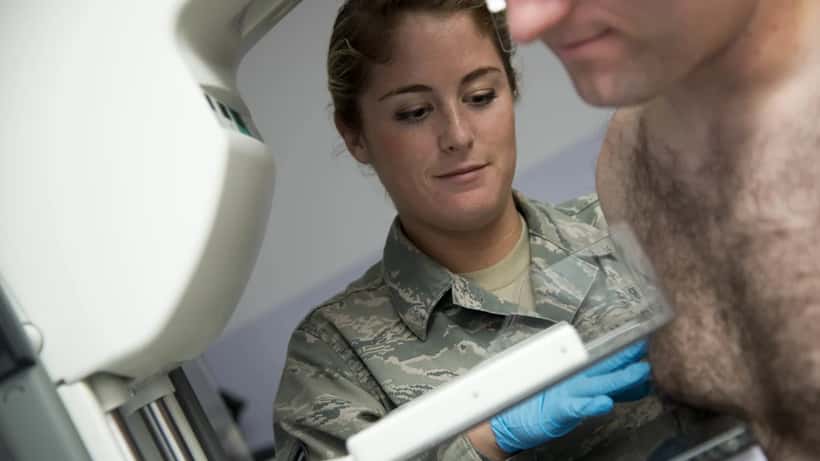
BreastScreen Australia offers free two-yearly mammograms to women aged 40 and over, with active outreach targeting women aged 50–74. Over the two-year period ending in 2024, more than 1.9 million women participated — representing around 52% of the target population. That means nearly half of eligible Australian women did not access a free, potentially life-saving service last year.
The mortality trajectory over three decades speaks to what participation achieves at scale. In 1991, breast cancer claimed 74 lives per 100,000 women aged 50–74. By 2023, that figure had fallen to 37 deaths per 100,000 — a 50% reduction across thirty years of sustained screening participation and treatment improvement.
When Celebrities Speak, Women Act
Health researchers have documented what happens when a high-profile woman announces a breast cancer diagnosis in plain terms. When Australian pop star Kylie Minogue disclosed her diagnosis in 2005, BreastScreen services recorded a significant and measurable spike in mammogram bookings within weeks — a phenomenon later documented in academic literature as the "Kylie effect."
Vanessa Trump's May 2026 announcement is expected to produce a comparable pattern. The clinical significance is real: if even a fraction of the estimated 900,000 Australian women who are currently overdue for their two-yearly mammogram book an appointment in response to this news, some proportion of those scans will catch cancers that are still small, still early-stage, and still highly treatable.
"Celebrity disclosures work," one breast cancer researcher noted in a 2025 review published through the National Breast Cancer Foundation, "because they strip away the sense that screening is something that happens to other people. They make it personal." Trump's emphasis on her good prognosis — and the implicit message that early detection made that prognosis possible — functions as a targeted public health message delivered to a global audience.
A Concrete Case: What 24 Months Can Cost a Woman in Her 50s
Consider a 52-year-old woman in western Sydney who last had a mammogram at age 49. Her two-yearly appointment was due at 51, but life intervened — work pressures, family commitments, no symptoms. She is now three years overdue.
If a cancer has been growing during that gap and is detected at Stage II rather than Stage I, the clinical and financial picture shifts substantially:
- Stage I breast cancer in Australia carries approximately a 98% five-year survival rate.
- Stage II breast cancer five-year survival drops to approximately 85%.
That 13-percentage-point difference translates into concrete treatment differences. A 9mm tumour caught at Stage I typically requires lumpectomy and radiation, with no chemotherapy. The same tumour, allowed to grow to 22mm before detection, may require chemotherapy, more extensive surgery, and extended hormonal therapy — adding months to the treatment timeline and significant financial and emotional cost, even within the Medicare system.
If this hypothetical woman had attended her overdue screening at age 51, her cancer — assuming it was present and growing — would statistically have had a 59% probability of measuring 15mm or less. Her treatment path would have been fundamentally different. The gap between knowing you should screen and actually booking is not an abstract risk. For some women, it is the difference between a six-week recovery and a twelve-month ordeal.
BreastScreen Australia appointments require no GP referral and no out-of-pocket cost. They can be booked by calling 13 20 50 or directly through each state's BreastScreen website. For women who have let their two-yearly interval lapse, booking now — regardless of how long it has been — is the recommended next step.
Why Women Delay — and What Experts Want to Change
Surveys conducted by the National Breast Cancer Foundation consistently identify three primary barriers to screening participation in Australia: fear of the result, discomfort during the procedure, and the belief that a symptom-free breast does not require examination.
All three are addressable. The fear of a result, while understandable, is counterproductive: an early-stage diagnosis is the best possible scenario if cancer is present. Catching a tumour at 10mm and treating it successfully is a categorically different outcome from finding it at 35mm after it has begun to involve lymph nodes.
Mammogram discomfort is real but brief — the entire procedure takes approximately 20 minutes. The compression required for imaging can be uncomfortable, particularly for women with dense breast tissue, but that discomfort is clinically justified by the sensitivity gain it provides.
The belief that screening is only necessary when symptoms appear is the most dangerous of the three misconceptions. Early-stage breast cancer frequently presents no symptoms at all. No lump, no pain, no visible change. The entire purpose of population screening is to find cancers that have not yet made themselves known through the body's own signals.
Women with a family history of breast or ovarian cancer, or those who carry BRCA1 or BRCA2 gene variants, face elevated risk and should discuss earlier or more intensive screening — including MRI in some cases — with their GP. BreastScreen accepts women from age 40, and the two-yearly routine can begin earlier for women with elevated risk profiles identified in a clinical assessment.
For an overview of how Australian cancer screening milestones have been tracked over recent years, including the long-term data behind programme effectiveness, the coverage of Australia's broader cancer screening milestones provides useful context on where the system's priorities have shifted.
After the Mammogram: When to Seek Expert Guidance
Vanessa Trump's situation illustrates something that is easy to overlook in the public conversation about breast cancer: a diagnosis is the beginning of a decision-making process, not simply a medical event. Once a result is confirmed — whether through BreastScreen or a symptomatic presentation — the questions arrive quickly. Which surgeon? Which treatment centre? Is a second opinion worthwhile? What does this mean for income protection, insurance, or employment leave entitlements?
In Australia, navigating those questions alone is not necessary. The BreastScreen pathway connects women with abnormal results to specialist assessment clinics typically within two weeks of their screening result. Breast care nurses, available through most major hospital breast cancer services, provide both clinical support and navigation assistance through the treatment process.
For women who want an independent perspective — on treatment options, on managing a diagnosis around work or family obligations, or on understanding what questions to ask a specialist — a health consultation can provide structured, expert guidance at a difficult time.
The immediate action, however, is simpler than all of that. If you are over 40 and have not had a mammogram in the past two years, book one this week. The service is free, the appointment takes under an hour, and the data on what early detection achieves in Australia is unambiguous. Vanessa Trump's diagnosis is a reminder that breast cancer does not select by profile, by prominence, or by the absence of symptoms. What it does respond to is timing.
Disclaimer: This article is for informational purposes only and does not constitute medical advice. Consult a qualified healthcare professional regarding your individual screening needs and health circumstances.
format_used: Expert reaction
