 Emily Turner
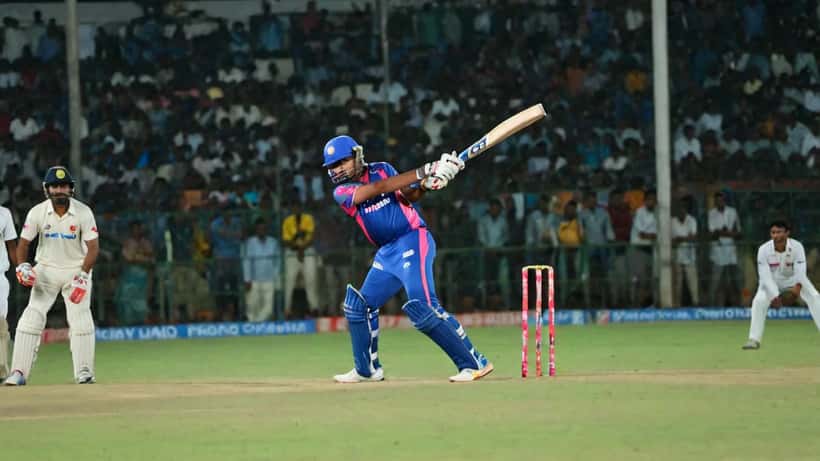
Vaibhav Sooryavanshi turned 15 years old and took the IPL by storm. On 10 April 2026 at Barsapara Stadium in Guwahati, he smashed 78 runs off just 26 balls — including a fifty in 15 balls — to lead Rajasthan Royals to a record chase of 202 against defending champions Royal Challengers Bengaluru. His partnership with Dhruv Jurel produced 108 runs off 37 deliveries — the second-highest run rate for a century partnership in IPL history.
The numbers are staggering. The age is 15. And for sports medicine specialists working with young Australian athletes, the question is not just "how?" — it is "at what cost?"
The Prodigy Who Rewrote the IPL Record Books
Sooryavanshi's 2026 season has been relentless. In his three innings at the start of this IPL campaign, he has accumulated 122 runs at a strike rate of 248.98. His 15-ball fifty against RCB is the fastest in IPL 2026. Last season, he became just the second player in T20 tournament history to score a century in 35 balls.
He faces the world's best fast bowlers, including Jasprit Bumrah, whom he dispatched for a six on his way to a 35-ball century last season. The physical demands on a 15-year-old body competing at this intensity are unlike anything most sporting environments are designed to manage.
For Australian cricket fans watching Kayo Sports in the early hours, it is thrilling entertainment. But for anyone involved in youth sport development, Sooryavanshi's trajectory raises important questions about what high-performance sport does to adolescent bodies.
Why Teenage Athletes Are More Vulnerable Than They Look
The concern is not about willpower or toughness. It is about biology.
During adolescence, the skeleton is actively growing through structures called growth plates — areas of developing cartilage tissue located near the ends of long bones. Growth plates are softer and more vulnerable than mature bone. Under repeated high-impact stress, they can fracture, develop stress reactions, or sustain permanent damage.
Research published in peer-reviewed sports medicine literature identifies the period of peak height velocity — roughly 11–13 years in girls, 13–15 in boys — as the time of greatest vulnerability. This is precisely the age Sooryavanshi is at right now.
For cricket in particular, the concerns are well-documented:
- Fast bowling creates high-force rotation through the lumbar spine. A 2024 study tracking under-15 and under-17 bowlers found that under-17s had approximately twice the lumbar bone stress injury risk of under-19s, with injuries detected at an average age of 15 — the exact age of Sooryavanshi
- Batting imposes repetitive high-velocity shoulder and wrist loading, particularly through power shots like the sixes Sooryavanshi hits at will
- Overhead throwing creates stress on the shoulder and elbow growth cartilage, which can become inflamed under repeated load
What the Australian Data Shows
This is not a theoretical concern in Australia. According to the Australian Institute of Health and Welfare, adolescents aged 15–17 have the highest sports injury hospitalisation rates of any age group in the country: 653 injuries per 100,000 participants. In 2023–24, approximately 62,100 sports injuries required hospital admission nationwide. Males aged 15–19 are the highest-risk group.
Cricket-specific data shows that around 30 per cent of sports injuries in children involve the head, given the hard ball and fielding demands. One in five cricket injuries in children involves the hand, while lower-leg injuries are also common.
The problem is not playing sport — it is intensity, volume, and insufficient recovery when the body has not yet finished building itself.
The Problem With "Extraordinary Talent"
Extraordinary young talent creates its own set of pressures that can override protective instincts in coaches, parents, and even the athletes themselves.
Sooryavanshi is reported to train with extreme dedication. His teammate Yashasvi Jaiswal noted simply: "He's working so hard as well." That work ethic is part of what makes him special. But Sports Medicine Australia's guidelines make clear that even elite junior athletes need structured recovery:
- A minimum of 1–2 full rest days per week, regardless of age or fitness level
- At least 24 hours full recovery after high-intensity training or match play
- No more than 16 hours of structured training per week — exceeding this significantly increases overuse injury risk
- Young athletes who overtrain are up to twice as likely to suffer stress fractures, tendonitis, and muscle strains
The broader danger is what sports science calls "early specialisation" — intensive focus on a single sport before physical maturity. Cricket Australia warns against participation in multiple academies simultaneously due to increased stress-related injury risk.
Signs Australian Parents Should Know
You do not need to be a prodigy to encounter these risks. Across Australia, hundreds of thousands of children play cricket in community competitions, school teams, and representative programs. Any parent whose child is training more than three or four times a week should know the warning signs:
- Persistent non-muscular low back pain lasting more than 7 days (which should always be investigated for lumbar stress reaction in young cricketers)
- Shoulder or elbow pain that does not resolve within 48 hours of rest
- Pain that is worse during or immediately after sport, particularly if it shifts from sharp to dull
- Noticeable reduction in performance not explained by fatigue
- Reluctance to participate or complaints about pain being dismissed as "growing pains"
The last point matters. Growth plate injuries are sometimes mistaken for muscle soreness because the pain location overlaps. A sports medicine specialist can distinguish between them — through clinical assessment and, where warranted, imaging — before permanent damage occurs.
When to See a Sports Medicine Specialist
Not every ache requires a specialist appointment. But Sports Medicine Australia's guidelines recommend seeking professional assessment when:
- Pain persists beyond 2–3 days of rest in a young athlete
- The same joint or region has been sore repeatedly across a season
- A growth spurt has recently occurred and activity levels have not been adjusted accordingly
- A young athlete is specialising in one sport year-round before the age of 14–15
Cricket Australia's talent pathway guidelines outline the long-term athlete development framework designed to protect young players from exactly these injury patterns. Platforms like Expert Zoom connect Australian families with sports medicine doctors and health specialists who have experience working with adolescent athletes. Getting an early assessment is significantly less costly — financially and physically — than treating a stress fracture or growth plate injury that has been playing through for weeks.
Watching Sooryavanshi With Both Eyes Open
Vaibhav Sooryavanshi is a once-in-a-generation talent. His performances against RCB on 10 April 2026 are the kind that make cricket fans set their alarms for 12:30 AM AEST. He deserves every accolade.
But he is also 15. The history of professional sport is littered with prodigies who burned brilliantly and briefly — not from lack of talent, but from a system that prioritised output over long-term health.
Australian families watching him play might ask: is my child being protected the same way? If not, it may be time to seek a specialist opinion.
This article is for general information only. It does not constitute medical or clinical advice. If you are concerned about a young athlete's injury, consult a qualified sports medicine practitioner.
