 Andrew Thompson
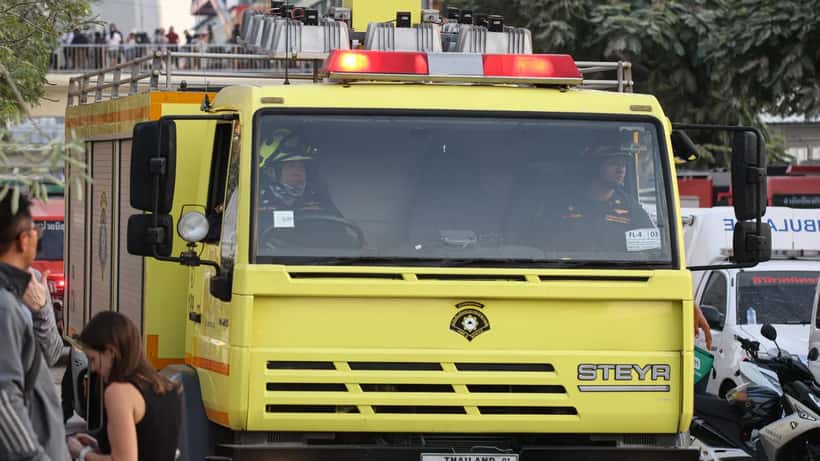
On 3 August 2026, the rear wall of a construction site building in Ultimo collapsed, sending debris crashing onto a neighbouring Shell service station, crushing parked cars and injuring seven people — two of them rushed to hospital in serious condition. Emergency services evacuated surrounding buildings and fire crews spent hours assessing the structure for further collapse risk. As dust settled on one of inner Sydney's most dramatic building failures in recent years, one question cut through the chaos: who pays?
What Happened in Ultimo
The collapse occurred on Broadway near Ultimo, approximately 2 km from Sydney's CBD. A portion of the building — mid-construction — gave way without warning, with falling debris landing on the adjacent service station forecourt. Fire and Rescue NSW Acting Superintendent Peter Murray confirmed that workers were removed from rubble and transported to hospital in serious condition, with one man in his 60s and another in his 30s among those affected. Five others were assessed at the scene.
At the time of publication, the cause of the collapse had not been officially confirmed. NSW Police and the building regulator, the NSW Department of Planning, Housing and Infrastructure, were assessing the site. The site had previously attracted regulatory attention — NSW Planning enforcement records show a Fire Safety Order issued to a Pyrmont Street property in Ultimo in 2025, indicating the suburb's older building stock and active construction activity have been on authorities' radar.
Why This Is a Legal Minefield
Construction site collapses in Australia sit at the intersection of multiple legal frameworks, and the Ultimo incident is no exception. Under the Work Health and Safety Act 2011 (NSW), all persons conducting a business or undertaking (PCBUs) — including the principal contractor, the developer, and any subcontractors present on site — have a primary duty of care to ensure the workplace does not expose workers or the public to risks.
Critically, that duty extends beyond the site boundary. When falling debris damages third-party property or injures people on adjacent land, liability under common law negligence is triggered in addition to the WHS Act. The injured parties at the service station, and the owners of the crushed vehicles, have potential claims against multiple parties.
"In a collapse of this kind, the investigation will look at three layers: design compliance, materials, and supervision," says the kind of expert an ExpertZoom construction law specialist would cite. "Any one of those can establish negligence, and the liability can be shared proportionally between the builder, the developer, and the engineer who certified the structure."
The Legal Exposure: Builder, Developer, or Council?
Australian courts apply the principle of proportionate liability under the Civil Liability Act 2002 (NSW) for economic loss and property damage claims. In practice, this means fault can be apportioned across multiple defendants — the head contractor, the structural engineer, the concrete supplier, or even the local council if it issued occupation certificates without adequate inspection.
For workers injured on site, the pathway is more direct. Under NSW law, workers are covered by workers compensation insurance, which provides medical expenses, weekly payments during incapacity, and lump-sum payments for permanent impairment. The two men hospitalised today are entitled to lodge a claim immediately — regardless of fault — through the workers compensation scheme administered by the State Insurance Regulatory Authority (SIRA).
Members of the public injured by the collapse face a different journey. They must pursue a personal injury claim in negligence against the site's principal contractor or developer, and may also have a claim against the property owner under occupier's liability principles. For the service station operator and car owners whose property was damaged, a property damage claim in negligence or under the builder's public liability insurance policy is the most direct route.
Concrete Case: The Crushed Car Owner and the Injured Pedestrian
Consider two scenarios that flow directly from today's incident:
Scenario A — Vehicle damage. A worker from a nearby business parks their car at the Shell service station at 8:45 am on 3 August 2026. Forty-five minutes later, falling masonry crushes the vehicle. The car is insured comprehensively — but the insurer will likely pursue the at-fault builder through subrogation rather than the car owner bearing the cost. If the car is uninsured, the owner can lodge a claim directly against the principal contractor's public liability insurance, which under Australian construction industry standards must carry a minimum of $20 million in coverage for projects of this scale. The owner's out-of-pocket exposure, in that scenario, should be nil — but only if they act quickly to preserve evidence and engage a lawyer before the insurer's investigators set the narrative.
Scenario B — Injured bystander. A pedestrian walking past the service station at the moment of collapse is struck by a concrete fragment and suffers a fractured arm and post-traumatic stress. Under NSW law, they can claim general damages (pain and suffering), special damages (medical costs, lost income), and future economic loss. If assessed as having a whole person impairment of 15% or more, they cross the threshold for non-economic loss claims under the Civil Liability Act 2002 — worth up to $697,000 in 2026 terms. Even below that threshold, medical expenses and lost wages are fully recoverable. The key: a claim must typically be filed within three years of the incident date, but a lawyer should be consulted within weeks, not years, to preserve witness statements and CCTV footage before it's overwritten.
According to the State Insurance Regulatory Authority (SIRA), workers injured in NSW construction collapses are entitled to weekly payments of up to 95% of their pre-injury average weekly earnings for the first 13 weeks — a figure that matters enormously for the two workers now in hospital. SafeWork NSW, the state's primary work health and safety regulator, is the authority responsible for investigating notifiable incidents like today's collapse and can be consulted for guidance on workplace incident rights and obligations.
What Should You Do If You Were Affected?
If you were on site, nearby, or had property damaged in the Ultimo collapse, the hierarchy of steps is straightforward but time-sensitive:
- Seek medical attention first — even minor injuries should be documented at a hospital or GP on the day of the incident. Delayed-onset symptoms from dust inhalation or shock are common.
- Photograph everything — your vehicle, any injuries, the scene if safe to access. Timestamped photos are evidence.
- Do not give statements to insurance investigators before speaking to a lawyer. Adjusters are working to minimise the insurer's exposure, not yours.
- Lodge a workers compensation claim immediately if you were employed on site — there is no waiting period and you do not need to prove fault.
- Engage a construction law or personal injury specialist — liability in multi-party construction incidents is complex. An experienced expert can identify the correct defendants, preserve crucial evidence from the site, and advise on whether a structured settlement or court proceedings offers the better outcome.
The Ultimo collapse will likely trigger a WorkSafe/SafeWork NSW investigation, potentially criminal charges under the WHS Act if serious failures are found, and civil litigation that could run for years. Getting expert advice early is the difference between being properly compensated and being left carrying costs that belong with someone else.
YMYL disclaimer: This article provides general legal information only. It does not constitute legal advice. If you have been affected by the Ultimo building collapse, consult a qualified Australian construction law or personal injury solicitor for advice specific to your circumstances.
