 Theo Manning
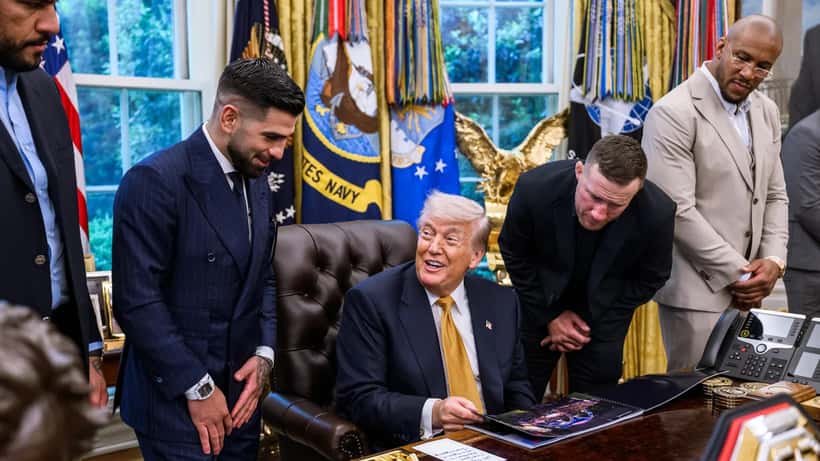
UFC Freedom 250 is scheduled to take place on the South Lawn of the White House in Washington DC on 14 June 2026 — a first in the history of combat sports — featuring Ilia Topuria defending his lightweight title against Justin Gaethje and Alex Pereira competing for the interim heavyweight belt. Before the first fighter steps into the octagon, however, the event has had to survive a federal lawsuit that went all the way to the Justice Department. The legal battle behind Freedom 250 raises questions every combat sports athlete — including the thousands of Australian MMA, boxing, and martial arts competitors — should understand.
The Lawsuit That Tried to Stop the Fight
Filed days before the event by the Public Integrity Project on behalf of a Vietnam War veteran and a civic activist, the federal complaint names the National Park Service and the US Department of the Interior as defendants. The core allegation: that the Trump administration bypassed the legal requirements that normally govern commercial events at national landmarks like the White House grounds.
Under National Park Service rules, sporting events are generally prohibited at sites such as the White House South Lawn. Temporary structures erected there typically require congressional authorisation and an environmental review before approval. The plaintiffs argued the event also raises corruption concerns, given that it financially benefits President Trump's associates, including UFC chief Dana White and Paramount-Skydance CEO David Ellison.
The Justice Department responded that all claims were "meritless" and that federal law does not require congressional approval for "temporary structures" on White House grounds. The administration's position: the complaint came too late to stop an event that had been months in preparation and had cost an estimated US$60 million in staging.
What Fighter Contracts Say About Force Majeure
For the fighters themselves — including Australian UFC competitors who have appeared on American cards — the legal challenge raised an immediate practical question: what happens to their contracts if a court intervenes and cancels the event?
Most professional MMA fighter agreements with the UFC are exclusive promotional contracts governed by Nevada or New York law, depending on the fighter's registration. They typically include a force majeure clause — a provision that suspends contractual obligations when events outside either party's control prevent performance. Natural disasters, government-ordered shutdowns, and court injunctions are among the most common listed triggers.
The key detail that most fighters and their managers miss: force majeure clauses are not automatic waivers of the fighter's right to be paid. Whether a fighter receives their "show money" (the base appearance fee) in the event of cancellation depends entirely on the specific language negotiated into their individual agreement. Standard UFC contracts have historically treated court-ordered injunctions as qualifying force majeure events, meaning fighters may receive nothing for a cancelled appearance if the clause is invoked — unless the fighter's legal representation has negotiated carve-outs.
Australian Combat Sports and Contract Protections
For Australian fighters competing domestically, the legal landscape differs significantly. Combat sports in Australia are regulated at the state level: in New South Wales, the Combat Sports Act 2013 governs boxing and MMA; Victoria operates under equivalent powers administered by the Office of Racing.
One area where Australian law offers clearer protection is through the Fair Work Act 2009 and the independent contractor regime administered by the Australian Sports Commission. The 2021 Sports Worker Reclassification Framework confirmed that some combat sports athletes who had previously been classified as independent contractors may in fact qualify for protections more akin to employees — including rights to a minimum level of remuneration when engagements are cancelled for reasons outside their control.
This is not a hypothetical issue. Multiple Australian martial arts promotions have cancelled or restructured events since 2020 due to venue closures, regulatory changes, or financial difficulties. In those cases, fighters operating under poorly drafted contracts had limited recourse. Those who had obtained independent legal advice before signing — and had negotiated force majeure carve-outs and deposit protections — fared substantially better.
What the UFC White House Battle Reveals for Sports Lawyers
The Freedom 250 legal challenge illustrates a broader principle that runs across all levels of combat sport: the contractual and regulatory framework governing an event is as important as the training that goes into the fight itself.
For Australian athletes at any level, several questions are worth asking before signing a promotional agreement:
- Does the contract clearly define what constitutes a cancellation as opposed to a postponement, and does the fighter's right to show money survive either?
- Is the force majeure clause narrowly defined enough to exclude operator negligence — preventing a promoter from invoking it when the cancellation is actually their own failure to secure permits?
- Does the contract specify the jurisdiction governing disputes, and is that jurisdiction one where the fighter can realistically enforce their rights?
- For larger events with international travel required: does the contract cover travel and accommodation costs if the fighter arrives and the event does not proceed?
These are not questions most fighters ask. They are exactly what a sports lawyer asks on a fighter's behalf.
When to Seek Legal Advice Before Signing
UFC Freedom 250 will almost certainly proceed — the Justice Department's response made that clear. But the lawsuit served a useful function for combat sports athletes globally: it made visible the legal machinery that underpins every professional fight card, and revealed just how much can go wrong when that machinery is poorly understood by the people it most affects.
Australian combat sports athletes can access specialist sports and entertainment lawyers through ExpertZoom's Legal specialists, matched to practitioners familiar with both domestic combat sports regulation and international promotional contract terms. Legal advice before signing a promotional contract costs a fraction of what a poorly structured force majeure clause can cost when an event is cancelled.
For more on how fighter rights have been tested in the Australian market, read about the legal questions raised by UFC Perth's pre-fight withdrawals.
This article is for general informational purposes only and does not constitute legal advice. Consult a qualified legal practitioner for advice specific to your situation.
