 Liam O'Connell
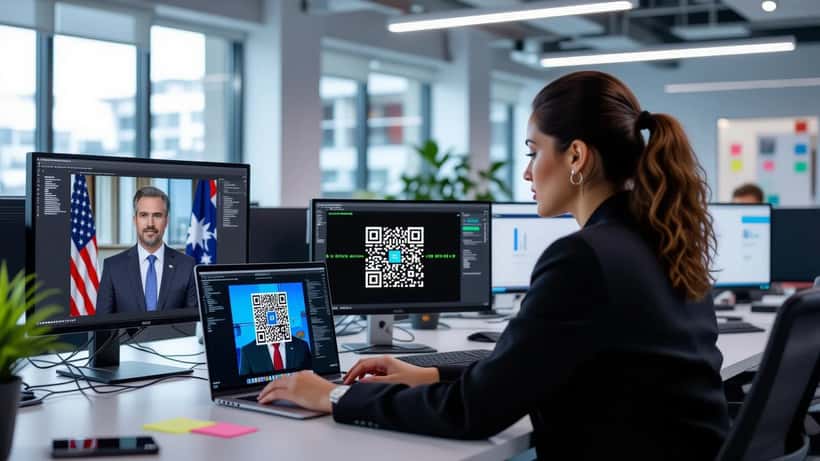
A doctored video of Donald Trump appearing to promote a Bitcoin "double-your-money" offer circulated across YouTube Live streams in July 2026, directing viewers to scan an on-screen QR code and send cryptocurrency to a scammer's wallet. The clip, staged to look like a NATO Summit press event, was never real. It is the latest example of a fast-growing threat now hitting Australian screens: hyper-realistic political and celebrity deepfakes engineered to separate ordinary people from their savings.
The timing is no accident. Trump himself has fuelled a wave of synthetic video in recent months, sharing AI-generated clips of his critics — including one, reported by Forbes on 2 July 2026, that showed him as a doctor mocking opponents with a cloned voice. When the most photographed man on earth is publishing fake footage of himself, the line between real and fabricated collapses — and criminals rush into the gap.
Why an American speech matters to your wallet in Australia
You may never watch a Trump rally, but the technology behind these clips is the same one draining Australian bank accounts. Scammers are cloning the faces and voices of the nation's most trusted figures — mining magnate Gina Rinehart, Andrew "Twiggy" Forrest and entrepreneur Dick Smith among them — to endorse fake "AI" or "quantum" trading platforms.
The losses are staggering. According to Western Australia's Consumer Protection, Australians in that state alone lost more than $30 million to investment scams since the start of 2024, with a single fake-celebrity scheme accounting for $10 million. Research cited by Australian security outlets found that 68% of Australians have encountered a fake celebrity or influencer endorsement, 28% clicked at least one, and of those, 30% lost money or personal data — with average reported losses of about AUD $950 per victim.
A Trump crypto deepfake and a fake Gina Rinehart "investment tip" are built in the same workshop. Learning to spot one teaches you to spot them all.
How the scam actually unfolds
The pattern is consistent, and understanding it is your first defence:
- The bait. A deepfake video or fake news article appears in a social feed, showing a famous person spruiking huge, effortless profits.
- The hook. A link takes you to a slick sign-up page. Submit your details and a "broker" phones you, often warm and patient.
- The first payment. You are asked for a small deposit — commonly around $250 — to "unlock" the platform.
- The dashboard illusion. A fake trading screen shows tidy little profits, pressuring you to top up. The numbers are pure theatre.
- The wall. When you try to withdraw, fees, taxes and delays appear until contact goes cold.
An IT expert's five red flags for spotting a deepfake
Detection tools are improving, but you do not need a lab to catch most fakes. Focus on these tells:
- Lip-sync drift. Audio that lags or runs ahead of mouth movements is the single most common giveaway. Watch the lips on plosive sounds like "p" and "b".
- Unnatural blinking and facial tension. AI faces often blink too rarely or hold odd, frozen micro-expressions. Real faces fidget.
- Edge artefacts. Look at the boundary where the face meets hair, glasses or a collar — flickering, blur or a faint halo signals digital stitching.
- Lighting that does not match. Shadows on the face pointing a different way to shadows in the room mean two images were fused.
- The "act now" money ask. No legitimate billionaire will ever ask a stranger to scan a QR code and send crypto. Any celebrity clip that ends in an urgent payment request is, functionally, always a scam.
When in doubt, verify through official channels. Celebrities and public figures routinely post warnings when their likeness is stolen — check their verified accounts before you believe a word the "video" says. The same discipline applies to any high-profile figure used as bait; our guide to spotting deepfake investment scams involving public figures walks through the wider pattern.
What to do if a video looks convincing
Treat every unsolicited investment pitch featuring a famous face as hostile until proven otherwise. Do not click the link. Do not "just have a look" at the platform — the sign-up page harvests your phone number for the follow-up call. If you have already engaged, stop all payments immediately, contact your bank to try to reverse recent transfers, and change any passwords you entered.
You can report the material to the national scam service, Scamwatch, which tracks emerging tactics and issues public alerts. Reporting also helps authorities warn the next target.
When to bring in a professional
Deepfake fraud sits at the intersection of technology and money, and the recovery steps can get complicated fast — especially where crypto wallets, offshore platforms or compromised devices are involved. A qualified IT security specialist can audit a device that may have downloaded a scammer's "trading app", check for remote-access software, and lock down your accounts before more damage is done. For older relatives, who make up a large share of victims, a short consultation to set up ad-blocking, two-factor authentication and a family "verify before you pay" rule is one of the cheapest insurance policies available.
The uncomfortable truth of 2026 is that seeing is no longer believing. A president can fake himself; a scammer can fake a billionaire. The skill that protects you is not spotting the perfect fake — it is refusing to act on any video that asks for your money, no matter whose face is talking.
This article is general information only and does not constitute financial or legal advice. If you have lost money to a scam, contact your bank and a licensed professional as soon as possible.
