 Andrew Thompson
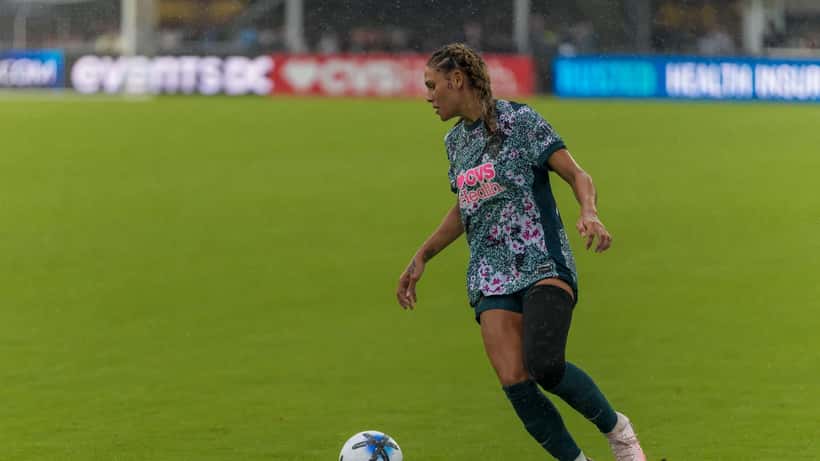
In January 2026, Trinity Rodman became the world's highest-paid women's professional soccer player at just 23 years old. Her three-year, $6 million deal with the Washington Spirit — averaging $2 million annually — didn't just break records. It exposed a structural gap between elite female athletes' market value and the legal frameworks protecting them. For Australian athletes, their families, and the agents who represent them, her story is both inspiring and instructive.
The Contract That Created a New League Rule
Trinity Rodman's negotiations were so commercially significant that the NWSL rewrote its own rules to make her deal possible. Known informally as the "Trinity Rodman rule," the High Impact Player (HIP) mechanism — announced in December 2025 and ratified in January 2026 — allows clubs to exceed their salary cap by up to $1 million per season to retain marquee players. To qualify, a player must meet a marketability threshold and be nominated for major professional awards.
The rule change illustrates something that sports lawyers understand well: elite athletes can reshape entire industries — but only when supported by sophisticated legal representation. Rodman's team negotiated not just a pay rate, but the structural conditions under which that pay becomes possible. Without legal counsel experienced in collective bargaining agreements and salary cap architecture, players routinely sign contracts that leave significant money on the table.
According to the Australian Institute of Sport, young elite athletes in Australia are increasingly entering professional pathways between the ages of 16 and 19 — a bracket where financial and legal literacy is often underdeveloped relative to physical talent.
Beyond Salary: The Endorsement Layer
Rodman's annual income extends well beyond her playing contract. Since June 2024, she has held an endorsement deal with Adidas. Dick's Sporting Goods signed her as a brand partner in October 2025. Dove Men+Care added her to its roster in November 2025. Her seven-brand portfolio spans footwear, sporting goods, personal care, electronics, and eyewear.
Each of these deals carries clauses that can make or break an athlete's financial position: exclusivity provisions that restrict which other brands the athlete can work with, performance-related pay reductions, image rights during injury periods, and termination penalties that can amount to months of income. For athletes without specialist legal advice, these clauses are often invisible until they trigger.
In Australia, professional athletes in the NWSL, W-League, AFLW, and NBL1 are increasingly exposed to multi-source income — match fees, central contracts, national team payments, and commercial endorsements — each governed by different legal frameworks and often carrying conflicting obligations. As covered in a recent analysis of Australian footballer transfer contracts and MLS clause law, even mid-career athletes can face significant financial loss when contract obligations across multiple organisations aren't legally coordinated before signing.
What the "Trinity Rodman Rule" Reveals About Structural Gaps
The HIP mechanism didn't emerge in a vacuum. For years, female athletes have operated under salary caps and league structures designed in eras when women's sport generated a fraction of its current commercial value. The Washington Spirit's decision to advocate for a rule change — and the NWSL's willingness to implement one — happened because Rodman's market value was so demonstrably large it created pressure that couldn't be ignored.
For most athletes, that kind of leverage doesn't exist. What does exist is the right to negotiate — and the right to understand what you're signing. In Australia, sports contracts are governed by a combination of federal employment law, industry collective agreements, and individual player contracts. The interaction between these frameworks is not straightforward. A player who signs a club contract without understanding how it interacts with a central national team contract can inadvertently trigger clauses in both — restricting her ability to seek endorsements, compete overseas, or exit before the contract expires without penalty.
If a Rising Star Signs at 18: A Concrete Scenario
Consider this situation: a 19-year-old Australian women's footballer — recruited by a W-League club after her national under-20 debut — is offered a two-year playing contract worth $45,000 per year, plus an Adidas kit deal worth $12,000 annually. Total package value: $57,000 per year, or $114,000 over the contract term.
Without legal review, she may not notice:
A "professional availability" clause specifying that if she misses more than 20% of scheduled training sessions due to injury, her annual playing wage drops by 30% — a reduction of $13,500. If she sustains a knee injury in July 2026 requiring 10 weeks of recovery, she stands to lose $13,500 for the 2026–2027 season alone.
An exclusivity clause in the kit deal that prohibits her from endorsing any other sporting goods brand for 24 months — blocking a $9,000 partnership offer from New Balance that arrives in February 2027.
A club image rights clause that grants the club 50% ownership of her commercial likeness during the contract period — meaning any future endorsement deal must share revenue with the club.
A missing release clause: if the contract ends and she wants to transfer to a rival NWSL club, the club can demand a transfer fee of up to 20% of her remaining contract value — approximately $18,000 — even if the club chooses not to renew.
Total potential exposure from unchecked clauses: $40,500 or more across a two-year contract. A sports lawyer charging $350 per hour for a five-hour contract review — a $1,750 investment — would have identified every one of these risks before a single page was signed.
What Australian Athletes and Families Should Do Now
The Trinity Rodman story is instructive precisely because it demonstrates that even the most commercially valuable athletes in the world require specialist legal support. The rules themselves weren't adequate — they had to be changed. Most Australian athletes will never have the leverage to trigger a rule rewrite. What they do have is the ability to negotiate before signing — and the legal right to do so.
For any athlete approaching a first professional contract, playing or commercial, the steps are clear. Before signing anything, engage a solicitor with specific sports law experience, not a general practitioner. Look for practitioners with experience in athlete agreements, collective bargaining, and image rights under Australian law. Review every clause, not just the headline salary figure.
Ask specific questions: What happens to my pay during an extended injury? What image rights does the club claim during the contract term? Does this endorsement deal block future sponsorships in adjacent categories? What are the exit terms if a better offer arrives?
If the athlete is under 18, contracts carry specific protections under Australian state law — but these are not automatic, and some clauses can still be enforced. Parental co-signature and independent legal review are essential, not optional.
The most expensive legal mistake in professional sport is assuming the contract is standard. Trinity Rodman's $6 million deal wasn't purely the product of talent — it was the product of knowing what to ask for, and having the right people in the room when it mattered.
An expert consultation takes an hour. Unwinding a poorly-worded contract can take years.
This article provides general information only and does not constitute legal advice. Consult a qualified solicitor with sports law expertise for advice specific to your situation.
